+ By TERESE SCHLACHTER + Photos by RICHARD ALLEN
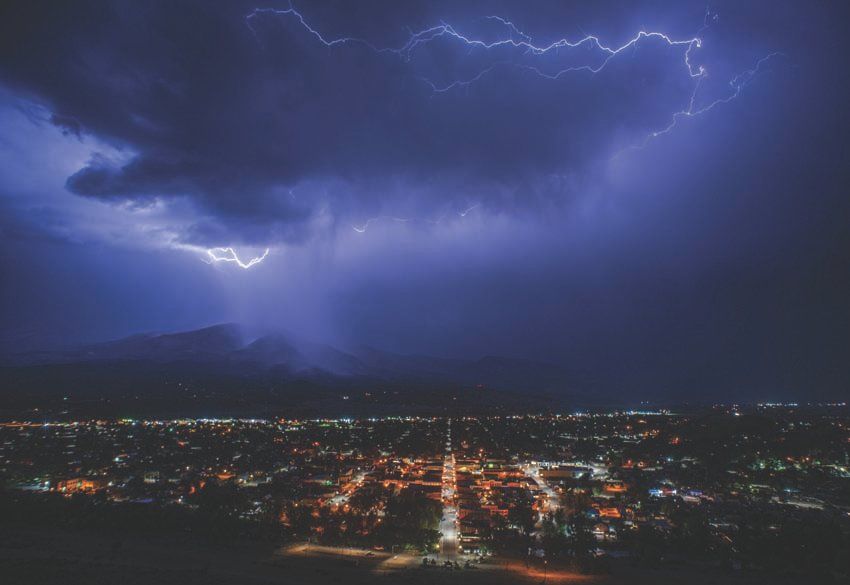
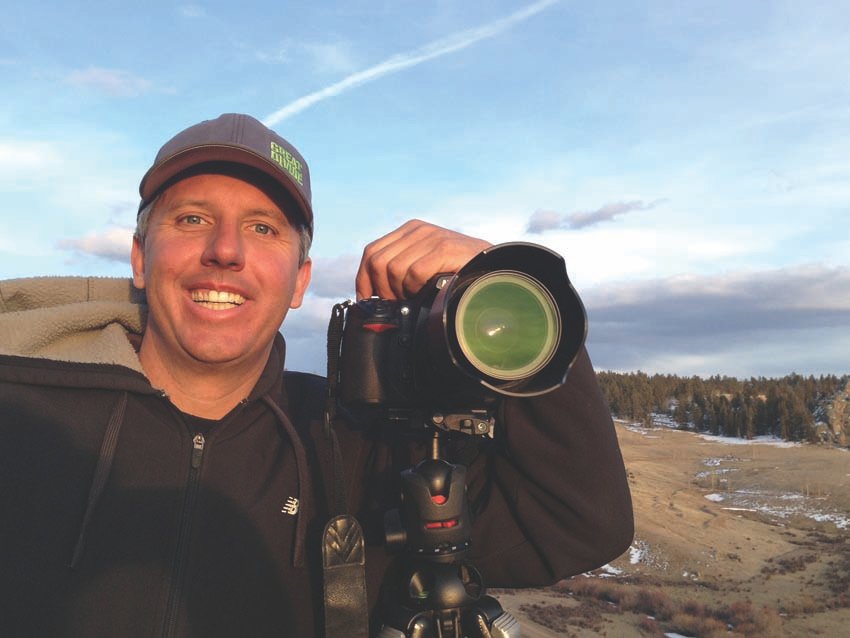
On any given night near Buena Vista, Colorado, Richard Allen might be found driving around in his camper van, searching for the light. “In the mornings and in the evenings is usually when I’m out photographing,” he says. “Sometimes I sleep in the van so I can get up before sunrise and get some beautiful photographs.”
Allen’s obsession with the mountains and rivers of the Western United States is well documented. He has thousands, maybe even tens of thousands, of images on hard drives and slides stacked up in his office. “I have trouble throwing anything away,” he says a little sheepishly. It would be like evaporating a moment in time. Piled up, those increments make moments, days, lifetimes.
The collection dates back to his first days behind the lens, in Annapolis. He and his buddies would skateboard in Newman Street Park, jumping benches and causing enough havoc to draw the attention of local police. But before they were shooed away, he’d snap a few action shots with his point-and-shoot camera.
Allen grew up in the community of Glen Oban in Arnold and attended Archbishop Spalding High School in Severn. He loved the water and the Chesapeake Bay, but something was calling him west. On an invitation from friends, he jumped in his old truck and headed to Colorado, where he traded his skateboard for a snowboard. His aperture opened to the mountains.
Allen finished college at University of Maryland, Baltimore County, and worked at Metropolitan Kitchen & Lounge, waiting tables and helping in the kitchen. He fell in with the Annapolis arts crowd and accepted an internship at The Capital Gazette. He took photographs for the newspaper and a local magazine. He shot a few friends’ weddings and soon realized that capturing other people’s “I dos” would financially enable his lifestyle as a seasonal commuter: summers in Annapolis and winters out west. Thousands of frilly bridesmaids, awkward in-laws, and ring-finger close-up shots later, he was feeling a bit burned out on the nuptial scene. The splendor of the Rocky Mountains won the geographic tug-of-war. In 2012, Allen made Colorado his full-time home.
He bought a cabin in Alma, which sits over 10,500 feet above sea level, more than 10,450 feet higher than his hometown. It is touted as the highest incorporated town in North America. He convinced his then-girlfriend (now wife), Nancy Allen, who lived in Hawaii, to join him there. “I just knew this was where I wanted to be,” he says. “There’s so much open land where you can just drive and camp. There’s so much openness and freedom.”
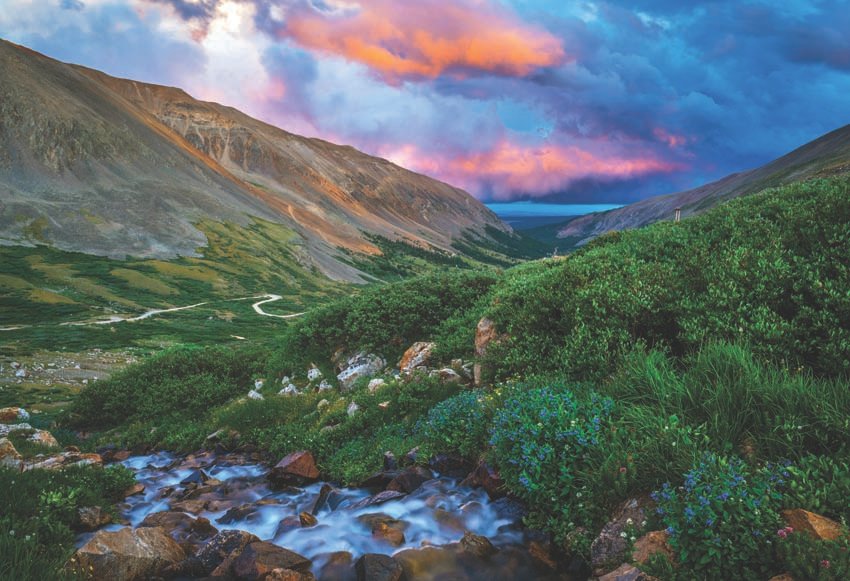
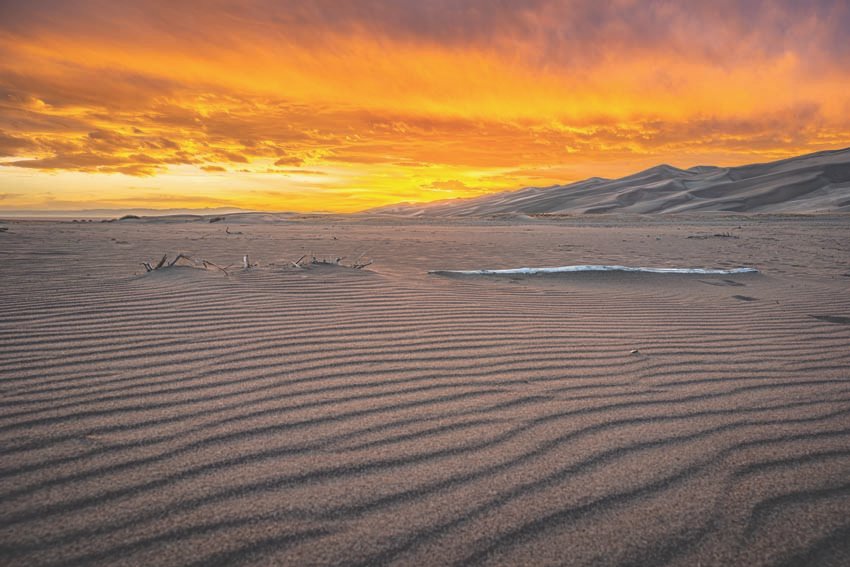
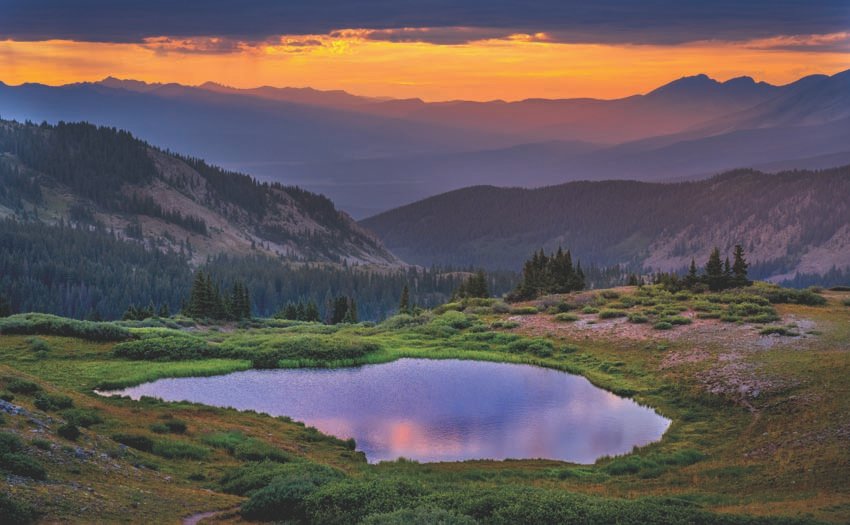
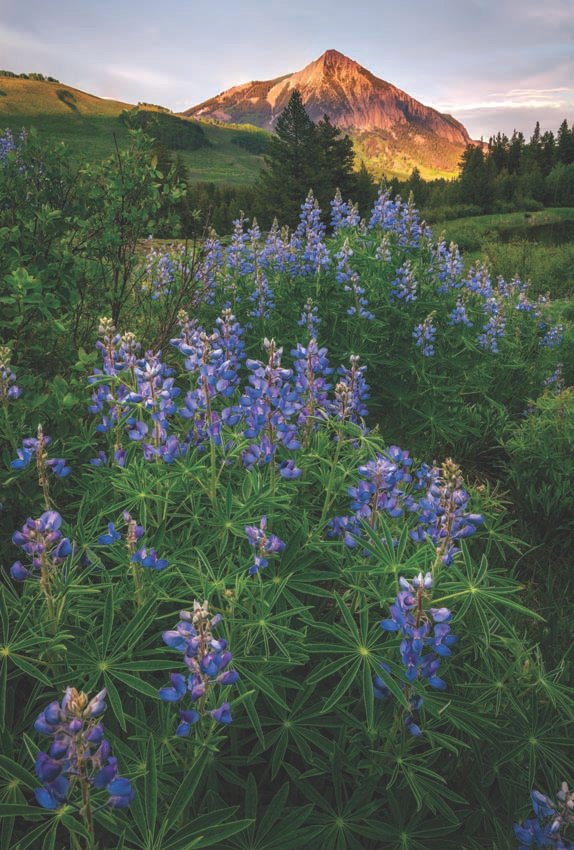
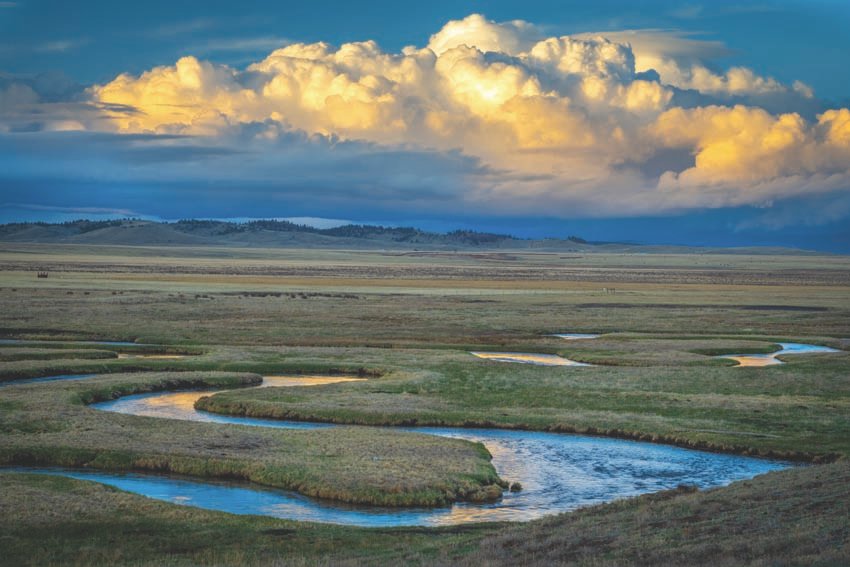
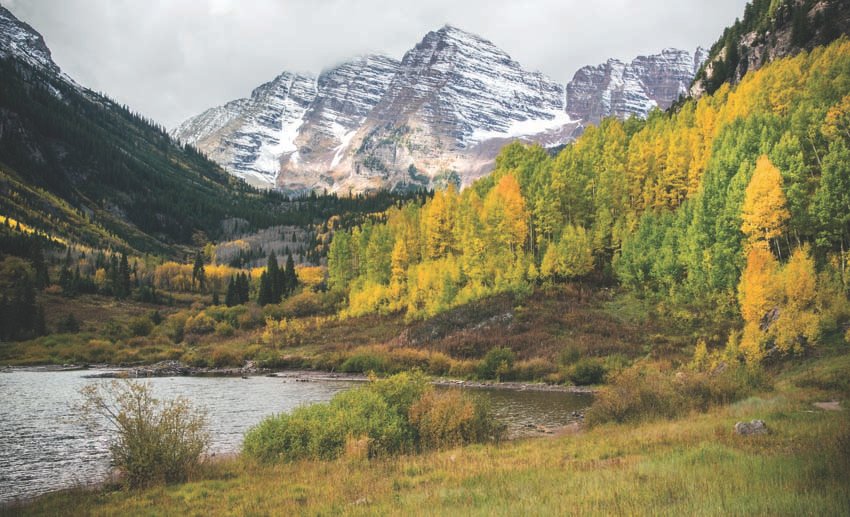
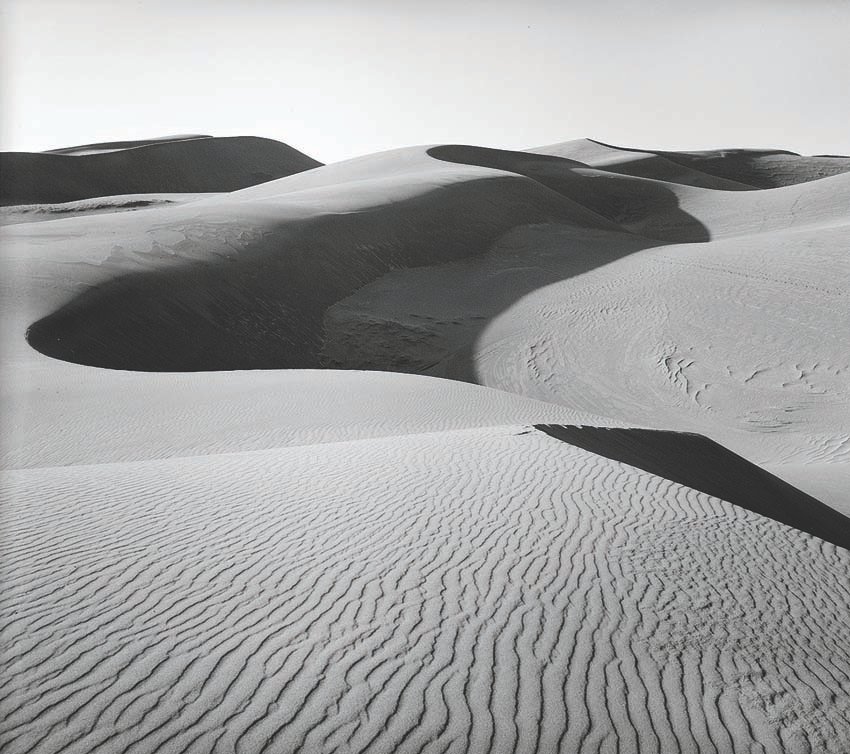
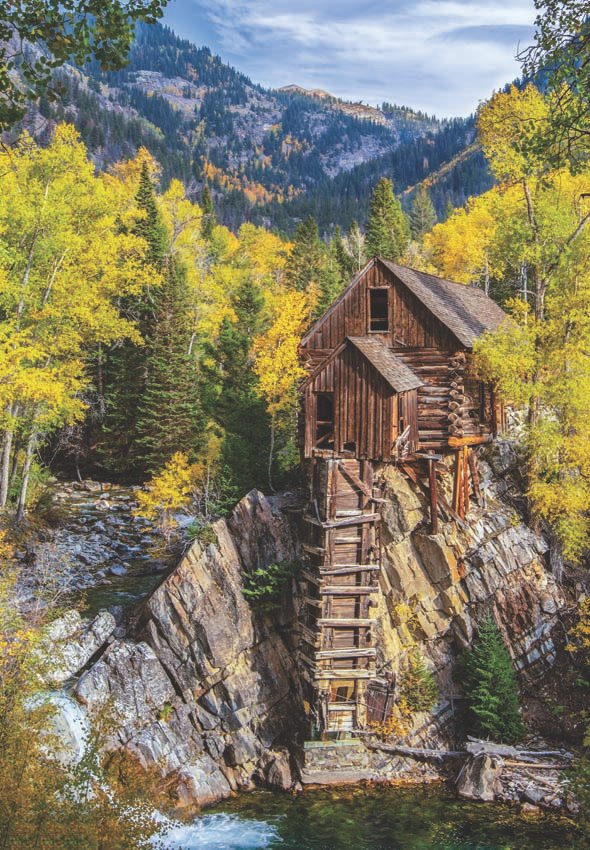
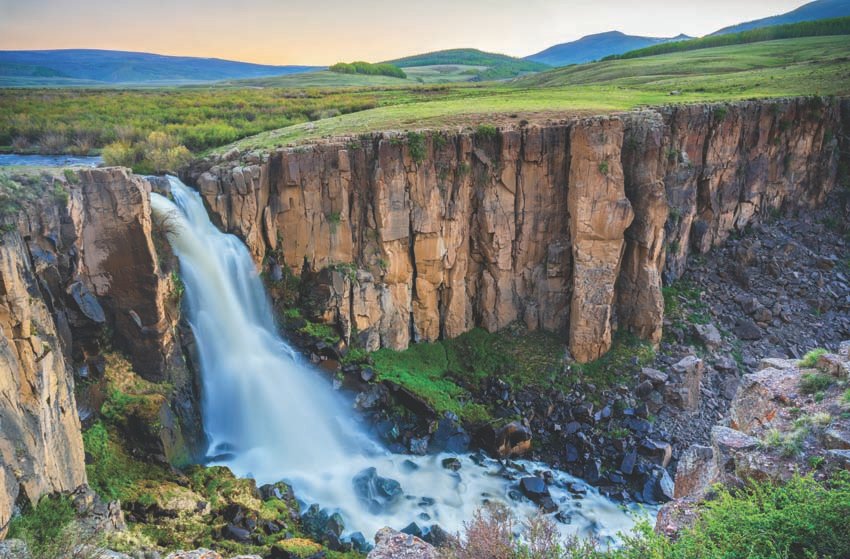
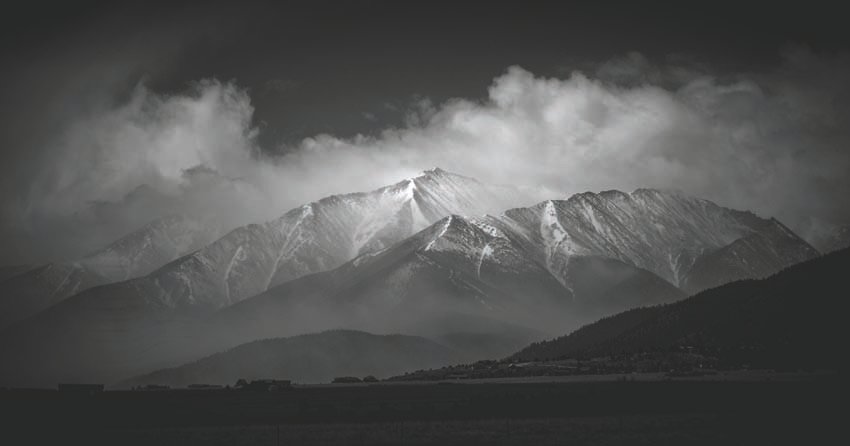
Allen’s Colorado landscape photographs are emblematically captured. He’ll sometimes drive long distances, taking pains to find the sweet spot for his tripod. Then, keeping an eye on his compass, he’ll lie in wait, sometimes for what feels like a very long time. “I have to know where the sun is going to come up and where it will hit the mountain or the sand dune,” he says. “Sometimes it’s beautiful, and sometimes nothing really happens.” He laughs about the times he’s given up, driven away, then looked back to see the perfect synthesis of light and rock unfolding in his rear-view mirror. “I needed to be more patient,” he says. Patience is key.
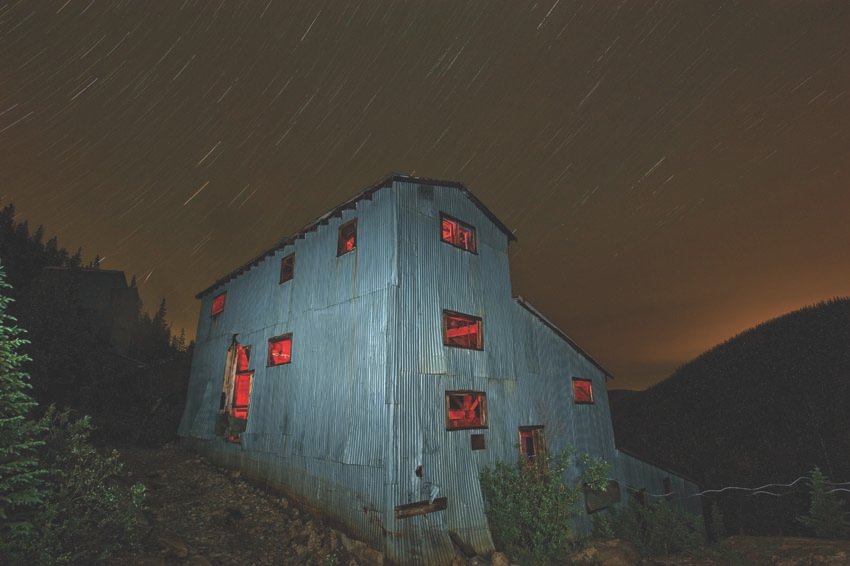
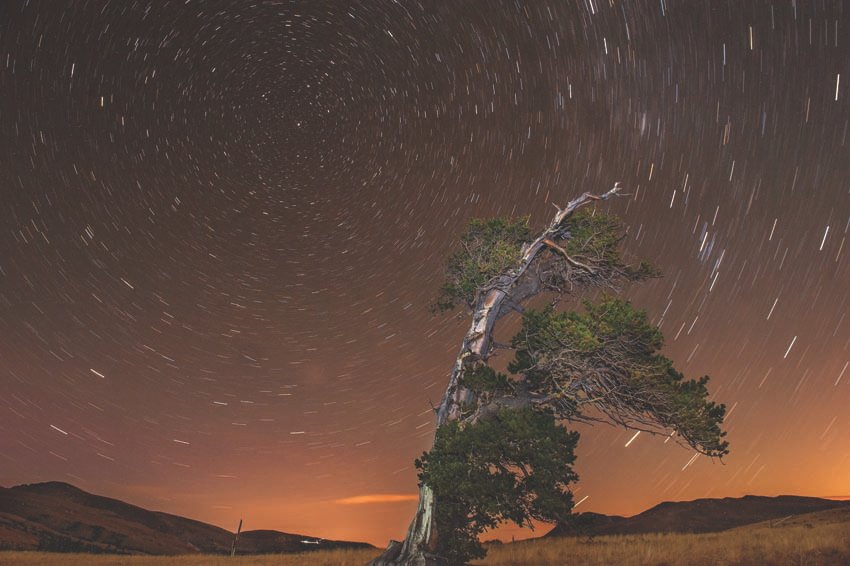
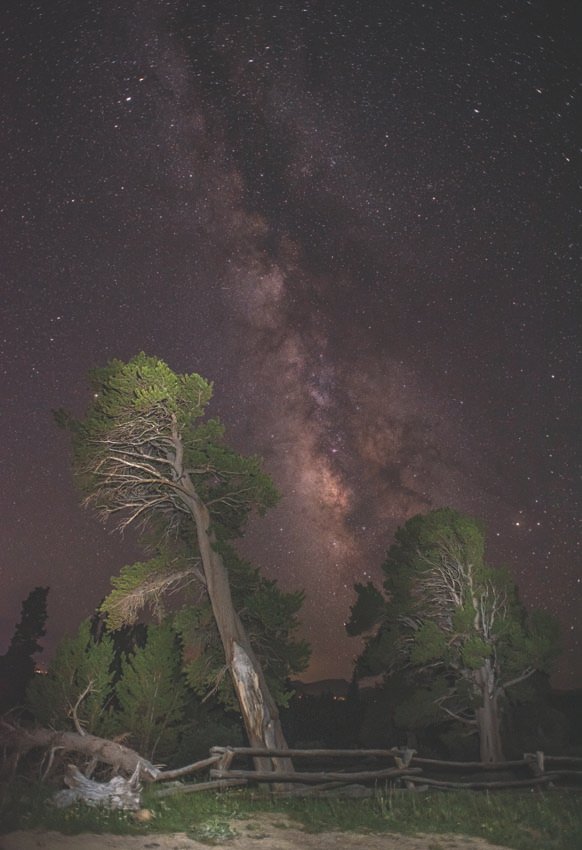
Night shoots are when Allen finds his zen. “I’m by myself. It’s very dark. The only way to shoot the Milky Way is if there’s no moon,” he says. He’s been able to shoot the galaxy by using a four- to five-minute exposure and a high ISO—the camera’s sensitivity to light. He might light up a nearby tree to use as a dramatic frame to draw the eye into the foggy celestial spiral.
He’s able to create the illusion of spinning stars using a 20-minute (or more) exposure and taking advantage of the earth’s rotation. “You have to point the camera at the North Star for it to work,” he explains.
Flowers have played a major role in Allen’s life, not only in his landscape photographs but also in his personal life. His wife is a florist. For her homegrown business to flourish, they had to move to Buena Vista, lowering their elevation from when they were in Alma by about 2,000 feet. She mostly provides flowers for weddings, which have become big business in the small town. Several venues offer scenic backdrops specifically for ceremonies, and Allen says he’ll likely be drawn back into photographing them.
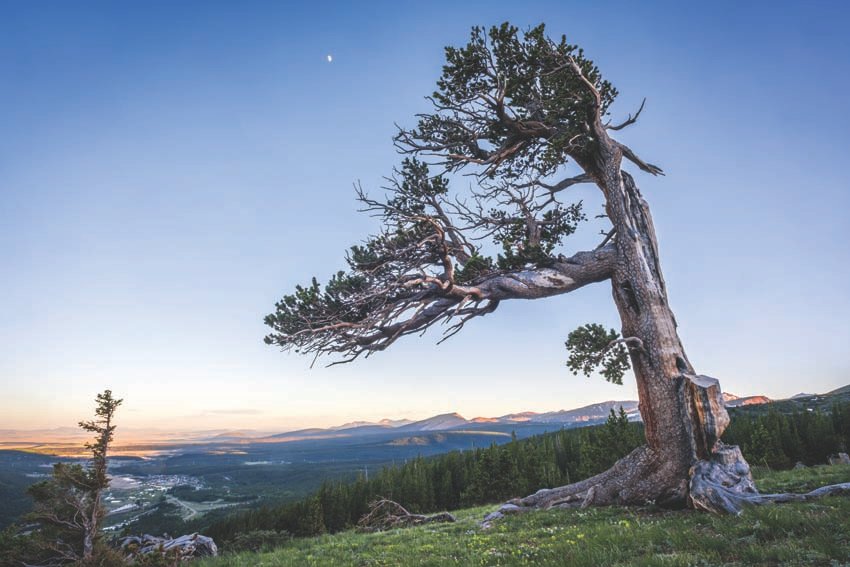
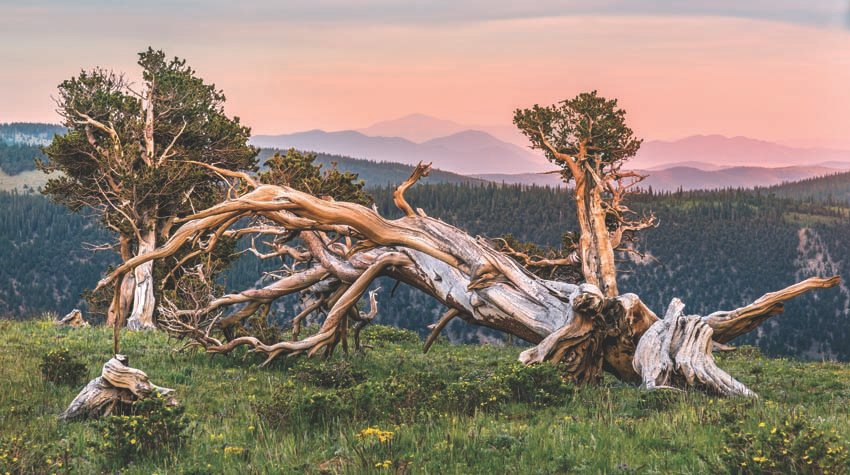
Thousand-year-old pines, knotted and bent by ferocious northwest winds, have twisted themselves into prone positions in the Windy Ridge Bristlecone Pine Scenic Area, and Allen is romanced by their resilience. “It’s brutal for anything to live at 11,000 feet with 100-mile-per-hour winds,” he says. The trees in his photographs are reminiscent of Salvador Dalí’s painting of melting clocks—lying about, striking dramatic poses.
Most years, Allen travels to Monte Vista, Colorado, to catch the thousands of sandhill cranes as they take a break from their long migration north, from New Mexico to the Great Lakes and Canada. In March’s twilight, he photographed them using a 400-millimeter lens in the San Luis Valley and captured their delicate wing tips.
Allen tries not to alter his images too much in editing. Landscape photographs always require some work, because the camera can’t see as well as the human eye. “You have to be able to take multiple images of that scene, then you stitch them together,” he says.
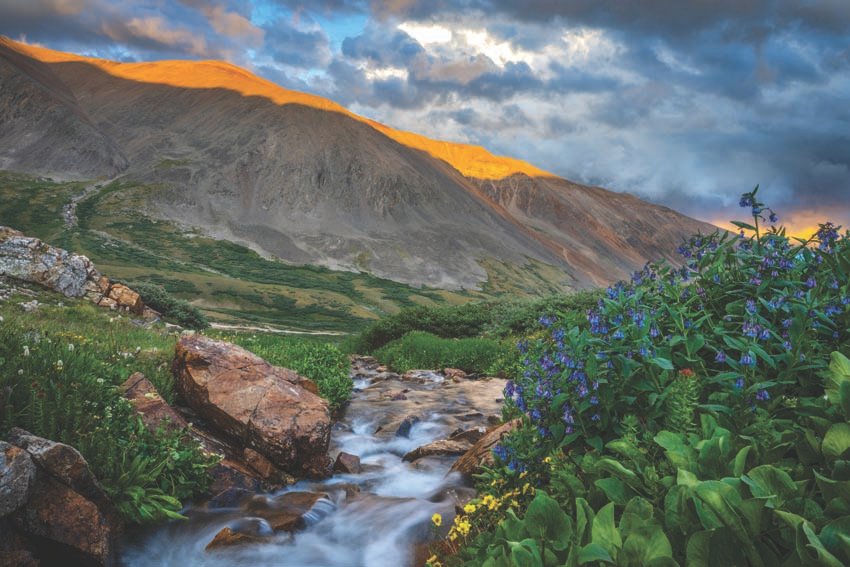
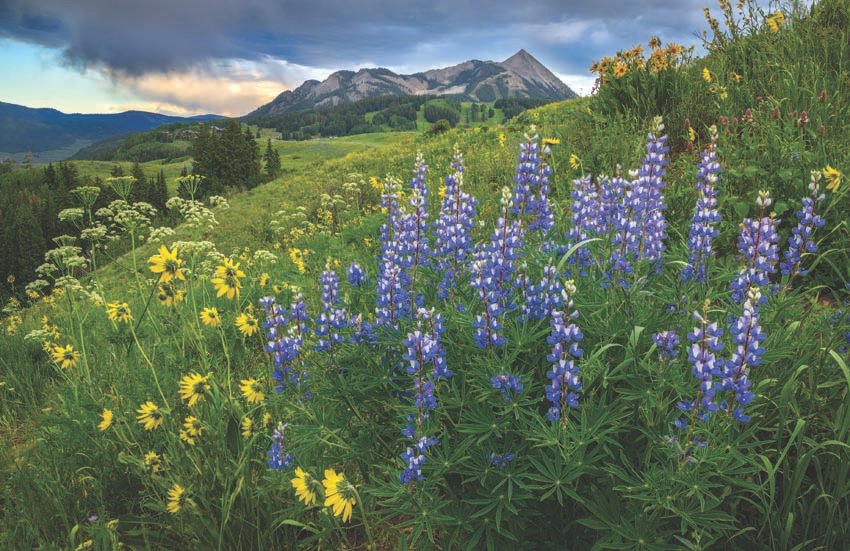
He sells his photographs in a few local stores and on his website, but he’s more interested in the stories they tell. “I really want people to feel like they’re there,” he says. He talks about running into an old friend at Lost Lake, an area featuring a series of trails. The friend had come there after seeing one of Allen’s photographs of wildflowers. It was if his friend had answered his invitation. For Allen, that was the most perfect light.