+ By Rahsaan “Wordslave” Eldridge + Photos courtesy of Deb Furey
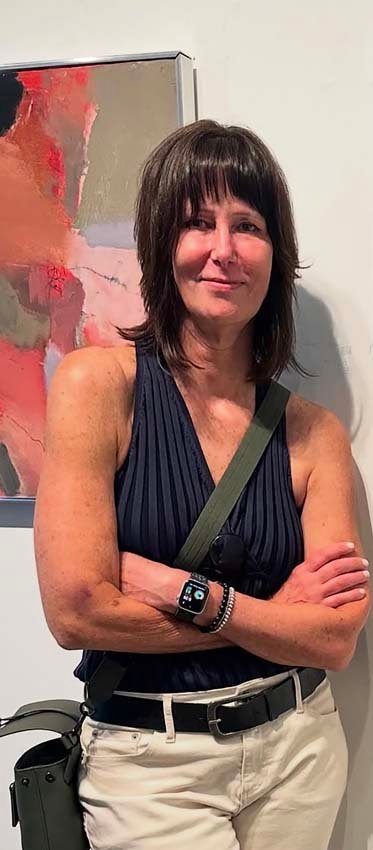
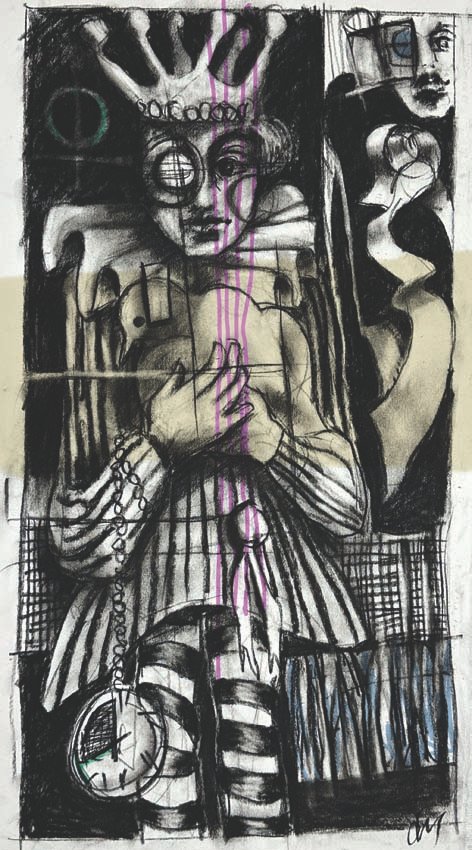
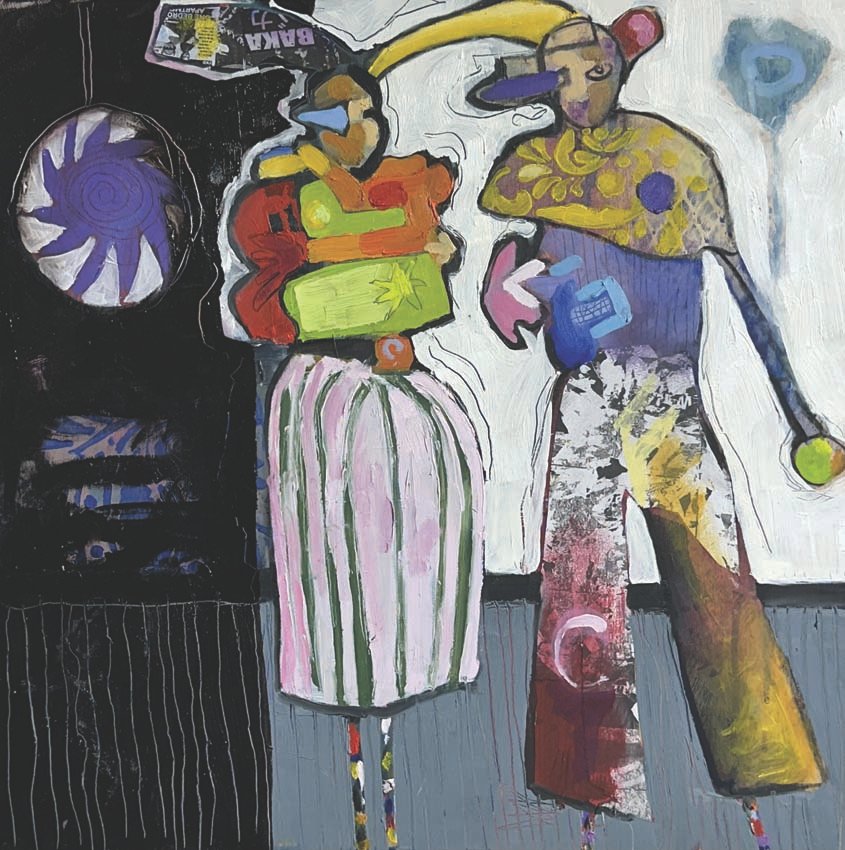
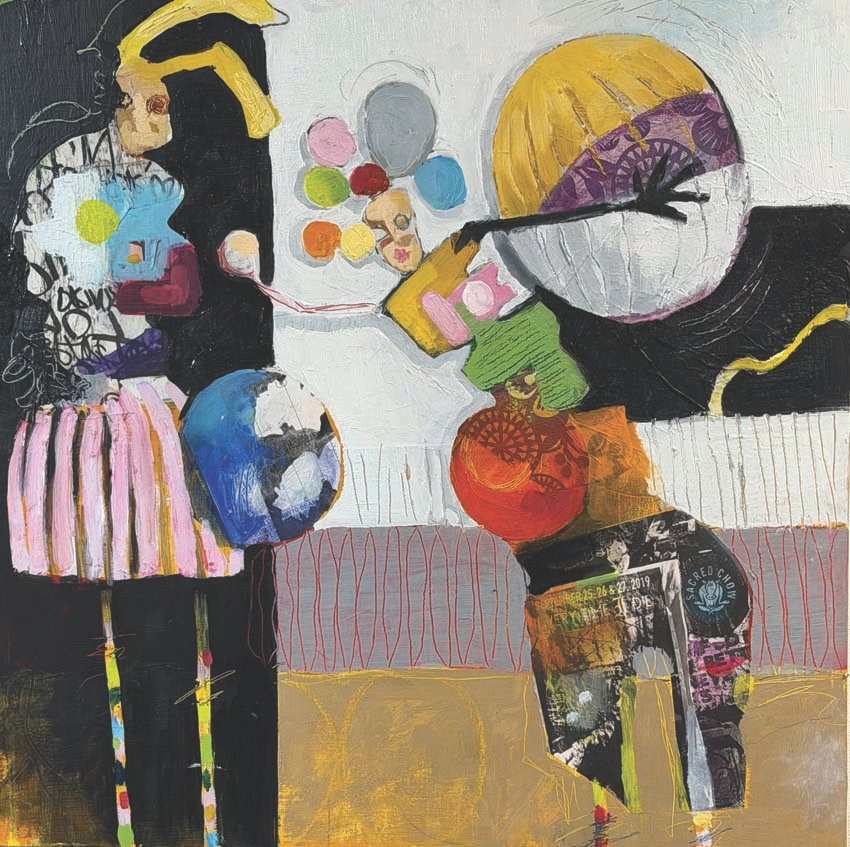
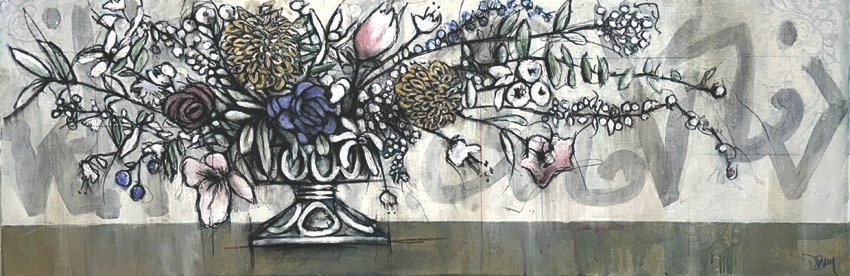
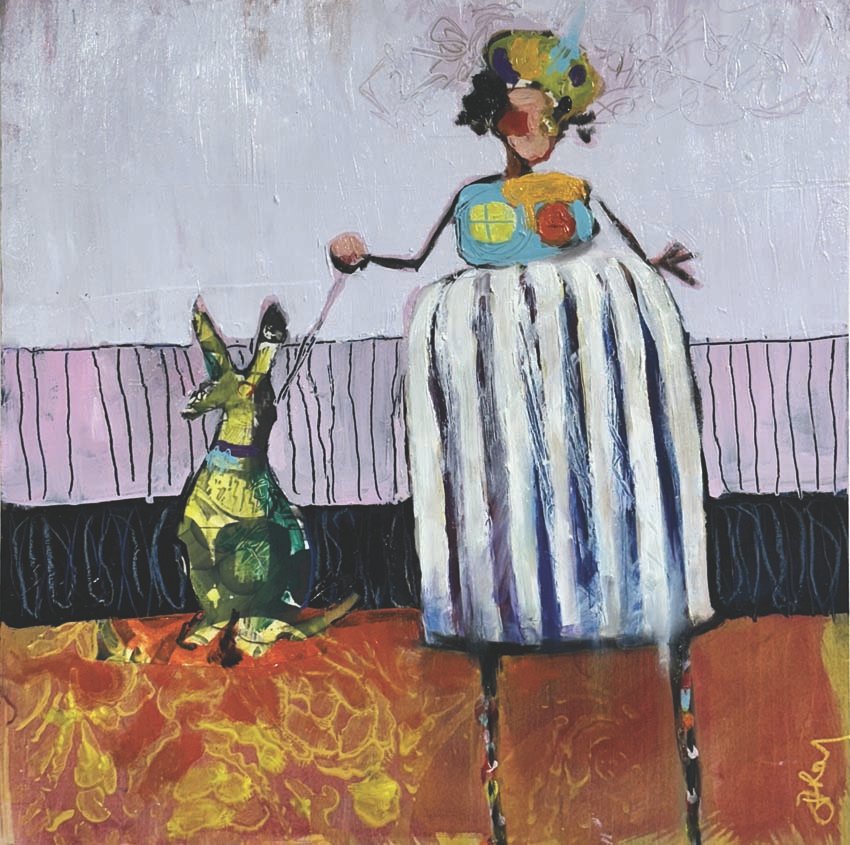
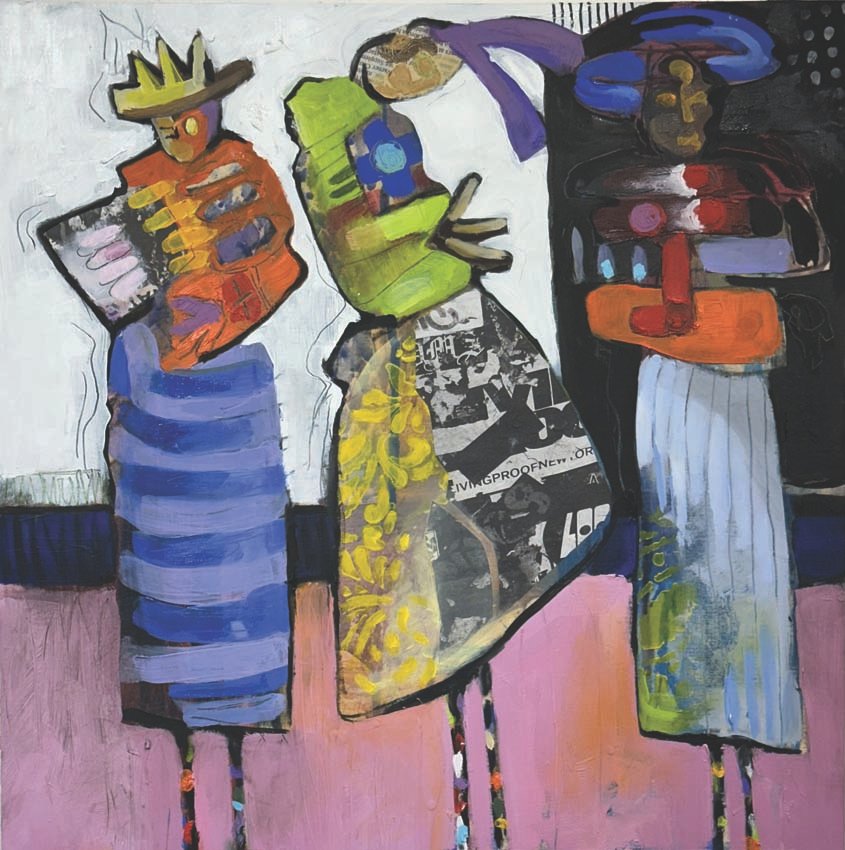
Deb Furey exists at the intersections of real and abstract, art and technology, and lightness and darkness. She recognizes the tension between light and dark as reflective of life. One can’t exist without the other. Those juxtapositions are represented in her work through collage, photography and paint, charcoal and oil, black and white, and colorful contrast. Her characters or “creatures,” as she calls them, are somehow both strange and familiar.
Furey’s been an artist for as long as she can remember. Even when her profession and personal life took her in a different direction, her creativity has always been an important resource and anchor. She sold her first painting (of a peacock) at eight years old. Her mother supported her creativity by enrolling her in lessons and allowing her to paint murals on the walls of their home. Born in Monmouth Beach, New Jersey, Furey remembers a simple life there, spending much time with family on the beach, before moving to Westport, Connecticut, with her mother and her mother’s partner when Furey was 14 years old. The distance from family and friends caused a difficult transition and rough high school years.
She spent the summer after her junior year of high school in Kentucky, studying art with Michael Skop, who significantly influenced her early artistic development by challenging her approach to drawing. Part of the terms of the residency required her and the other students to work on the farm where they were staying. Skop invited 10 to 12 students to study sculpting, which they did every morning, and drawing, which took place in the evenings. He adopted the artistic philosophy of Betty Edwards, author of Drawing on the Right Side of the Brain, which is about shifting perception from the analytical to the intuitive. Furey credits the experience with developing her foundations in realistic drawing and sculpting.
Her drawing skills were reinforced while she was part of a small artist collective in Westport that gathered to paint portraits of each other. After high school, Furey moved to Boston, where she studied painting and interrelated media at Massachusetts College of Art and Design. She left school early to work, but she also felt that she needed more life experience to expand her artistic point of view. She eventually returned to finish her degree. She also studied painting at the School of the Museum of Fine Arts in Boston, graduated with a liberal arts degree in photography from the University of Massachusetts Boston, and has a master’s degree in educational technology and human cognitive development from the Harvard Graduate School of Education.
Furey supported herself working as a jeweler until she got an opportunity in computer graphics and animation. She led a team of artists who created images for businesses. Her experience as a team leader eventually led to her shift into business consulting. In 2009, she took a vice president position at the marketing agency Merkle, which landed her, her husband, and two daughters in Severna Park, Maryland. Currently, she is senior vice president of Blend360, a data, analytics, and technology solutions company.
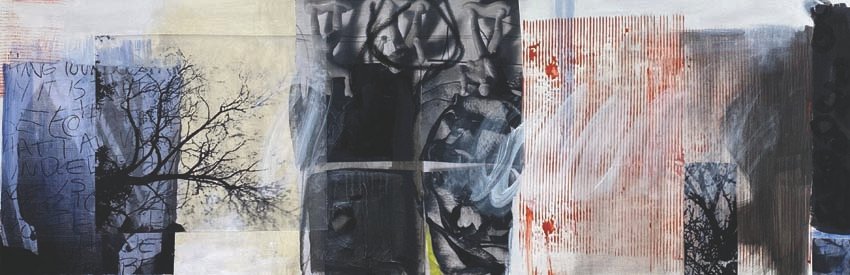
The connection between Furey’s artistic and business sides may not seem obvious, but she notes how coming up with solutions for clients also taps into her creativity. Perhaps there’s no coincidence that she’s working for a company with the word “blend” in the name, as her artistic approach often mixes media and sometimes embeds with graffiti, which is also an influence. Other influences include Robert Rauschenberg, Jasper Johns, Mark Bradford, Alex Foxton, George Rouy, and Raphaël Barontini. She’s also a fan of Andy Warhol and, citing his polarization and innovation, appreciates the way he pushed boundaries.
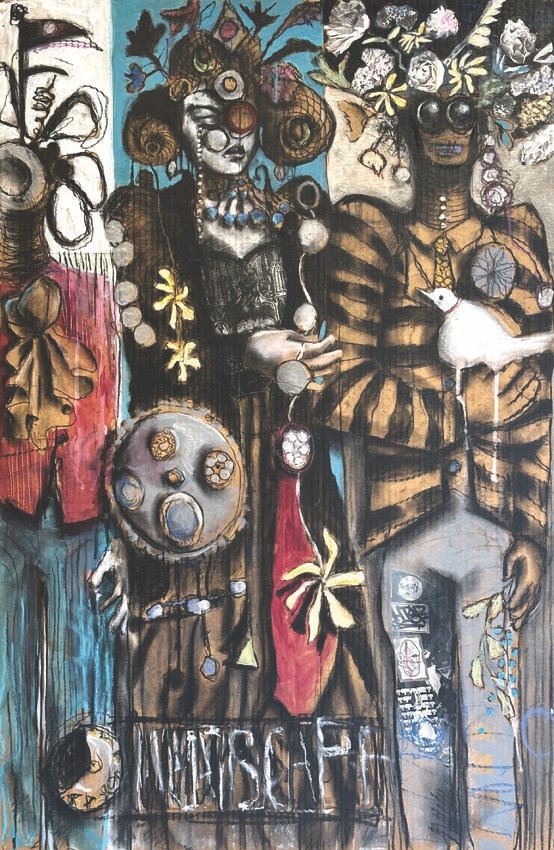
Furey leans on the complexity of humans. She believes that we cannot be singularly defined, and she works to create depth while intentionally blurring constructs such as race and gender roles, making the point that we are more than the boxes that society sometimes places us in. Her interest in displaying couples in her work is rooted in her belief in equality between women and men. She’s been married for 40 years and doesn’t always subscribe to societal conventions that dictate gender-based household responsibilities. She’s also acutely aware of time, calling it the “tempo of life.” It shows up as clocks in her collages.
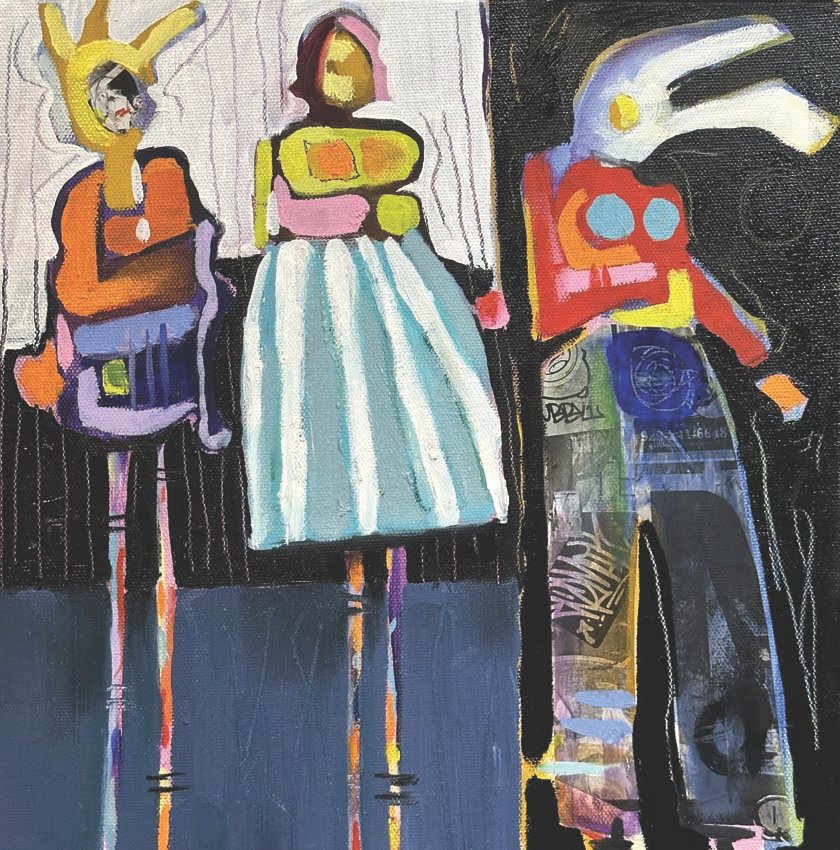
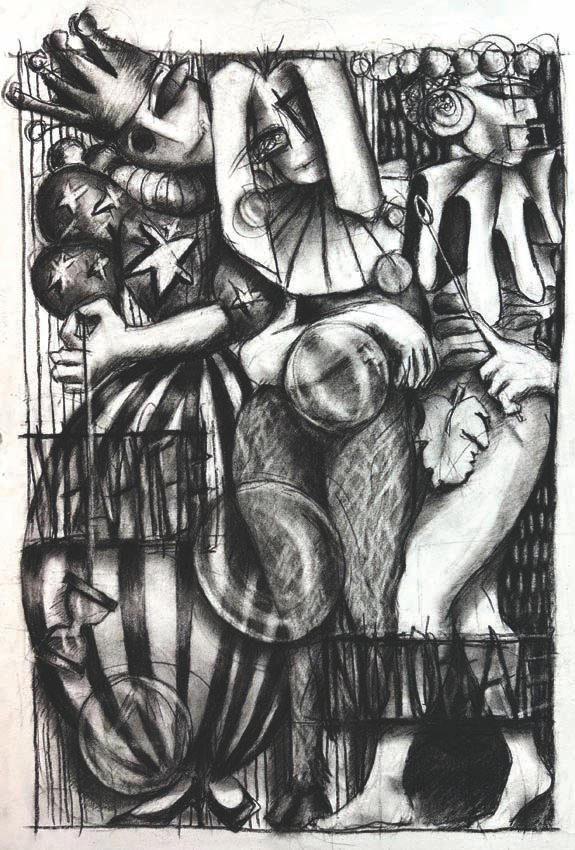
Furey sees herself in her characters. She imagines herself in different states of being, like a type of cosplay that manifests on canvas. One minute, she might be a queen, the next, a pirate or crazy jester. She’s drawn to mystery and horror but negotiates how much to depict darker themes, as that can be off-putting to some observers. It’s the only time during the process when she self-edits; otherwise, she enjoys the discovery of letting the work come to her as it wants to.
The evolution of technology, particularly artificial intelligence (AI) and its role in art, is another matter that Furey contends with. She holds a certificate in applied generative AI for digital transformation and is open to using AI to animate her existing work, but she doesn’t want to use it to create from scratch. At one point, she used AI as a launching point for ideas but felt stifled by striving to replicate the images instead of letting the work flow naturally. For Furey, there’s no way to reproduce the sheen, texture, and feeling of painting on a surface.
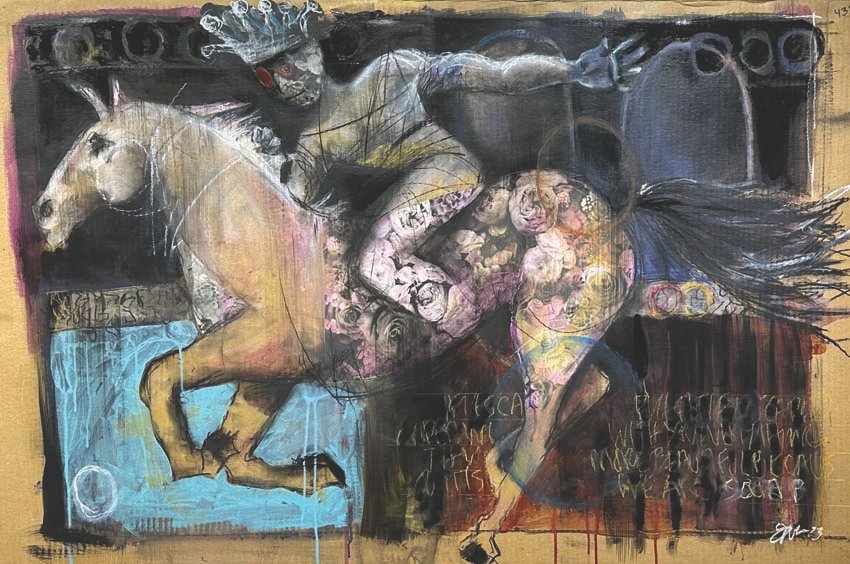
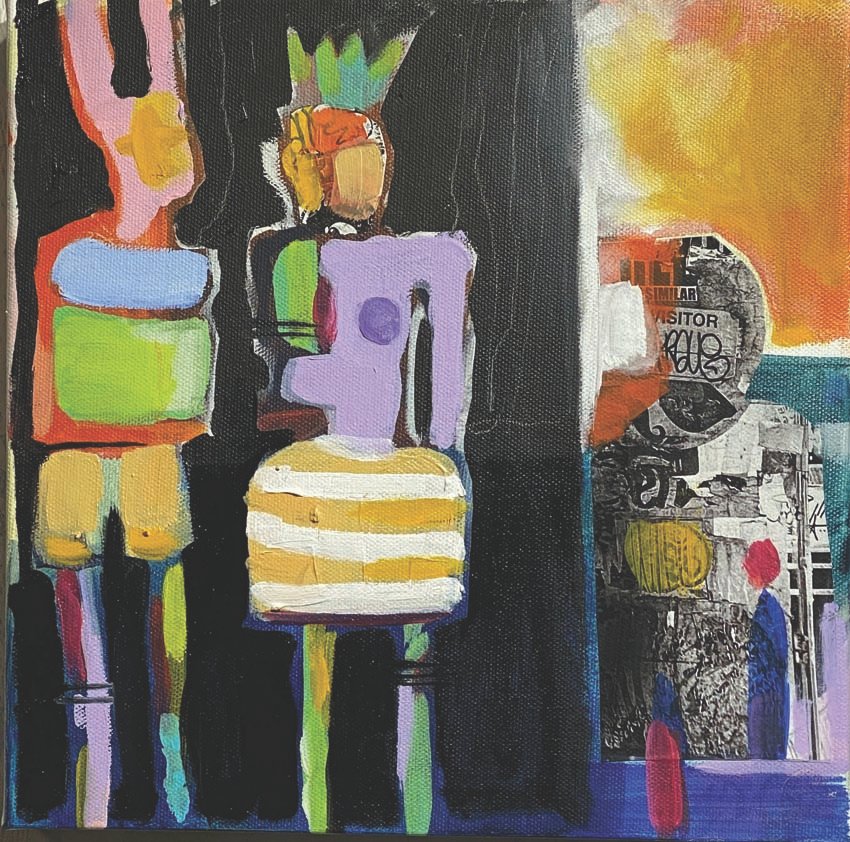
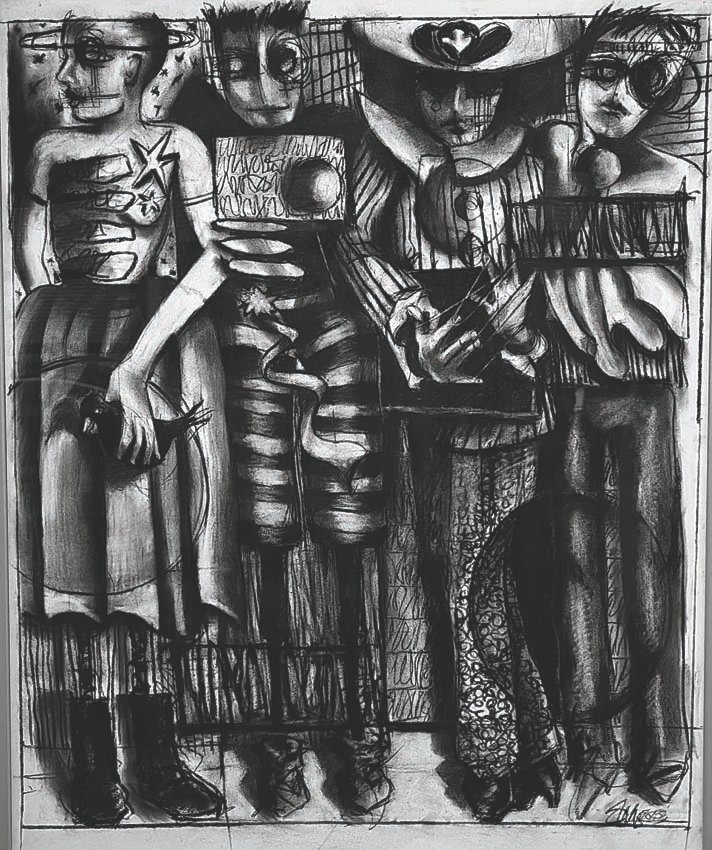
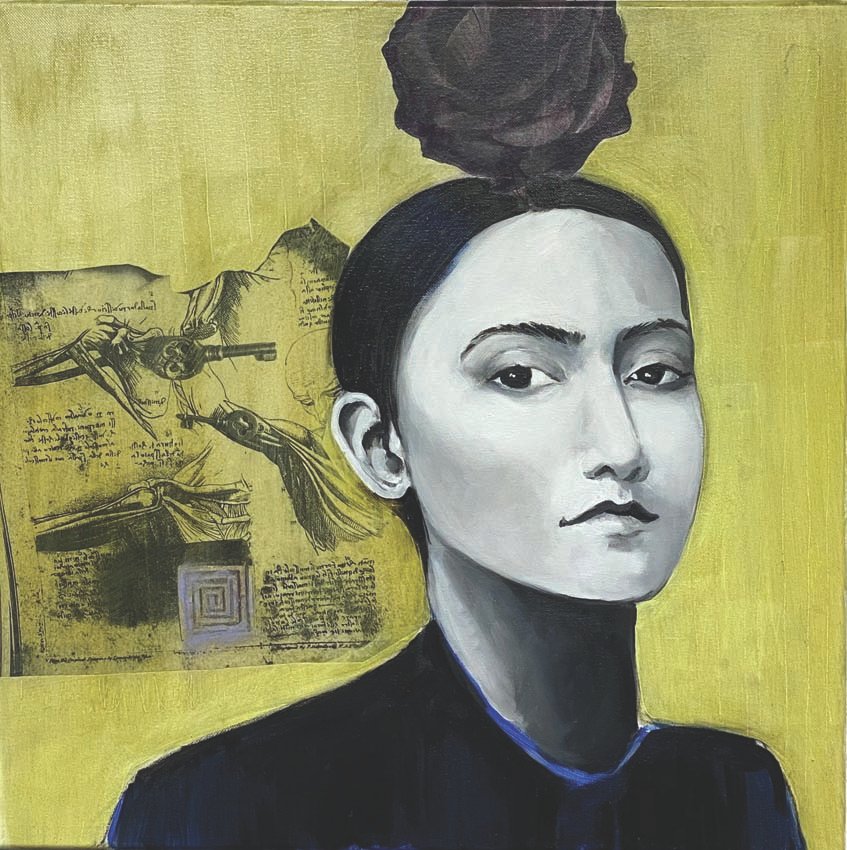
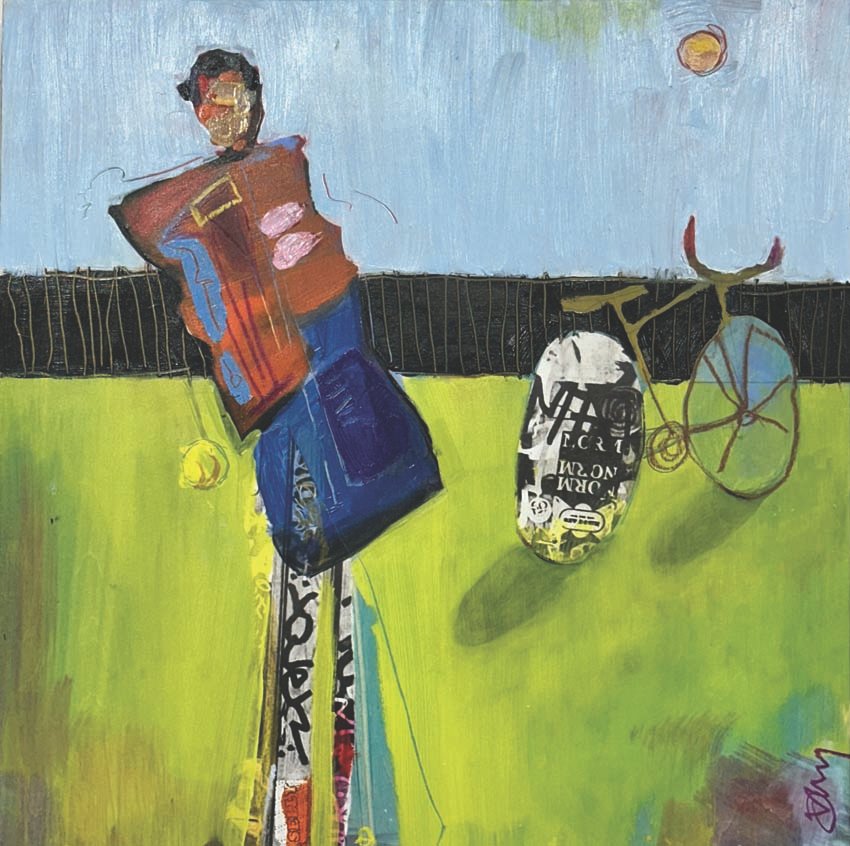
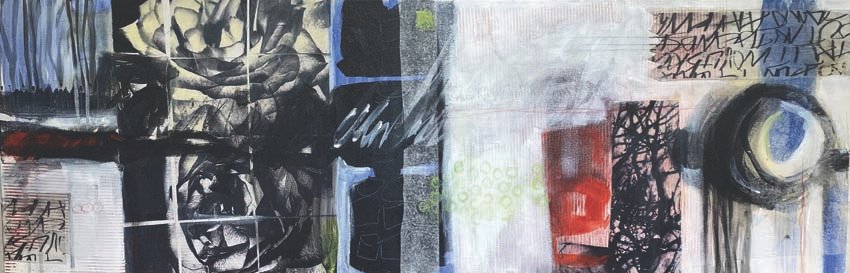
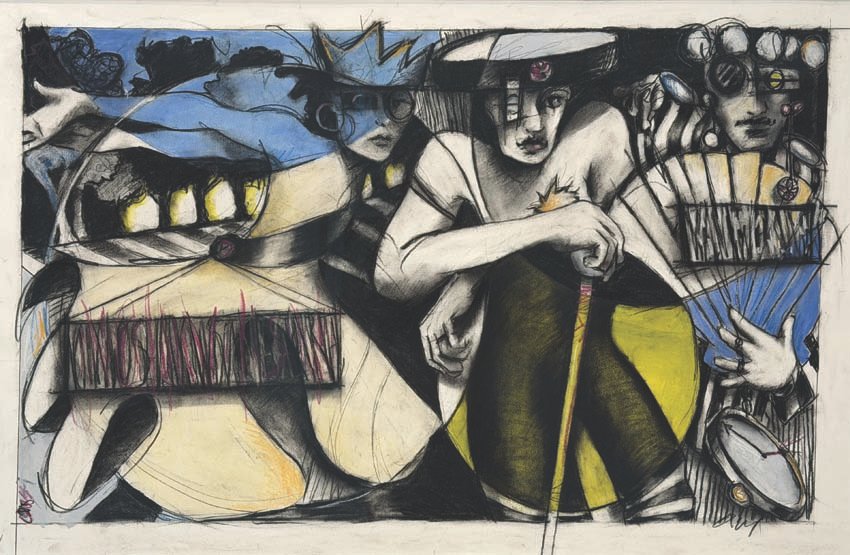
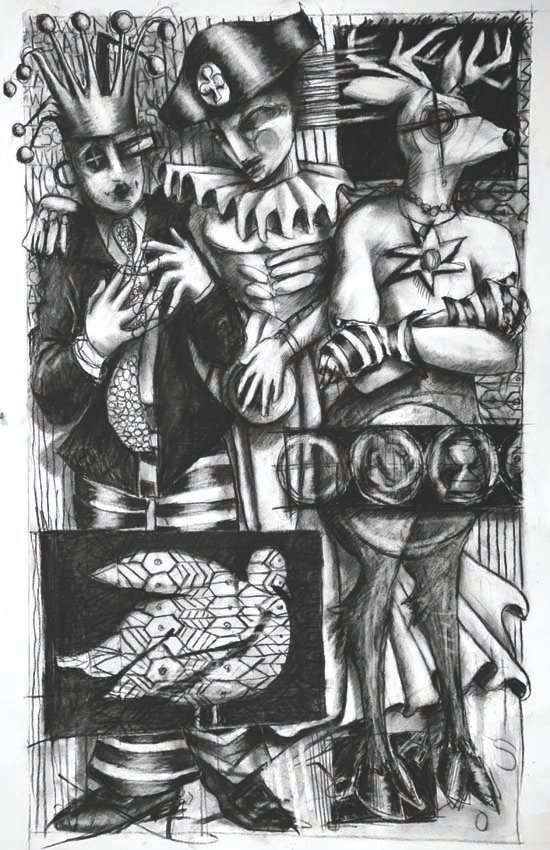
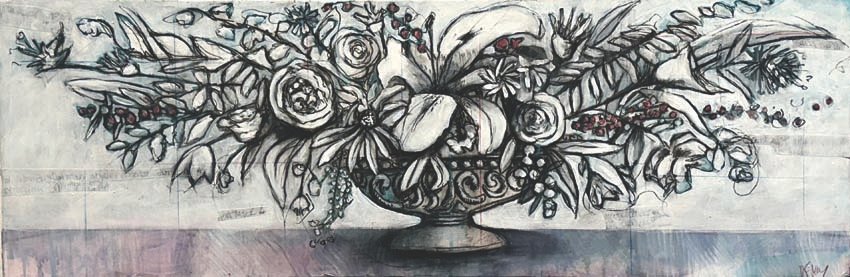
To date, Furey has five completed series. “Small Peops” (2022–2024) is color oil paintings of characters on 10” x 10” or 12” x 12” canvases. “Hidden Lights”(2020, 2023) uses oil and photography to create collages with plenty of subtle imagery to investigate, including clocks and foliage. “Cabaret” (2020–2025) has mostly black-and-white charcoal drawings focused on the interplay of character, and Furey says that these drawings flow right out of her. “Alters” (1997–2022) features mixed media that blends photography and paint, real and abstract, dark and light. And “Miscellaneous” (2020–2024) uses collage but also features characters with more realistic and clearly defined features not found in most of her other pieces.
Since 2010, Furey’s work has been in several galleries in the area, including Foundry Gallery and Touchstone Gallery in Washington, DC, and 49 West Coffeehouse, Winebar & Gallery, Maryland Hall, Circle Gallery, and Annapolis Maritime Museum in Annapolis.
Control plays an important role in her life. Not having control over her family’s financial situation as a child and having to move away from family has been a driving factor in her maintaining a corporate career; she has been intentional about creating a life of stability. When she’s not creating or working, she enjoys riding her bike, gardening, and working out. But the canvas is where she gets to play. It’s where control gives way to freedom and curiosity. She currently paints about three days a week but looks forward to increasing it to a daily practice and working on the next series.