+ By Vicki Meade + Photos by Alison Harbaugh
In 1966, a canvas-topped Land Rover stopped on a dusty roadside in Thiadiaye, Senegal, and out stepped Martin Beadle, an idealistic 22-year-old in blue jeans toting a carpetbag and a duffel bag. Right then, his childhood dream came true. “I always wanted to go to Africa,” says Beadle. “I’d read all about it in books and magazines from the time I was really young.” He was fascinated by the people, animals, and traditions. “When I arrived, I felt like, wow, this is so amazingly real.”
Over the next two years, as the only American Peace Corps volunteer in a town of 2,500, Beadle taught health education and immersed himself in a vibrant world that influences artwork he creates from found objects and natural materials. “All around me, people were making things by hand—clothes, jewelry, tools, baskets, bowls—using cotton, metal, stone, plants, and leather,” he says. “And I loved it.”
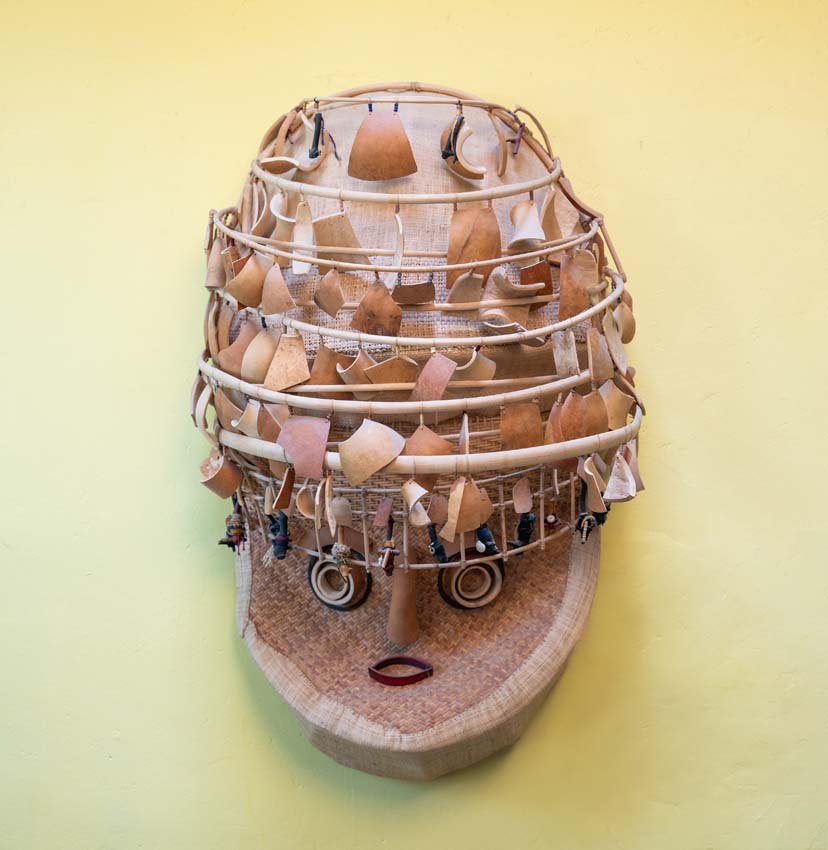
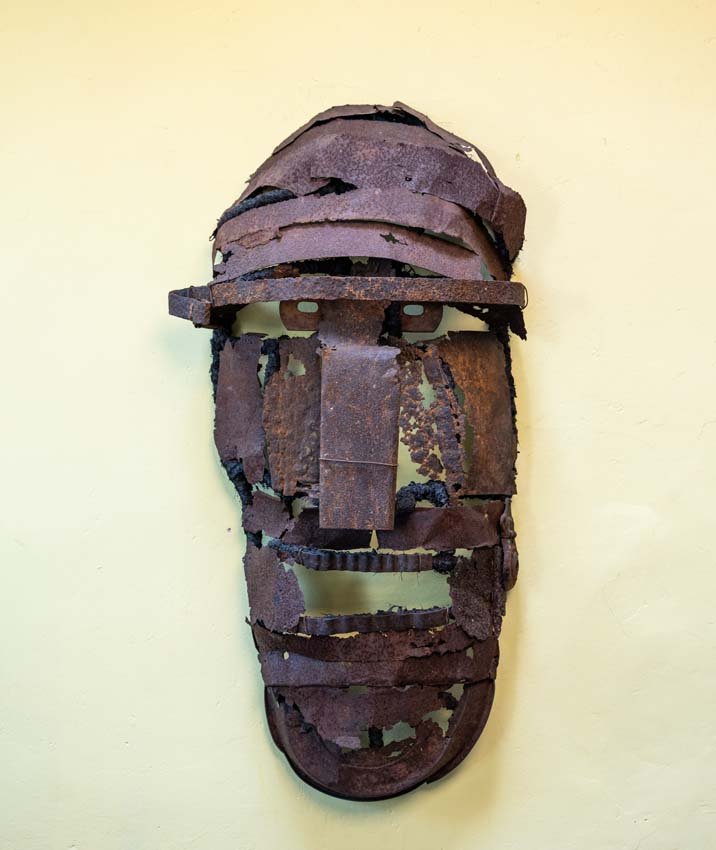
The son of a US Naval Academy linguistics professor, Beadle attended Oberlin College and earned a degree in anthropology, a discipline that echoes his fascination with people and faces, before heading to Africa. He’s always been an observer, intrigued by the way that faces convey messages and emotions. As a child, he made a mask out of wood and papier-mâché and became captivated by the ability of masks to disguise and transform. “Put on a mask,” he says, “and suddenly you’re a lion; you feel like you have its power.”
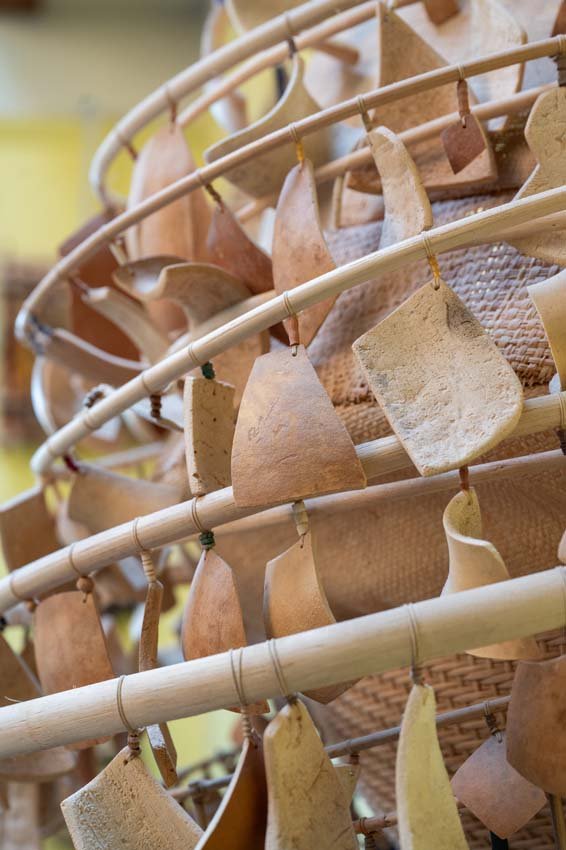
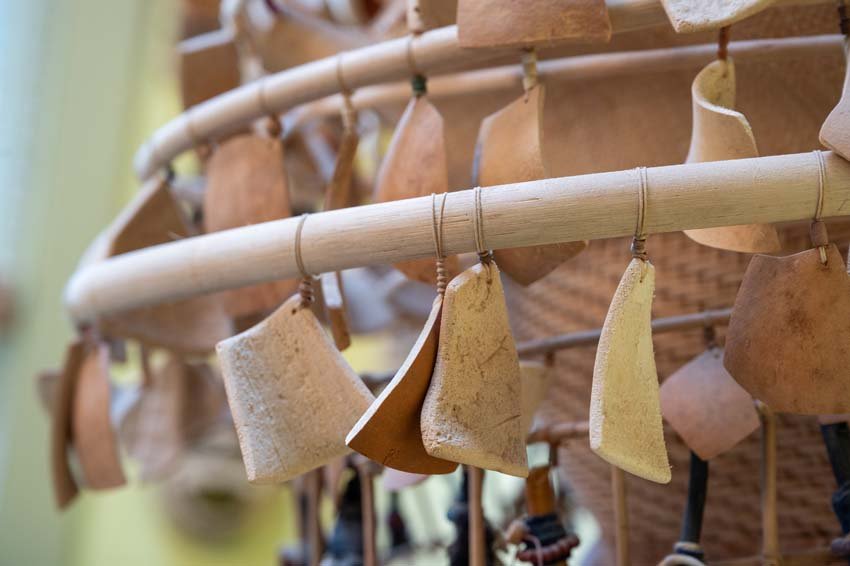
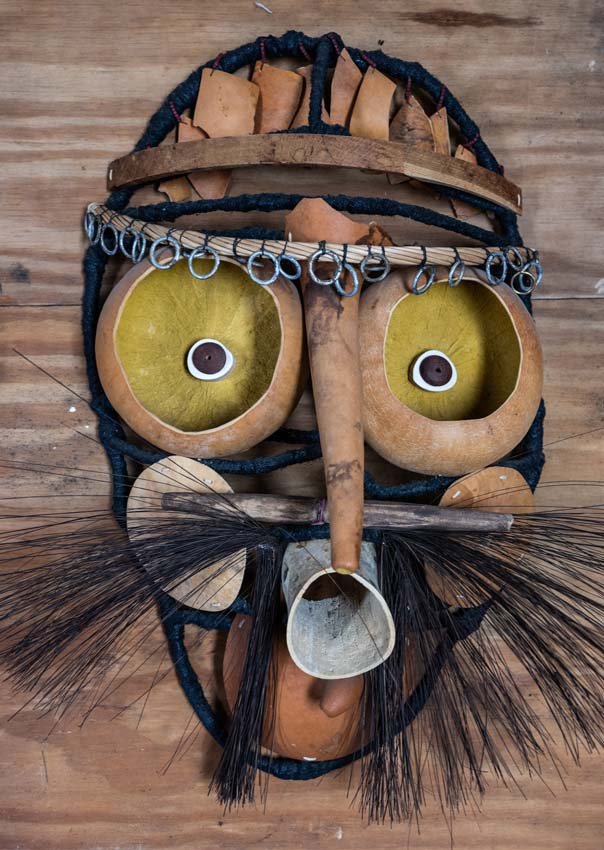
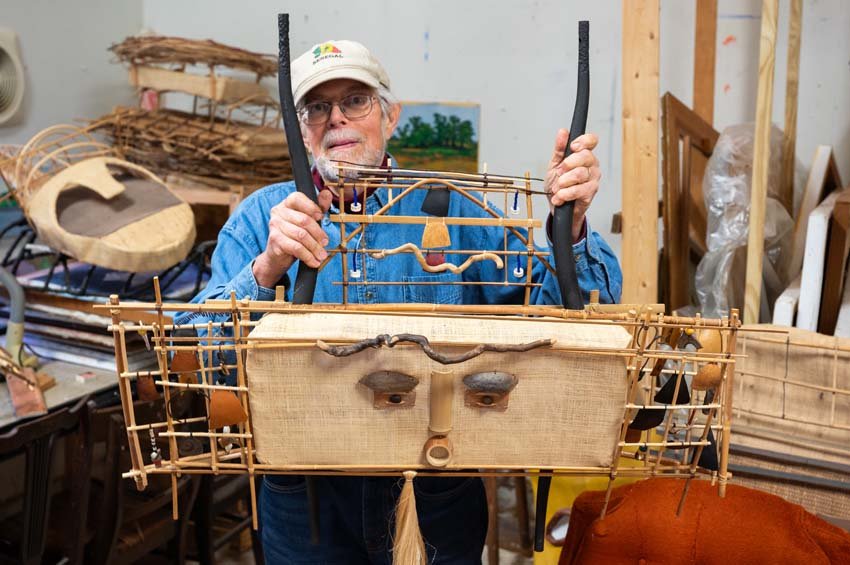
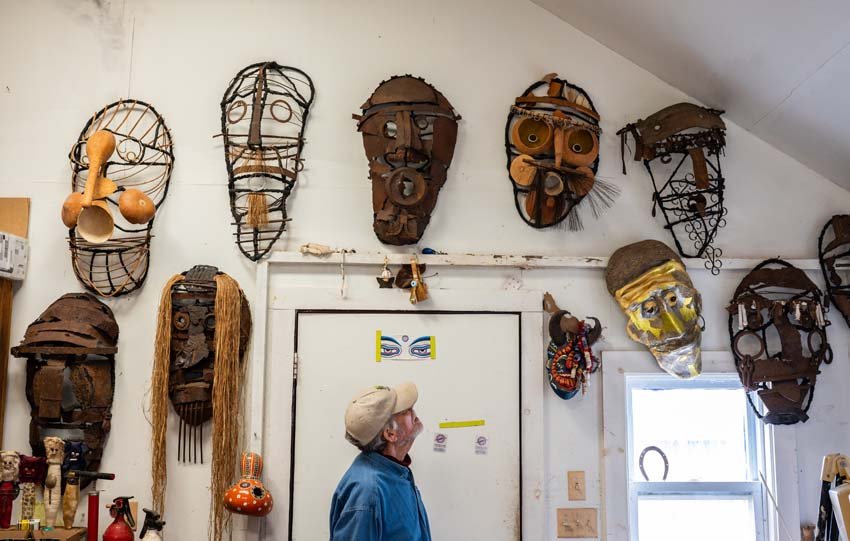
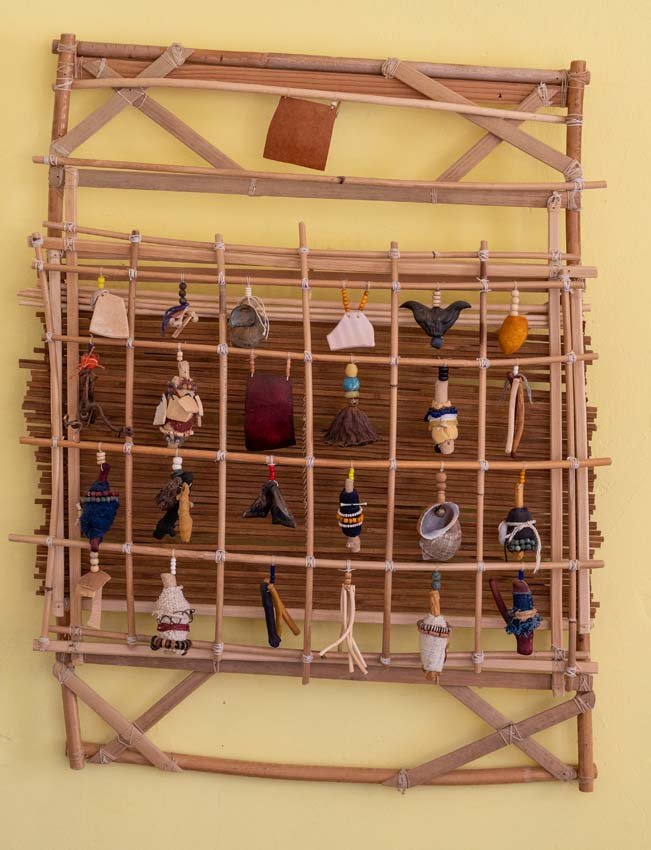
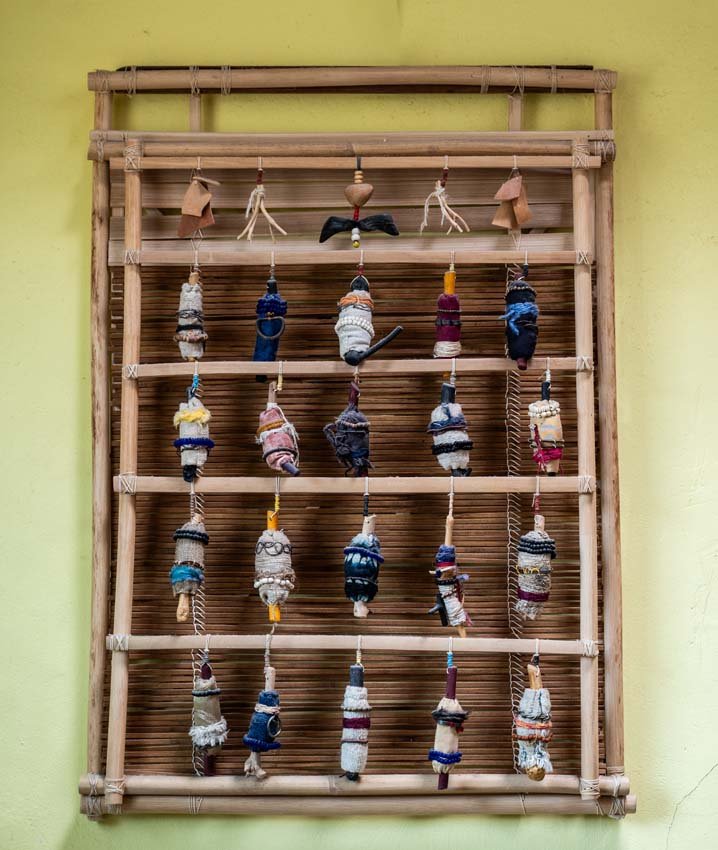
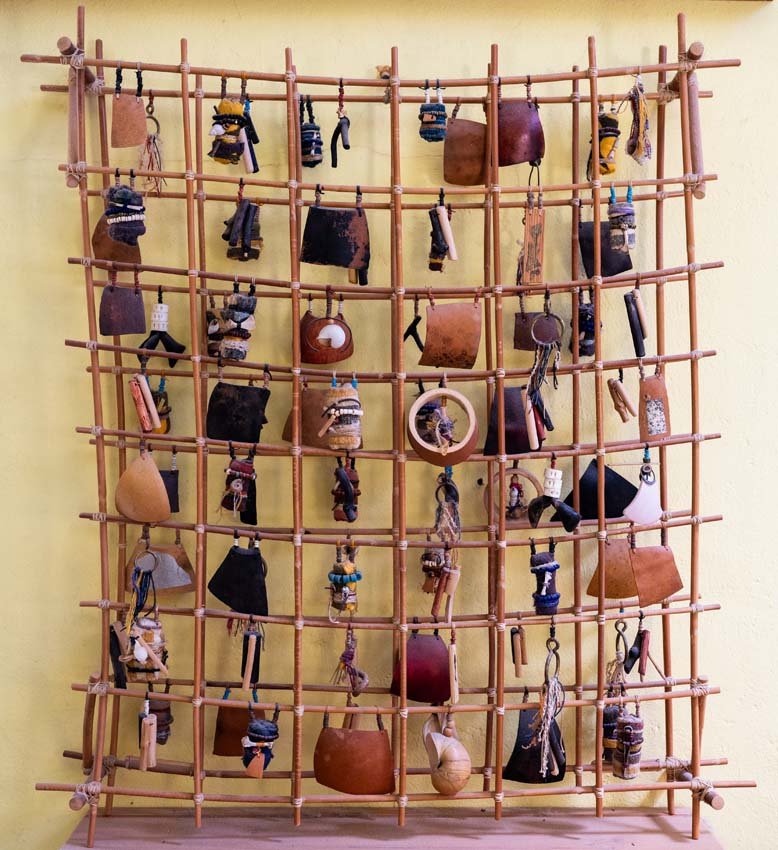
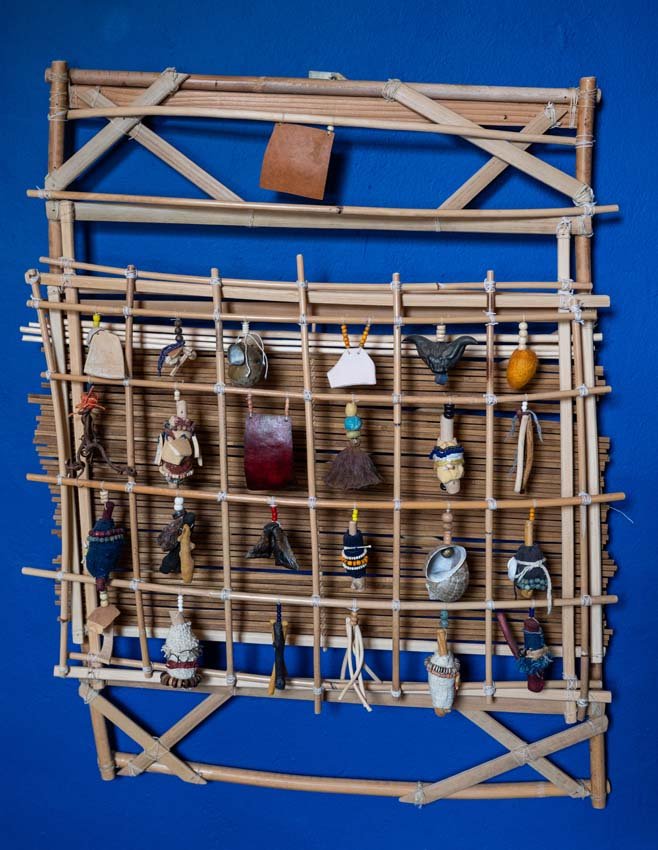
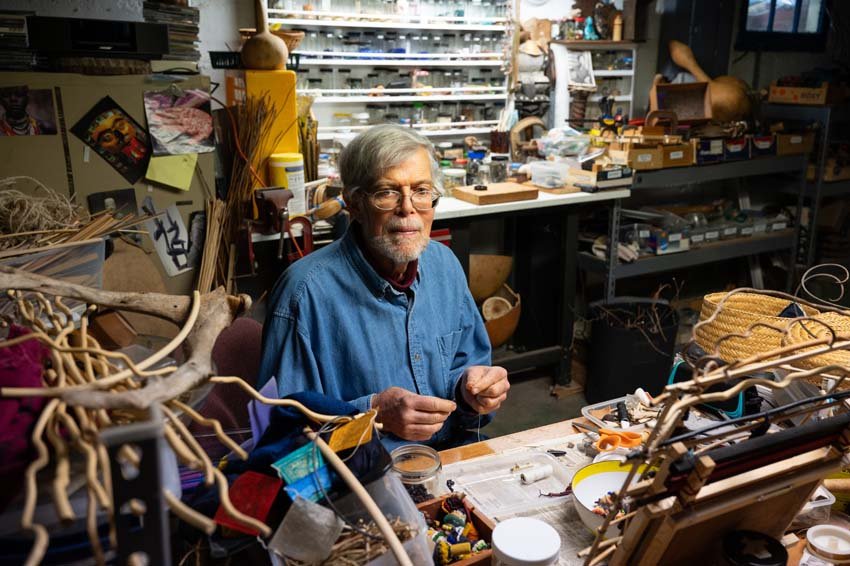
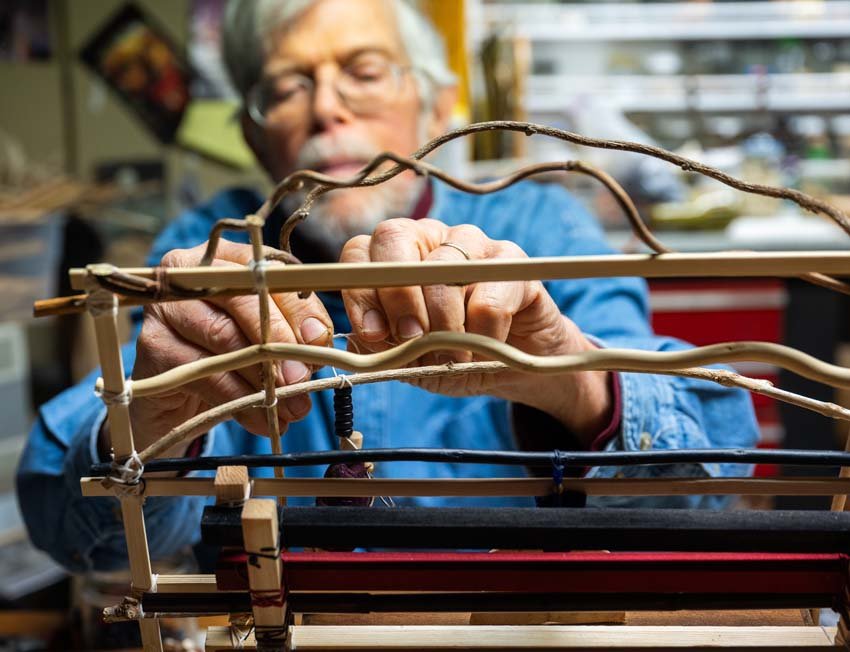
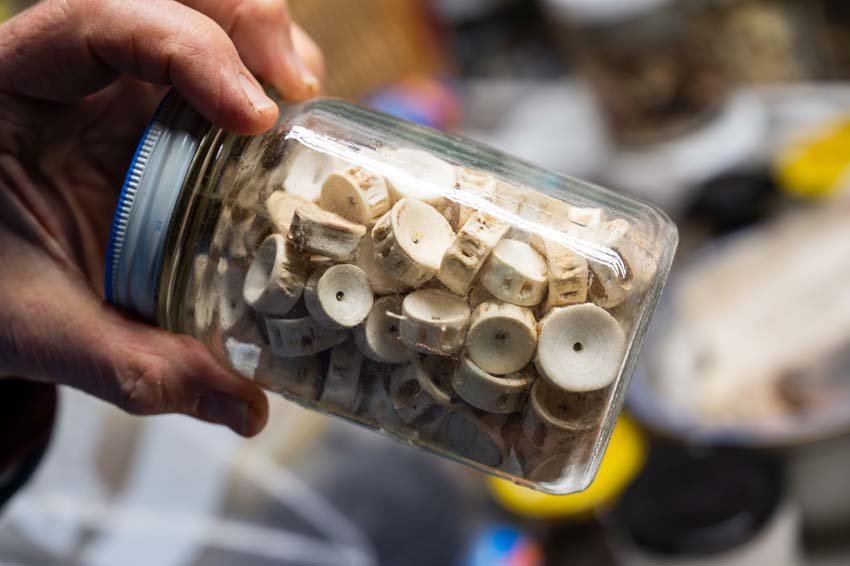
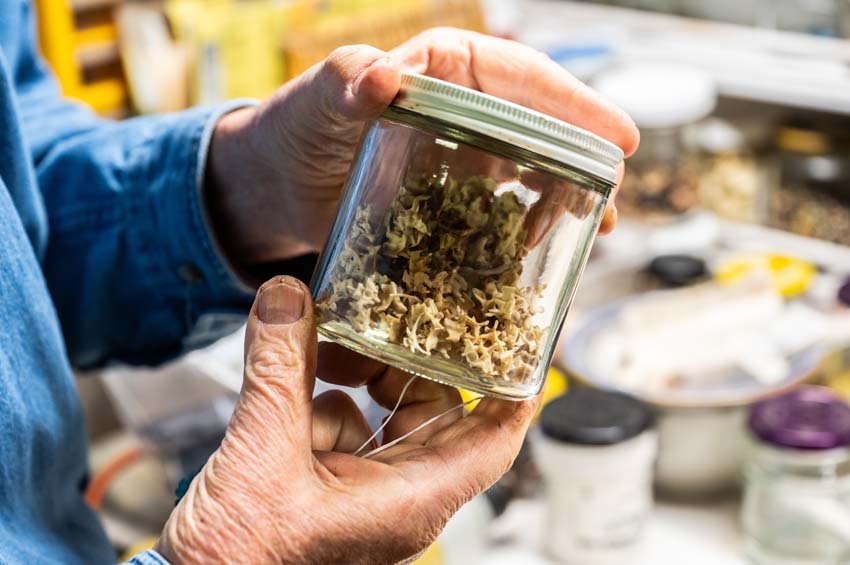
Later, as a fourth-grade teacher at the Key School in Annapolis, Beadle started designing masks out of natural materials and eventually expanded to sculptures and wall hangings. His artworks are built of stones, sticks, seeds, bones, pods, cocoons, shells, and fabric that he gathers and saves, as well as parts of plants that he grows.
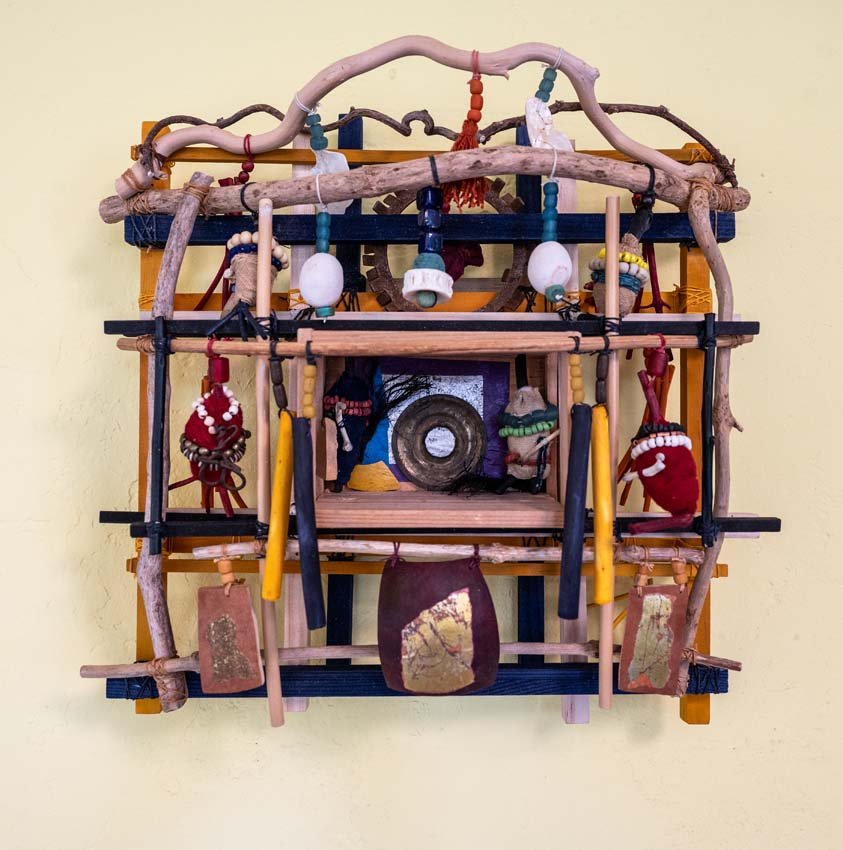
“Since nursery school, I’ve been a collector of things I find on beaches, in the woods, or anywhere,” Beadle says, laughing. “My father thought it was useless clutter, but I saw its possibilities—how it could be put together to make something new. When my work appeared in school exhibits, I felt good that people appreciated it and that my father recognized its value.”
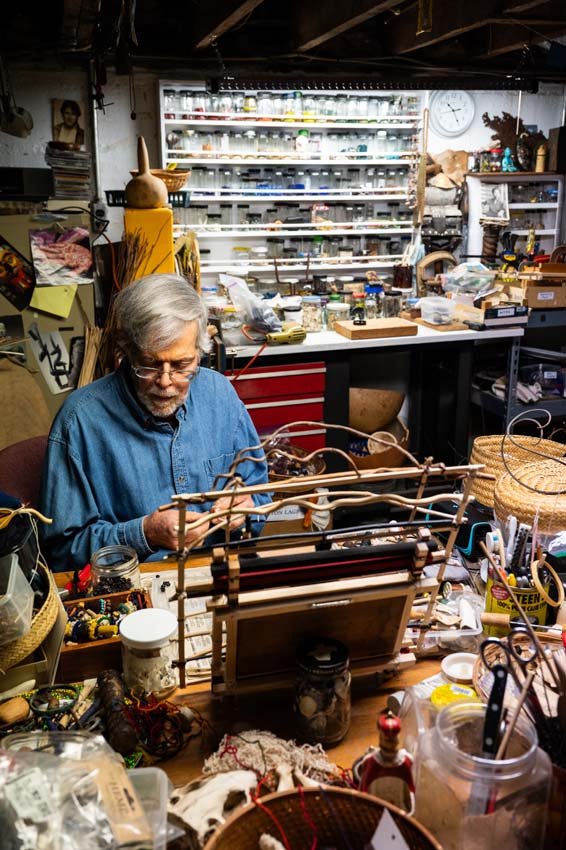
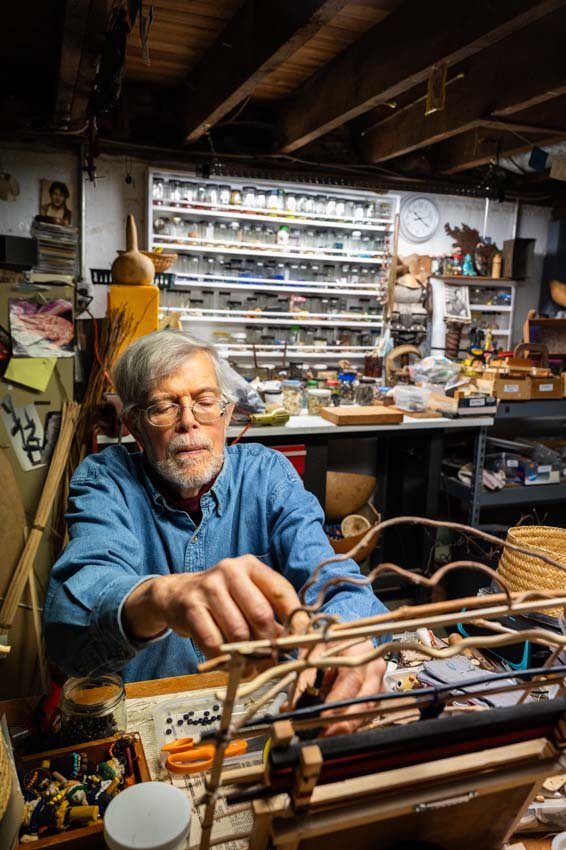
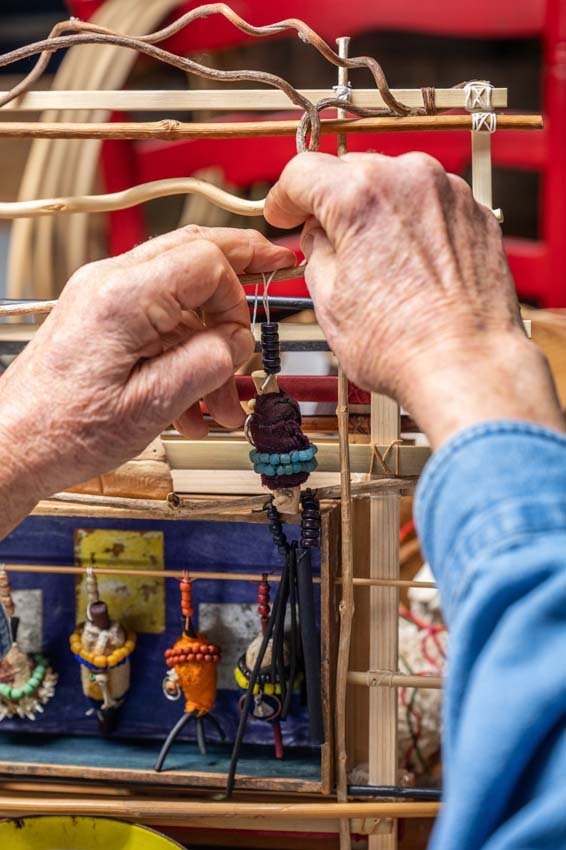
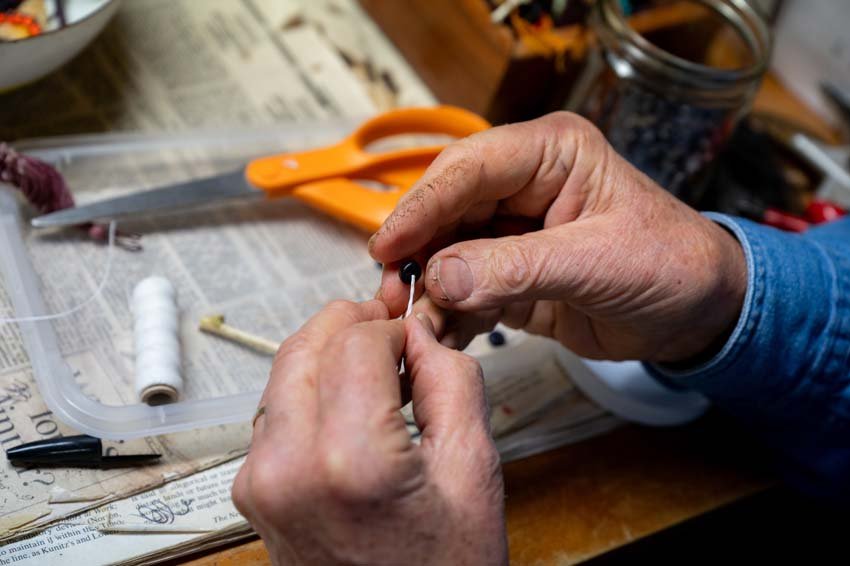
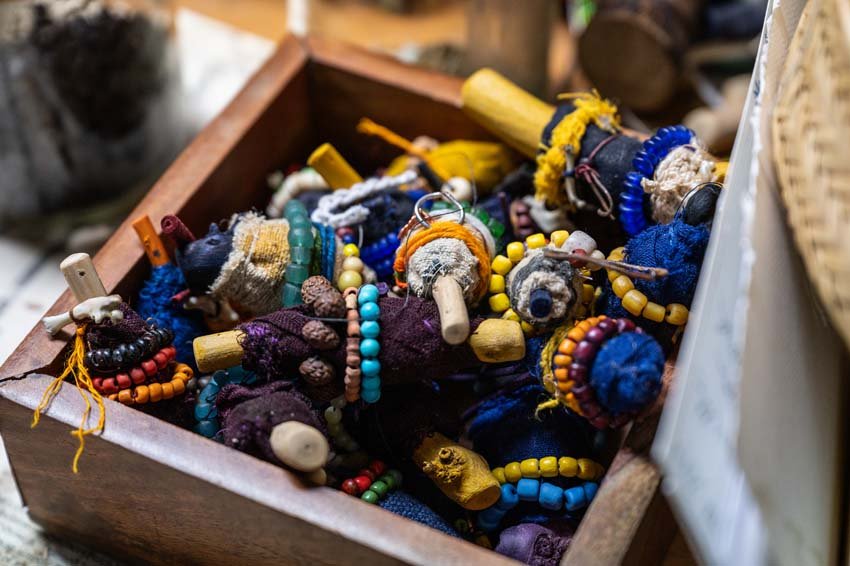
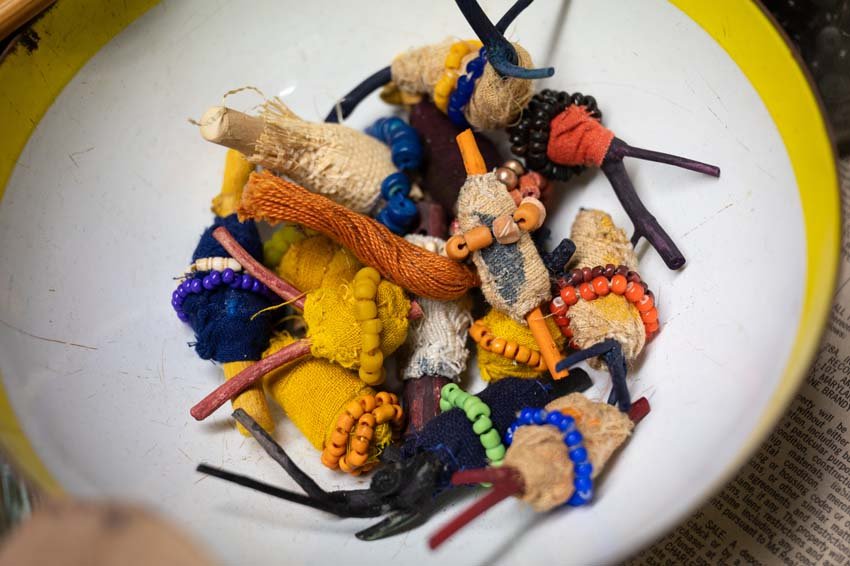
In creating his art, Beadle selects natural objects for their color, texture, and shape, and he combines them in ways that he finds pleasing. His approach is more intuitive than cerebral, even primal. “I put the things out in trays and bowls in front of me,” he says. “I’ll pick up a couple of objects, see how they work together. They might even have been sitting there for years, and suddenly, when I need them, there they are, as if they’ve been waiting for the right moment.” That’s what Beadle calls his creation zone, when particular objects seem naturally drawn together.
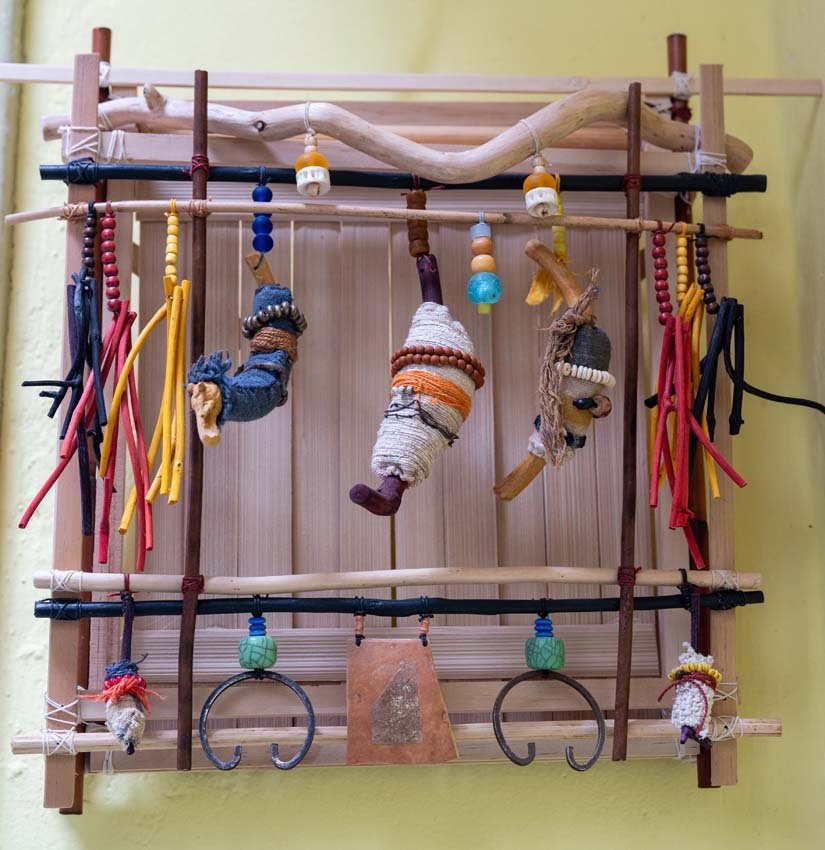
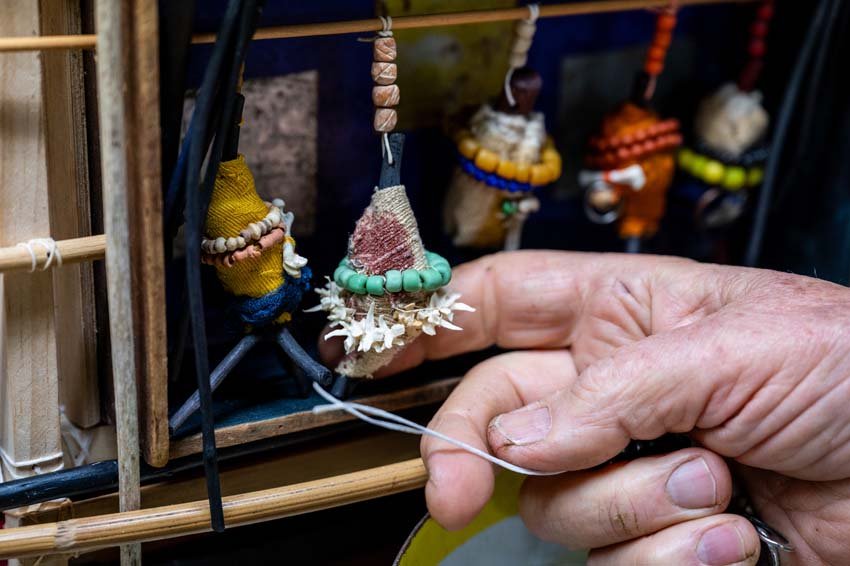
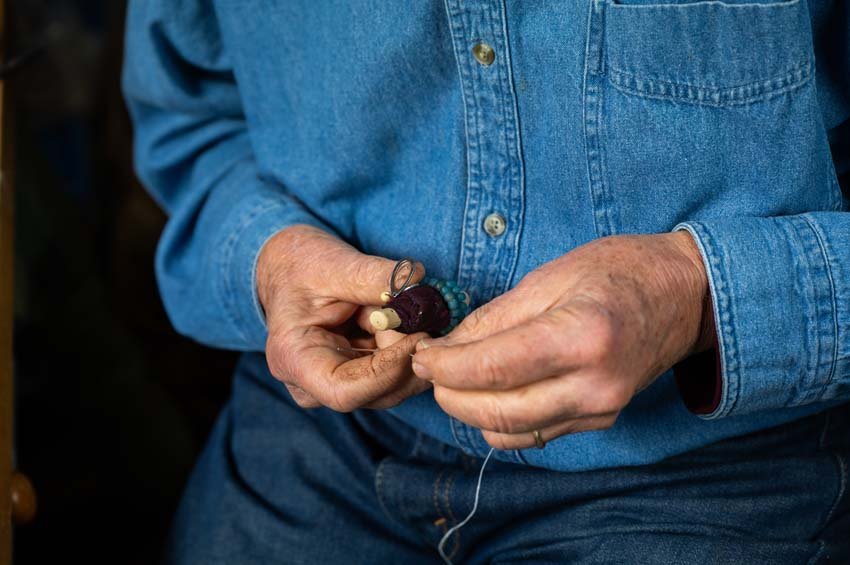
He loves to transform and reshape things by attaching, suspending, or wrapping them. “Maybe it starts out as detritus, something discarded or run over, and I make it into something of beauty and mystery,” he says. He doesn’t try to convey any particular meaning through his art. Observers might see a talisman, or a crowd of people dancing, or a collection of charms, or a rustic high-rise inhabited by whimsical creatures. “People can draw their own truth from what they see,” he says.
Beadle’s experience in Senegal is a key inspiration for his work, but he’s careful not to imitate African art. Instead, his complex pieces convey his sense of Africa’s essence. He’ll always remember the hot, dry, sunny days and bright blue skies; colorful cotton caftans on tall, dark people; roosters running free and donkeys braying; the bustle of daily markets with vendors hawking wares, camels carrying bags of salt, displays of baobab and other exotic fruit; and underpinning it all, the precise clip of Senegalese French and the rhythmic sound of the local Wolof language.
Animism, too, plays a role in Beadle’s art. It’s the ancient belief, prevalent in Senegal before Islam took hold, that things have memories and possess a spiritual essence. “I’m not sure that natural materials have memories,” says Beadle, “at least, not in a spiritual way, but they have their own essence, and we must treat them with respect.”
Another influence, he says, is Alexander Calder, the American artist best known for his mobiles and wire sculptures. “I admire how he took a bunch of junk and banged it all together, and how his artwork hangs and moves freely in space,” he explains.
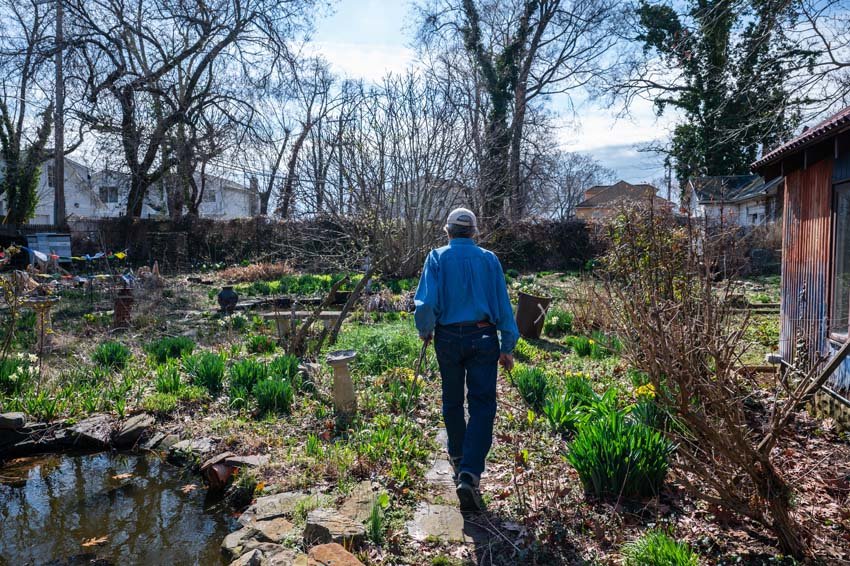
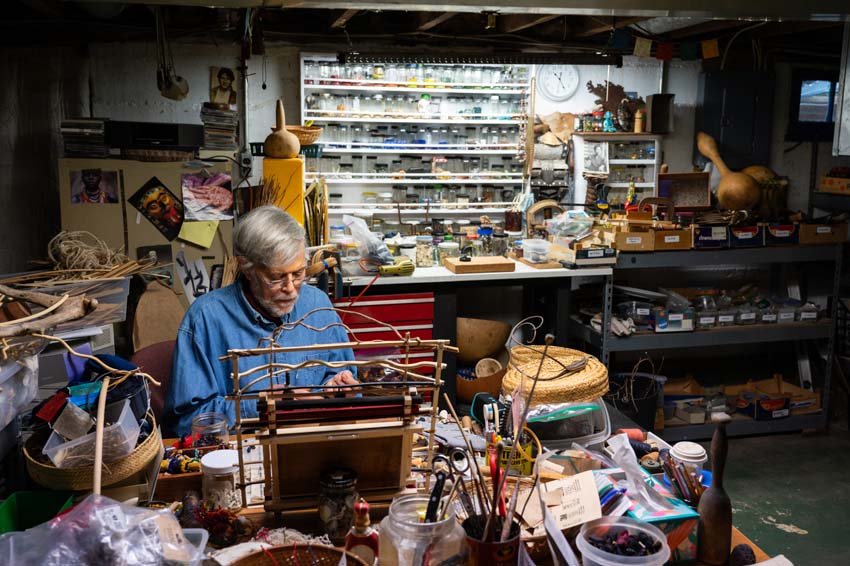
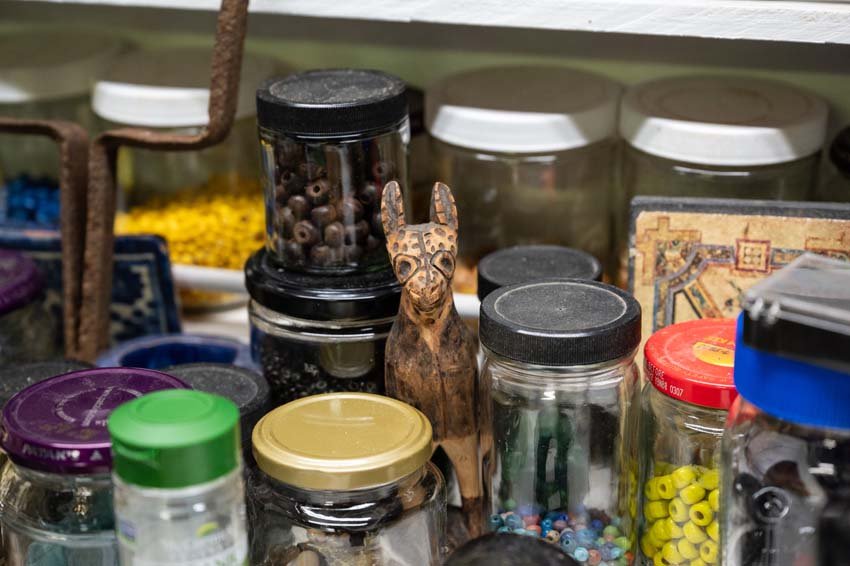
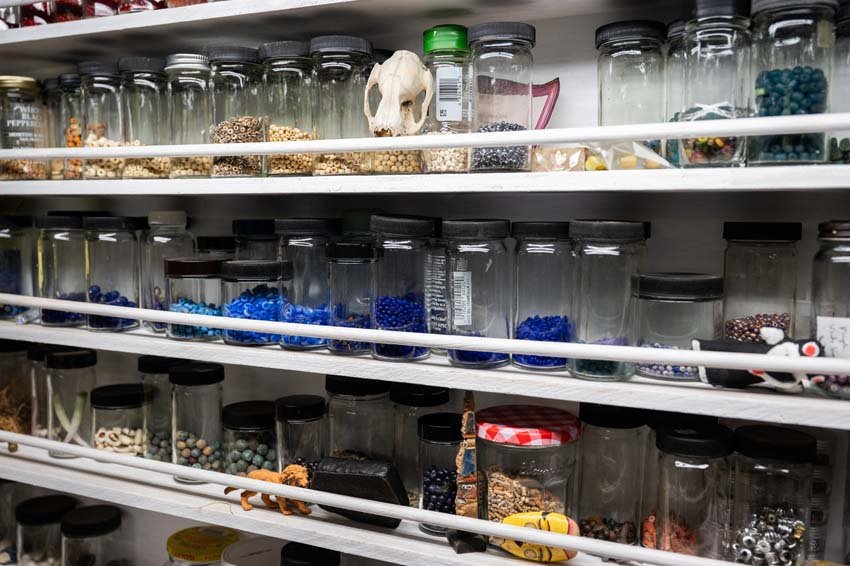
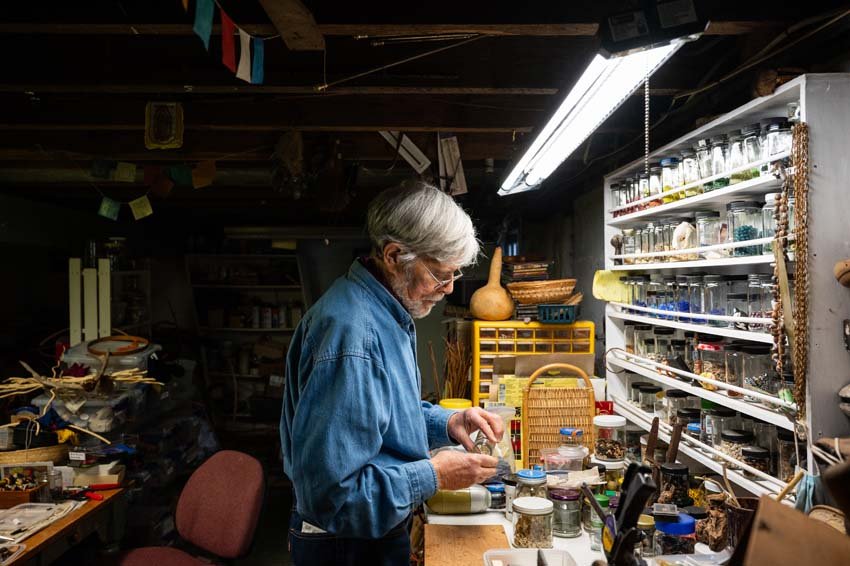
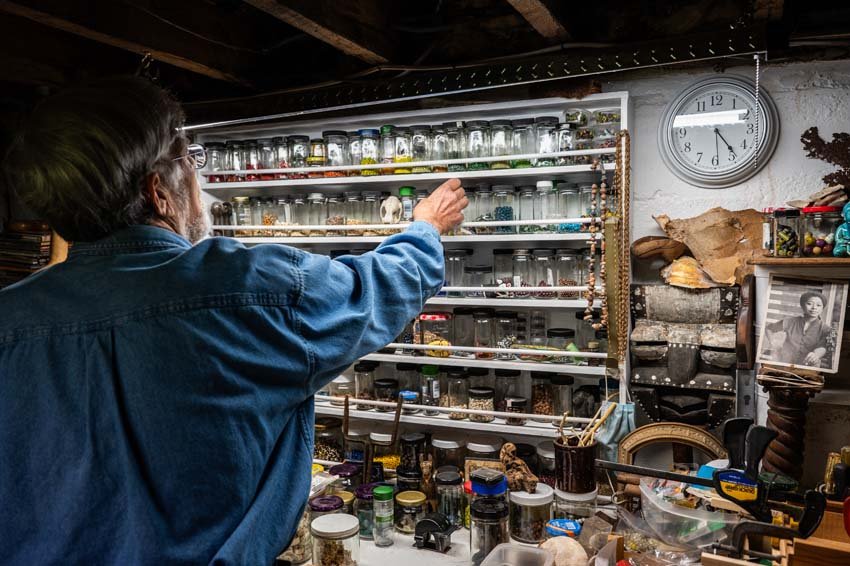
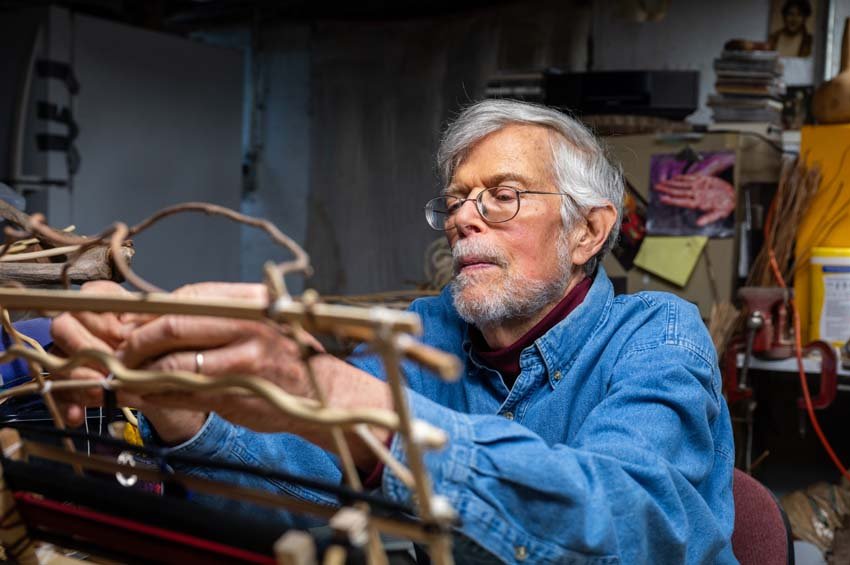
Beadle often works in his Eastport basement, which is crammed with shelves, tables, and bins overflowing with sticks, strings, beads, husks, shells, and pieces of gourd, some of which were brought back from Africa. Sometimes he harvests materials from his lush, unruly garden, where he cultivates flowers, vegetables, herbs, ornamental plants, and honeybees and maintains two goldfish ponds. Next to his house stands a studio that he used to share with his husband, Doug Bowers, an accomplished painter who passed away in 2023. Like Beadle, Bowers spent his professional career in education and formerly headed the English department at Severna Park High School. During their 47 years together, they led a rich, fulfilling life, visiting museums and galleries, seeing friends, and supporting each other’s artistic endeavors. “We couldn’t work in the studio at the same time, though,” Beadle admits, shaking his head. “He liked to listen to classical music while he painted, and I need quiet.”
Beadle’s friend Sylvia Önder, a professor of Turkish and anthropology at Georgetown University, suggests that, in many ways, Beadle’s art reflects his own character. “He’s a careful and caring person,” she says. “He cares about the bees in his hives, animals and children, the people in his life.” She owns three of his creations and appreciates the respect for nature that they embody.
“He makes a lot of bundles,” she says. He wraps and decorates natural objects to transform them into something powerful and striking. “We all collect junk,” she says, “a stone from the beach or a seashell. Then we say, ‘Why did I save this? What does it mean?’ If you make a bundle out of it, you’re paying attention to it. You’re preserving it, you’re turning it into something precious, instead of throwing it away.”
Just as Beadle’s experiences in Africa have enriched his years, his art enriches natural objects that have been overlooked or discarded, giving them a new and beautiful life.
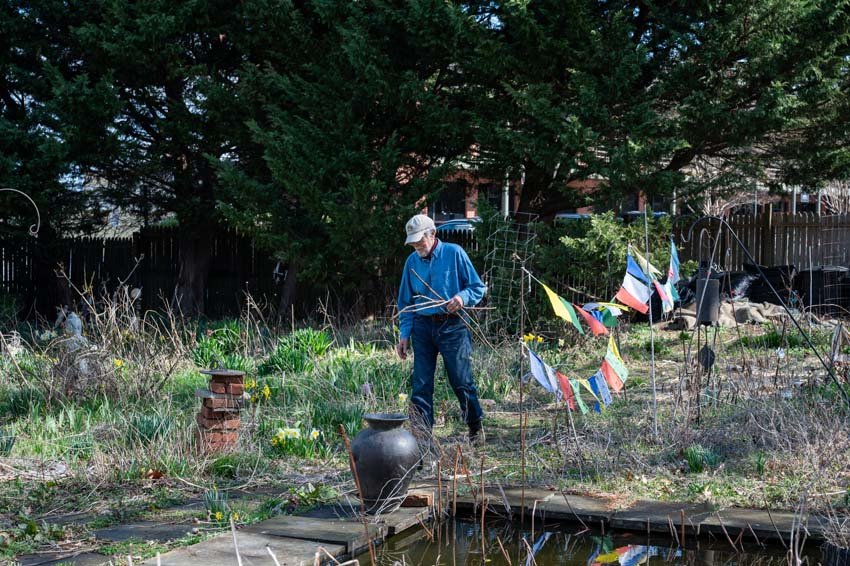
Photo by Alison Harbaugh