+ by Jeff Muller + photos courtesy of Chris Haley
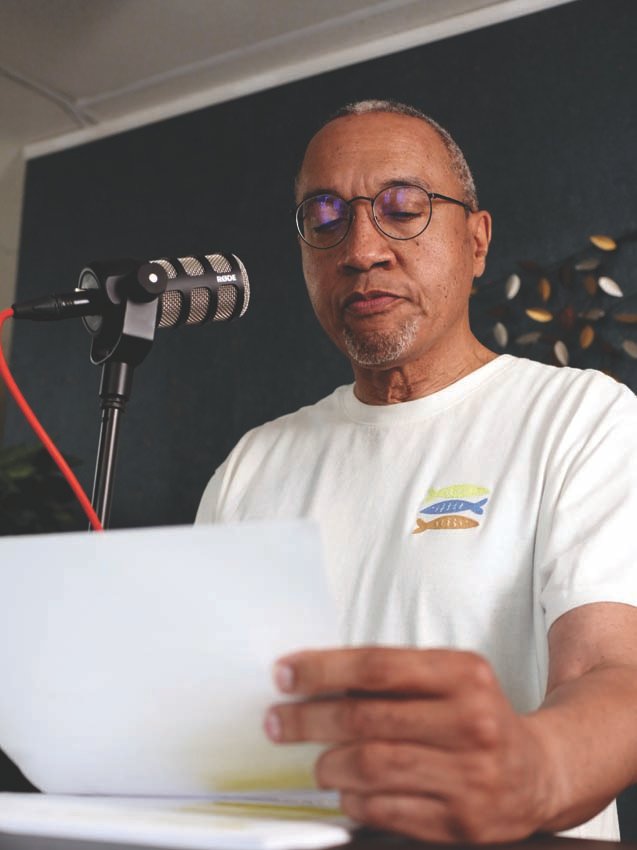
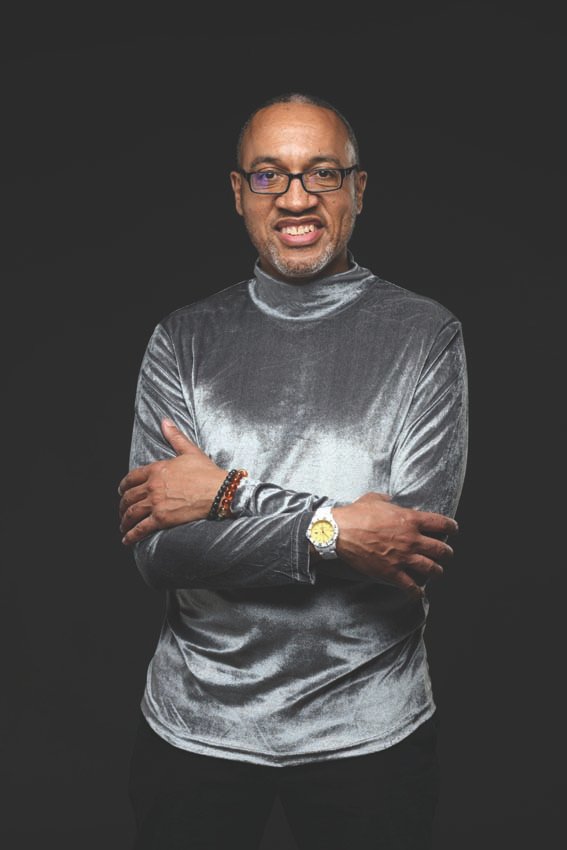
Sitting with Chris Haley in the backroom of 49 West Coffeehouse, Winebar & Gallery in Annapolis on an early summer day, it is apparent that he is a man of many ideas and constant motion. Both spirited and unassuming, he displays a combination of curiosity, reflection, and insight that have served him well in his many endeavors. He is an archivist, genealogist, historian, actor, singer, producer, director, writer, speaker, administrator, podcast host, and board member. With each passing year he seems to add a new line to his resume.
The son of author Alex Haley’s youngest brother, Julius—an engineer for the David W. Taylor Naval Ship Research and Development Center—and Ida—who worked in the Recorder of Deeds office in Washington, DC—Haley is carrying forward the family’s legacy in many ways.
Born in Washington, DC, Haley spent an idyllic childhood in Takoma Park, Maryland, with his parents and older brother, Alan. He describes these years as happy and classically American, growing up with family pets in a house with a big backyard. While he enjoyed the same types of activities as most children, such as playing baseball, riding bikes, and reading comic books, there were three seeds that would root and grow as the focal areas of his life.
The first seed was his love of writing, which grew out of his fondness for comics. From as early as he can remember, Haley would write and illustrate his own stories, stapling pages of loose-leaf paper together to create a comic book. In high school, his writing would further develop as he added short stories and a one-act play to his growing portfolio.
The second seed was his love of acting, which he discovered at age nine when he was asked to perform in a Thanksgiving play. Around the same time, he sang an a capella version of “Take Me Out to the Ballgame” at a talent show at the Takoma Park Community Center. The feeling of being on stage and bringing stories to life before an audience thrilled him, and for several years this would be his focus.
The third seed was his love of history, planted by his paternal step-grandmother, Zeona Haley. When Haley was nine, his grandmother bought him a book called A Pictorial History of the Negro in America. “I was fascinated to see all these Black faces, because at that point I was only aware of Frederick Douglass, Harriet Tubman, and George Washington Carver. In this book, there were all these other people who looked like me. From that point on I was fascinated with learning more.”
Haley was also influenced by “Uncle Palmer,” the family’s name for Alex Haley, referencing his middle name. He visited whenever he was in town. Although Haley knew that his uncle was a noted writer, Haley was then too young to get into any deep conversations with the elder Haley. It was only later that Haley wished he had asked his uncle about interviewing Martin Luther King Jr. and Malcolm X. However, when the Roots miniseries came out, Haley was old enough to understand the event’s cultural significance. “I had a sense of nervousness because it was about my family. It was almost like a dream, because this was huge, and it made our family name widely known,” he shares. Haley was also beginning to experience both the advantages and the added scrutiny that comes with having a famous family member, something that persists to this day.
After graduating from Archbishop Carroll High School in Washington, DC, then earning a bachelor of arts in English with a minor in theater from the University of Maryland, Haley decided he wanted to pursue acting as a career. For a decade he did local theater in Maryland, then Connecticut, and later Florida. There he worked at Universal Studios Florida as part of the “fire department,” a group of actors who were on-call understudies for every show in the park. Along the way, he wrote both poetry and short stories but had yet to return to his love of history and genealogy.
That changed in 1993, when he decided to leave Florida and return home. The previous year, Alex Haley had died. With his passing, Haley took up an interest in exploring the genealogy on his mother’s side, which was yet undocumented. Initially, he saw that as both an area of personal interest and a means to an end, as he wanted to develop research skills he would need to write about some notable figures in the entertainment field, including Marvin Gaye, Sam Cooke, and Jackie Wilson. “The history was going to reinforce and support my further dive into the arts. And then it just ended up that I stayed here for 30 years with my focus now more on genealogy and history, with acting shifting to the background,” says Haley.
This transition happened following a series of introductions, first to former archivist Phebe Jacobsen—who in 1967 had helped Alex Haley determine that his ancestor Kunta Kinte landed at City Dock—and then to Maryland State Archivist Edward Papenfuse, who offered Haley a job. While he started as a phone reference archivist, Haley would go on to be appointed as the director of the Study of the Legacy of Slavery in Maryland program at the Maryland State Archives. “The program is about bringing to light those individuals who have been totally forgotten or diminished,” he says, “However much we can build the database and make it accessible to anyone, I feel really good about that. If I’m in any way following in the footsteps of my uncle, then it’s in that. But it also reflects on my grandmother Zeona, who gave me that book years ago.”
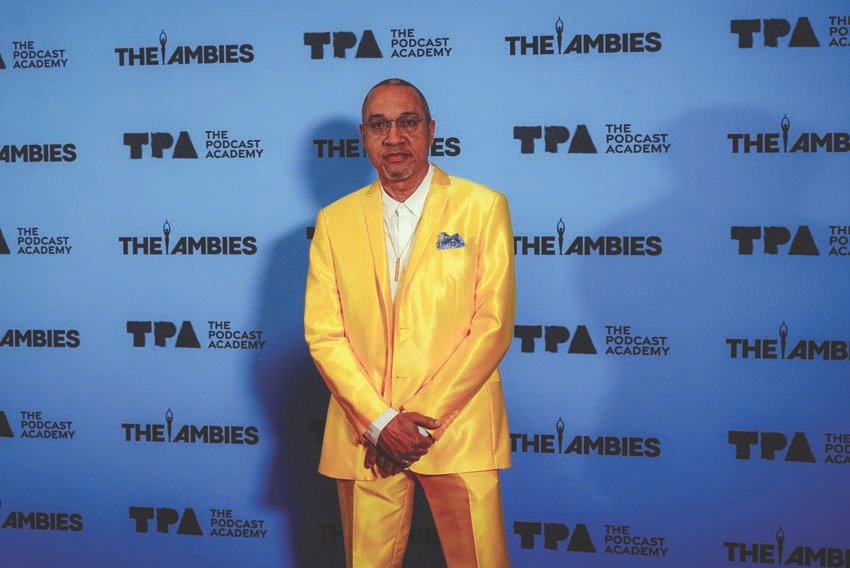
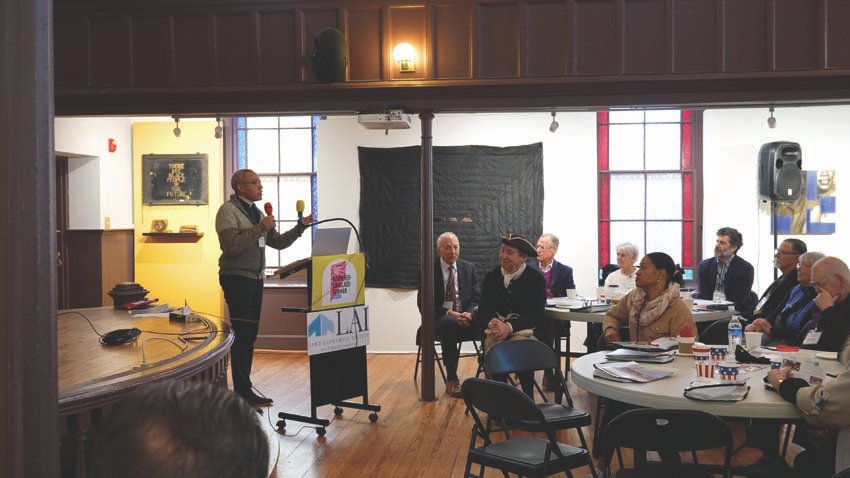
His family history, along with his role at the State Archives, led to two of Haley’s additional roles as speaker and speechwriter. In 2001, he wrote and delivered his first speech when he was invited by the University of Arkansas at Pine Bluff to speak at an event honoring his grandfather Simon Alexander Haley, who had been dean of the agriculture department. More speaking opportunities followed, including many at archivist events and genealogical gatherings. Haley is currently finishing a book that collects 20 of these speeches along with reflections on each.
Haley’s backgrounds in entertainment and history came together in his role as archival expert and co-director with Brad Bennett for the documentary film Unmarked, which tells the story of neglected African American burial sites from Virginia and the South and the efforts—both needed and under way—to protect them from disappearing from history.
Another role these myriad experiences begot was as host of the award-winning podcast The People’s Recorder, which explores the legacy of the 1930s Federal Writers’ Project, tracing how Depression-era writers documented American life and examining how those historical narratives echo in modern society. Haley was first invited to participate because he had worked with the producers of the podcast as an actor in another venture 20 years prior, and because of his work on Unmarked, which was thematically similar to the initial episode he was to participate in.
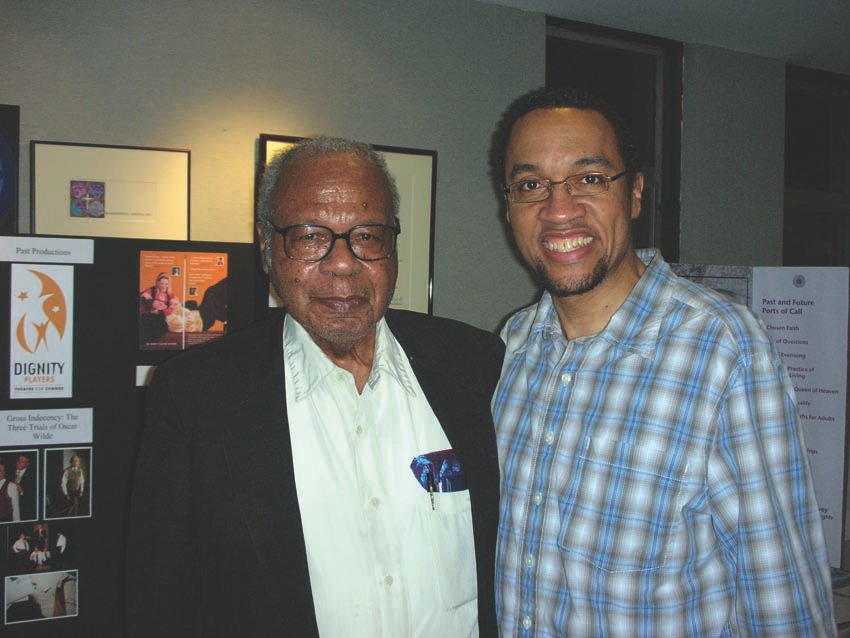
Even as he has delved deeper into the worlds of genealogy and history, Haley never abandoned his love for acting and the arts. This includes writing, acting, and directing several short films, performing with The Colonial Players and Dignity Players theater companies, and serving as the executive director of the Utopia Film Festival in Greenbelt, Maryland.
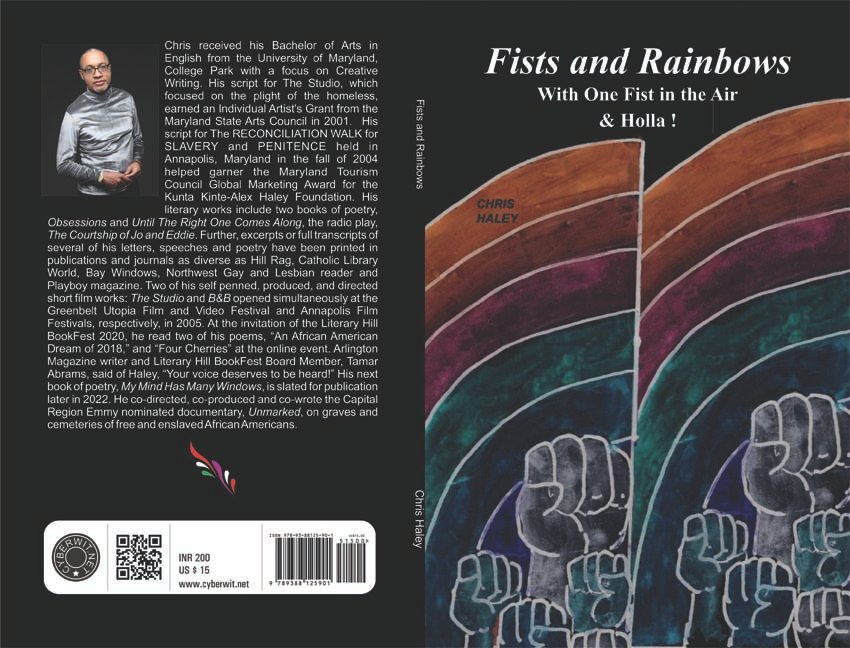
He has also leaned into his artistic side through poetry, publishing seven volumes with another in the works. In his poetry Haley has explored various aspects of who he is, including explorations of what it means to be gay. “Some of my poetry questions what the point of differentiating people is,” he adds. “I address that the thoughts or concerns or passions of a gay person are no different from those of a straight person.”
Along the way, Haley has also been invited to participate as either board member or advisor for organizations including the Kunta Kinte–Alex Haley Foundation, Historic London Town Foundation, Jake Savage Foundation, Annapolis Arts Alliance Foundation, Annapolis Pride, Compass Rose, and the Annapolis Film Festival. His prodigious output has also led to Haley winning 10 awards across multiple disciplines.
With his best years still ahead of him, Haley believes he has much more to contribute. For now, he’ll continue to turn historical fragments into living narratives that resonate in the present day. █
For more information, visit chrishaleyspeaks.com.
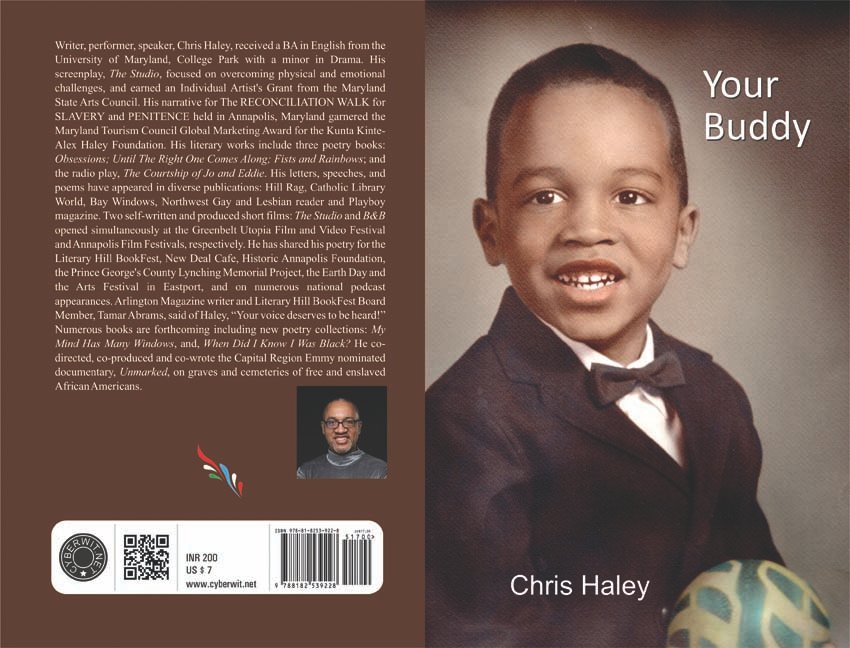
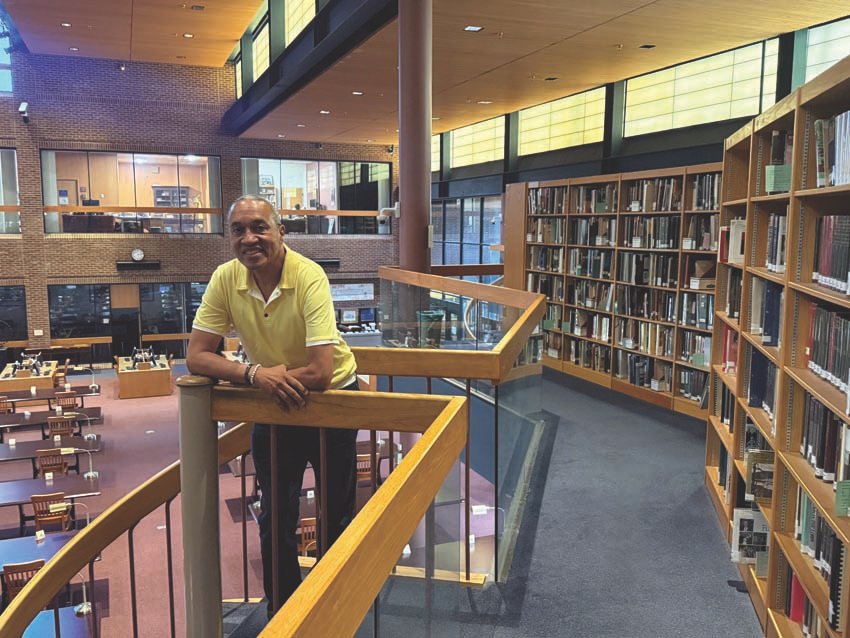
Photo by Jimi Davies
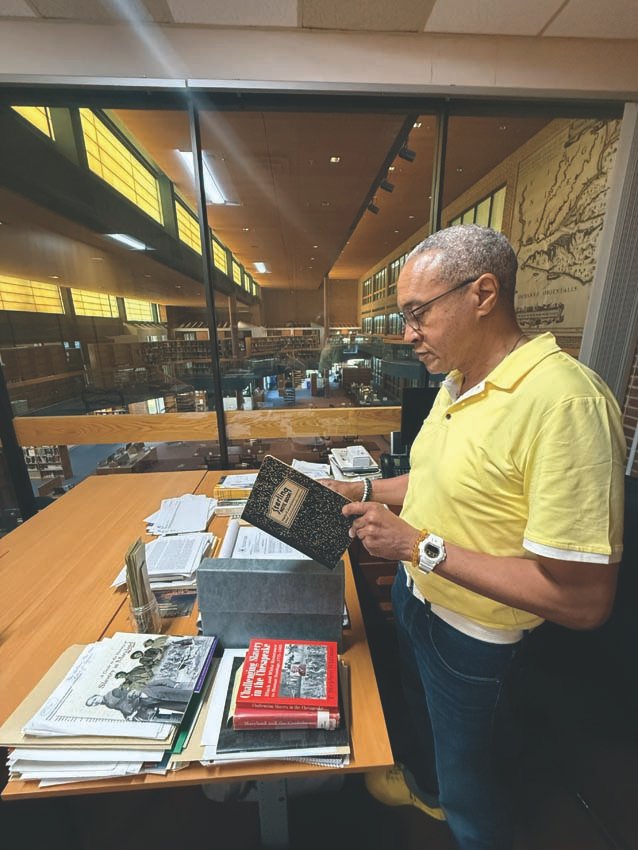
Photo by Jimi Davies