+ by Christine Fillat + photos courtesy of Austin Paul Geithner
A gentle breeze sends the porch wind chimes tinkling, chickens scratch about the yard, a collection of honeybees zoom in and out of their hives, and a cozy kitty cat lazes about the house. This is Austin Geithner’s world, in bucolic Dundalk.
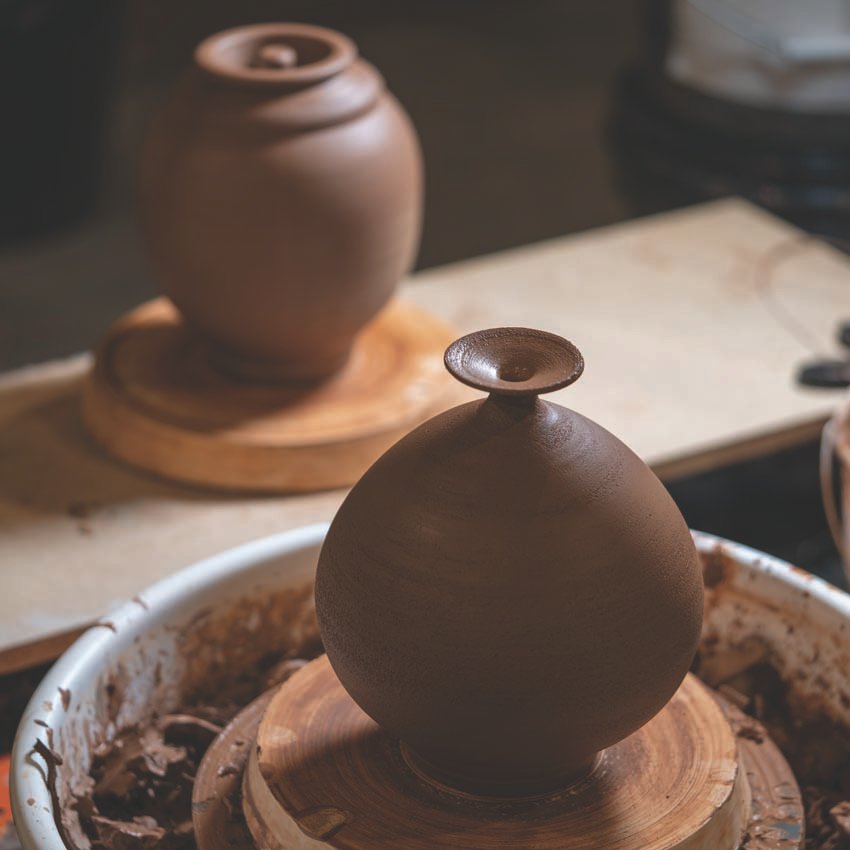
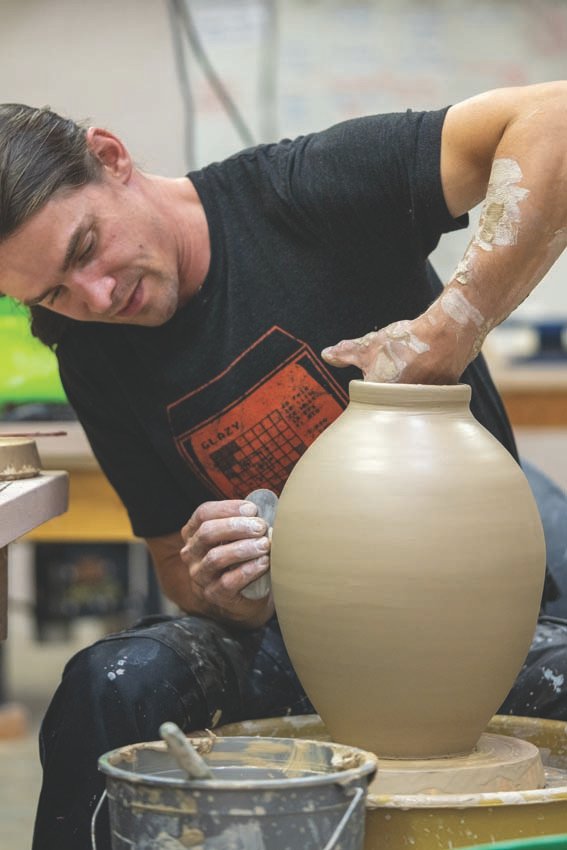
What goes on in the house is just as dynamic as what goes on outside. Geithner is a ceramicist and a musician. His basement serves as his studio workshop where he makes pieces for the kitchen and table. It’s where he throws clay and mixes glazes as well as creates sounds with his drum kit, percussion instruments, and synthesizer.
For his day job, Geithner is a project manager for Klassic Sound & Stage, an event production company. The job has an atypical work schedule and he can clock in at all hours. “Working in entertainment is something I have been doing for a long time,” he says.
He grew up in Arnold, where he made sculptures from whatever car parts his father left lying around. At eight or nine years old, he went to art camp at Maryland Hall for the Arts. One of his vivid memories is using pastels on sandpaper and burning his hands on the rough surface.
Another time, young Geithner ordered a cup of tea at the Maryland Hall café. He had asked the baristas to give him whatever they liked. They poured him a cup of lapsang souchon black tea. “It tasted like a bonfire,” he recalls. Having never tasted anything like that before, Geithner discovered his lifelong love for tea.
After discovering his penchant for strongly flavored tea, Geithner developed an interest in making music: initially percussion, followed by an adolescent foray with the guitar. “The drums felt more intuitive,” he states. “Drums and percussion have been the easiest instrument for expression to translate complex emotion. Drums are almost visceral. They are the conductor. Drums can change the dynamics of the other instruments.”
In his teens and into his 20s Geithner played the drums with several local bands, including Mojo Bozo’s Electric Circus and Lost Child, among others. They would perform at Fish Head Cantina, Joe Squared, Metropolitan Kitchen, Ottobar, Rams Head Live, and Zen West.
Geithner’s last major gig was in 2019. At the end of that year, his mother signed the two of them up for a ceramics class at Chesapeake Arts Center. “I remember that first class so vividly. Everything felt so intuitive. I felt like I was where I belonged. I was so curious, and it just got hold of me, so I just ran with it,” he says.
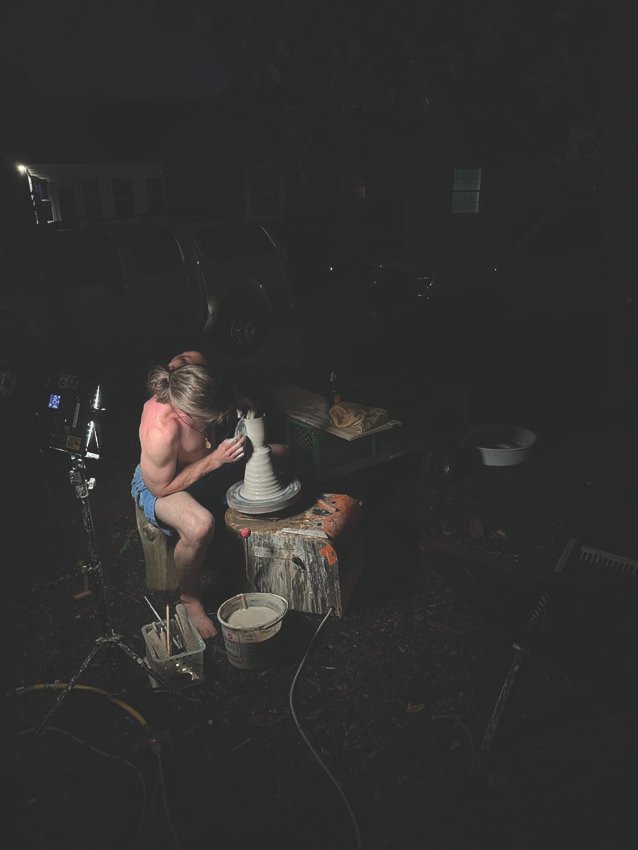
Geithner became acquainted with the materials and the processes and outfitted his home with all the art accoutrements necessary to make objects out of clay. And then the pandemic hit. As difficult of a time as it was for him to maintain musical momentum, Geithner’s ceramics practice picked up steam as he honed his craft at home. Then, when the pandemic waned, he found numerous avenues to teach and become involved in the ceramics community.
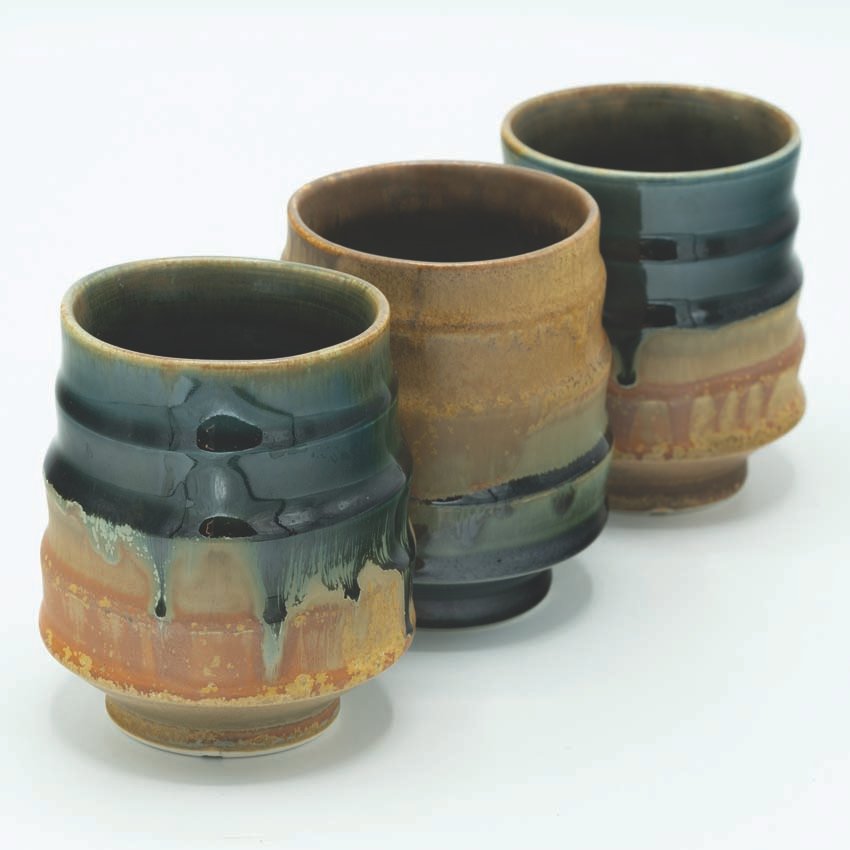
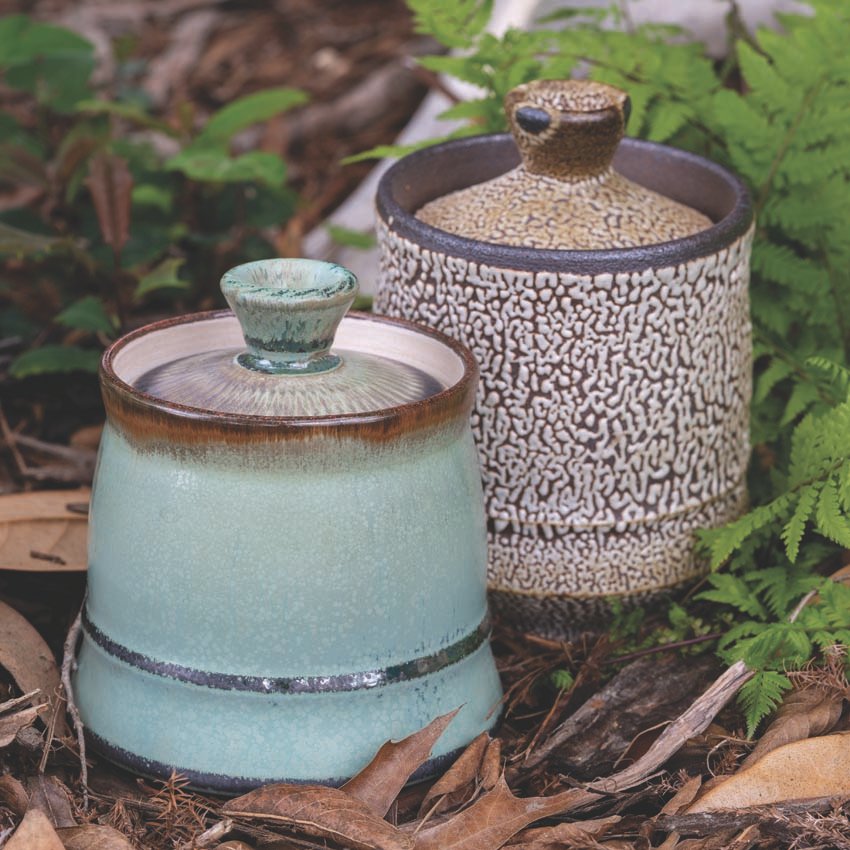
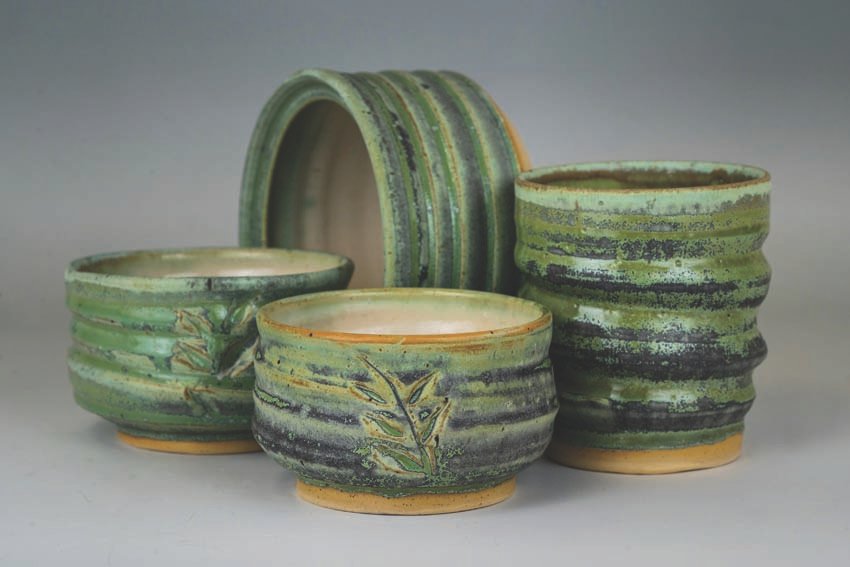
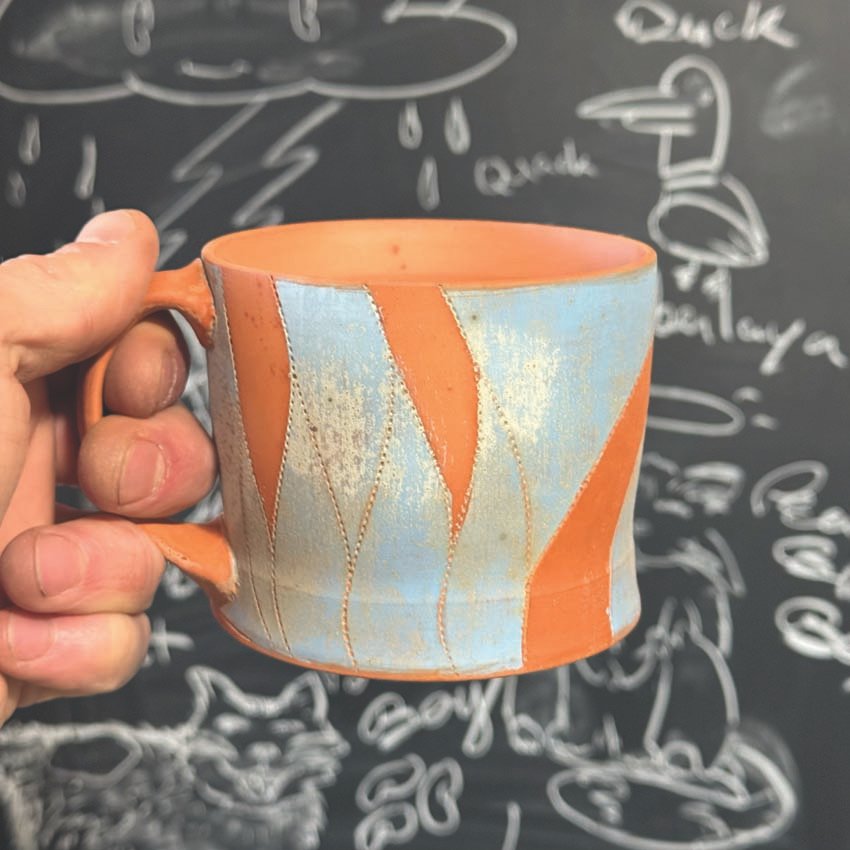
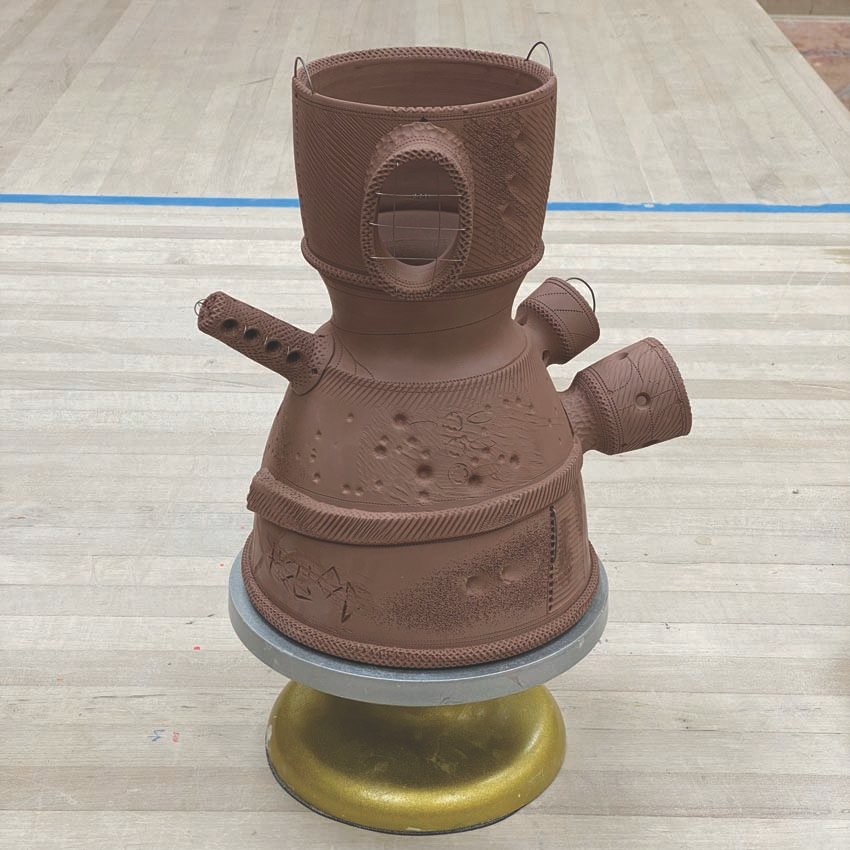
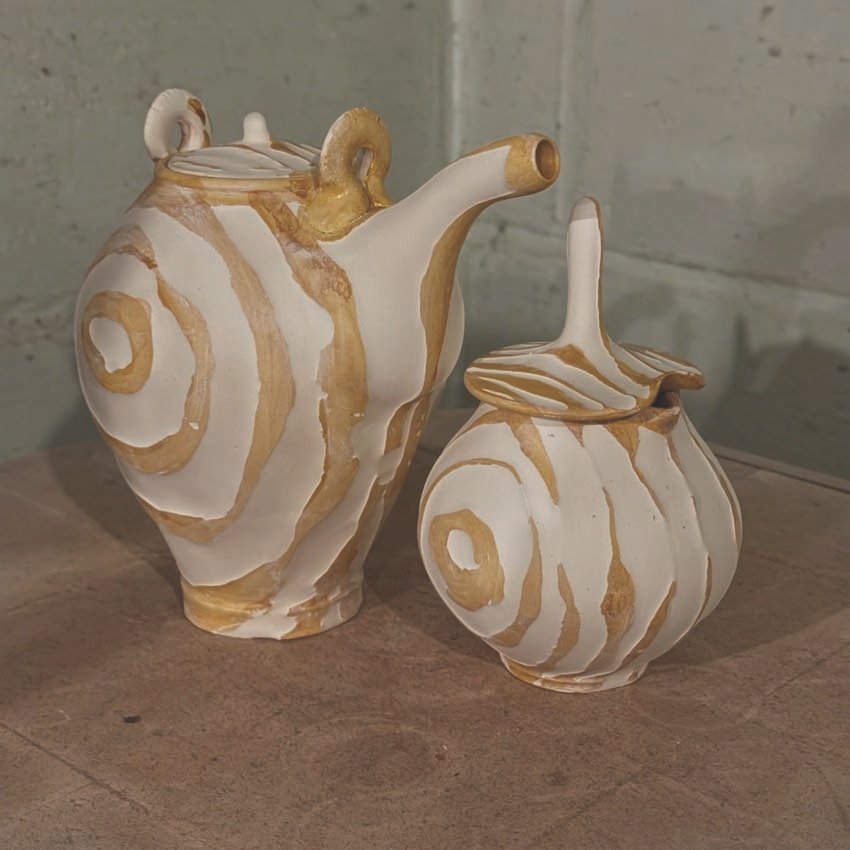
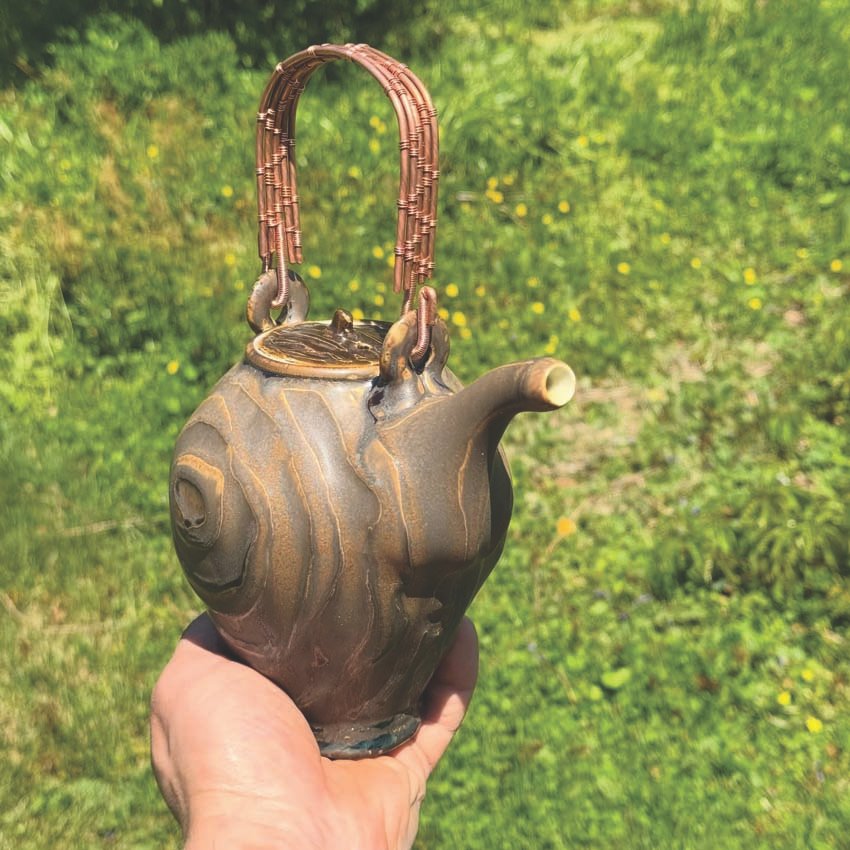
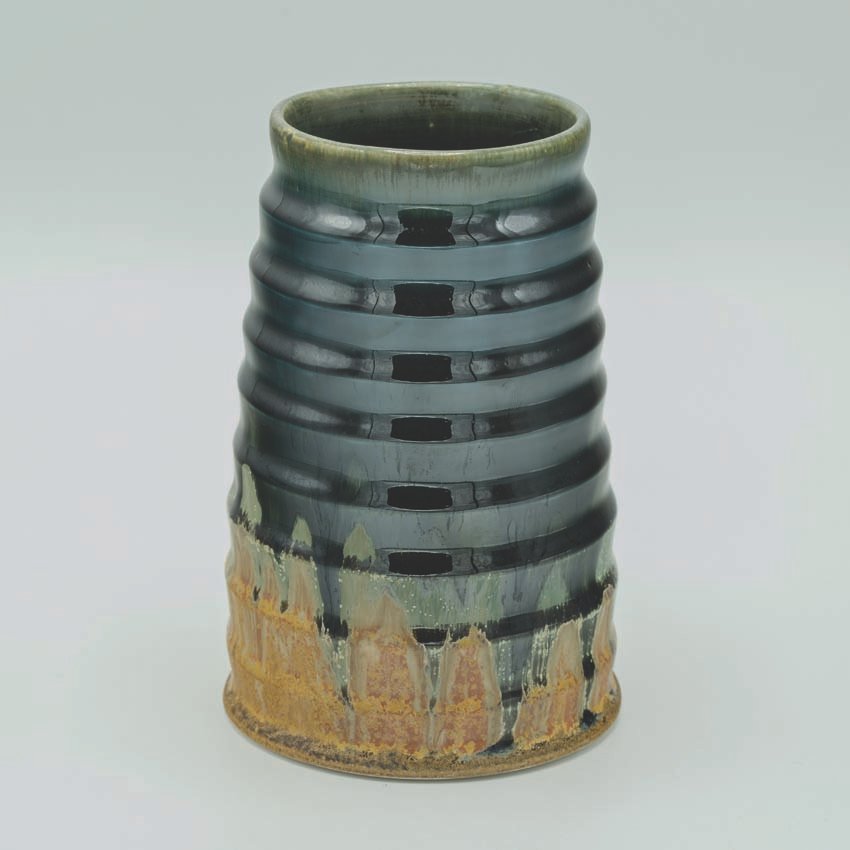
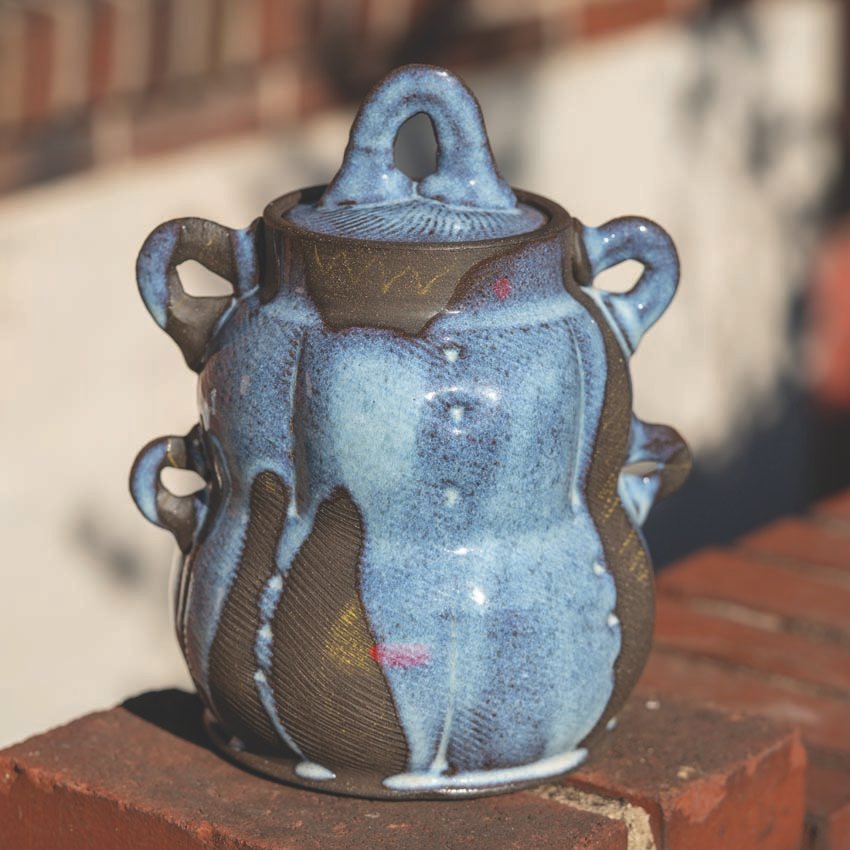
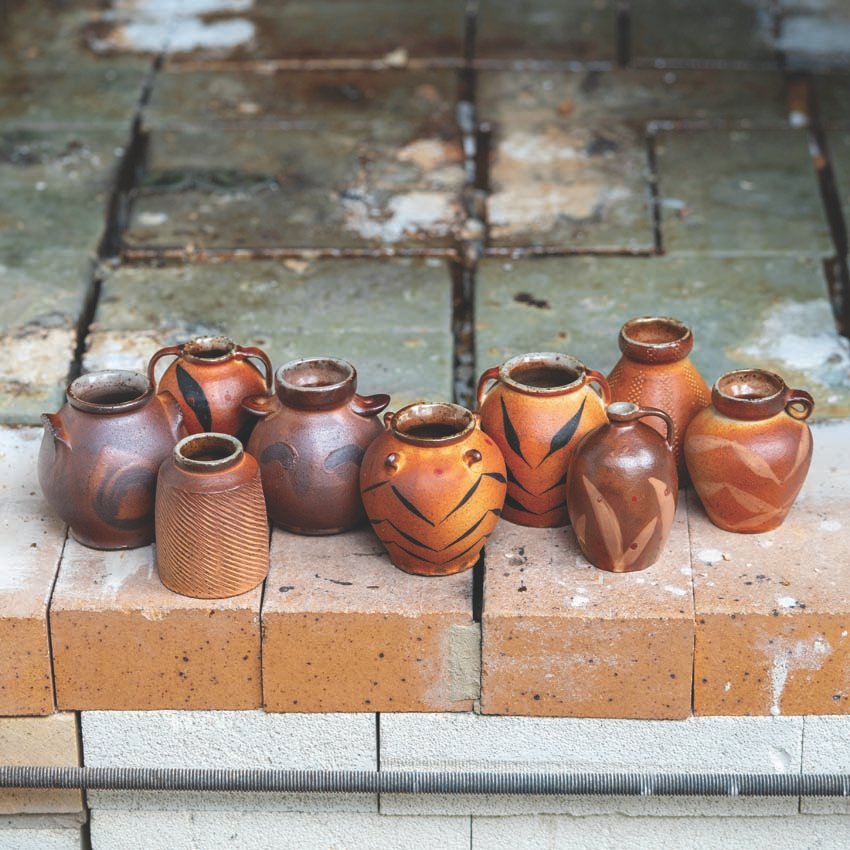
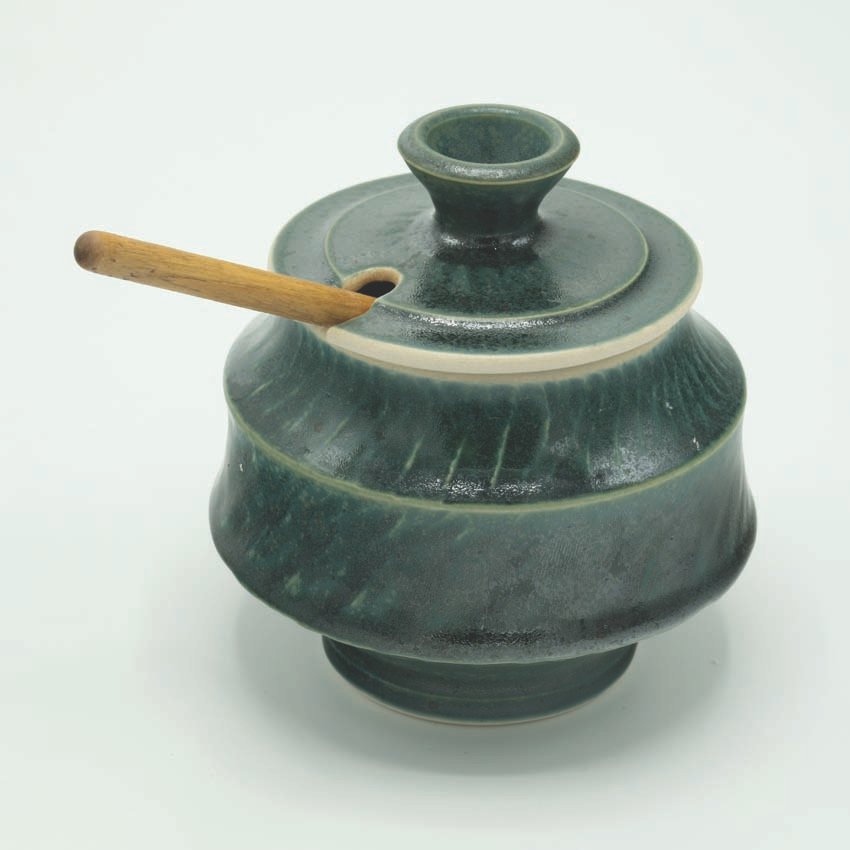
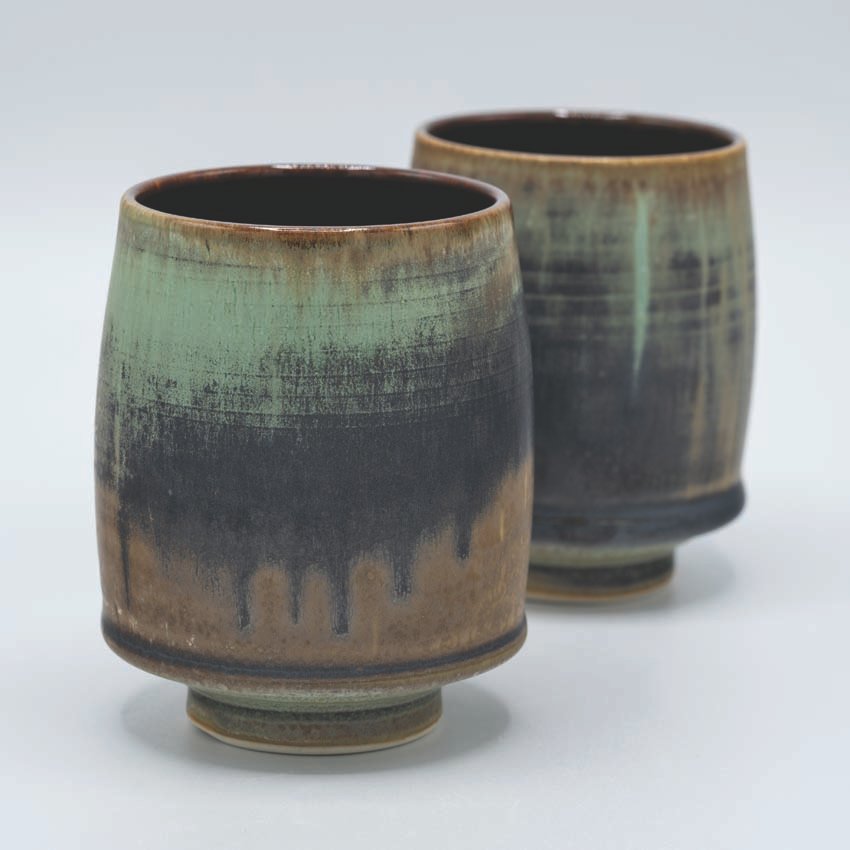
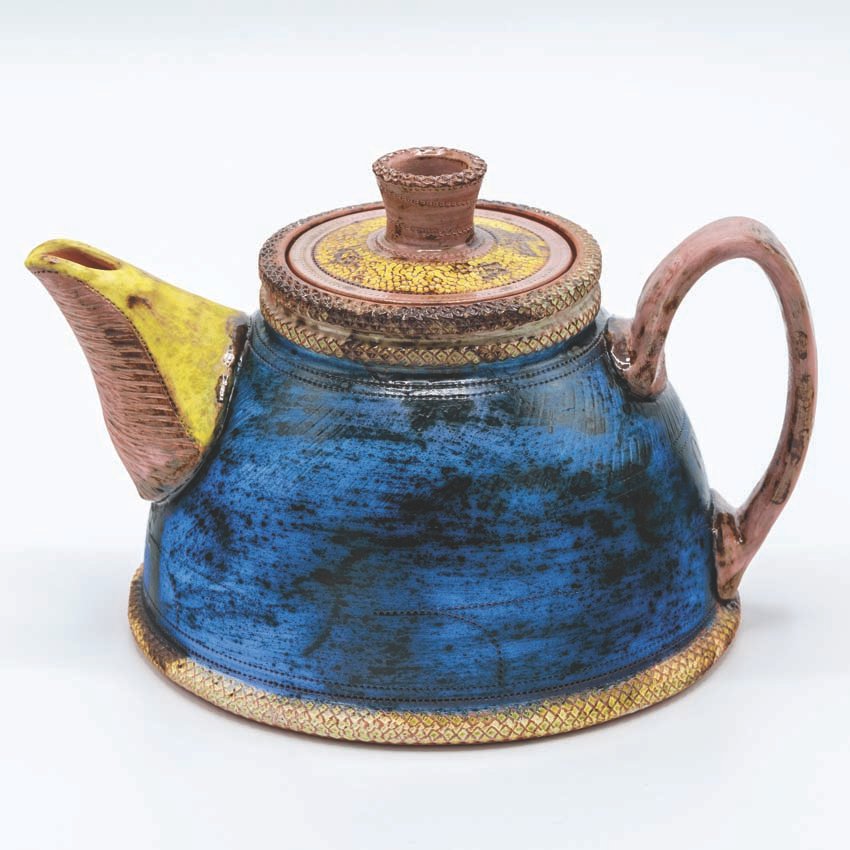
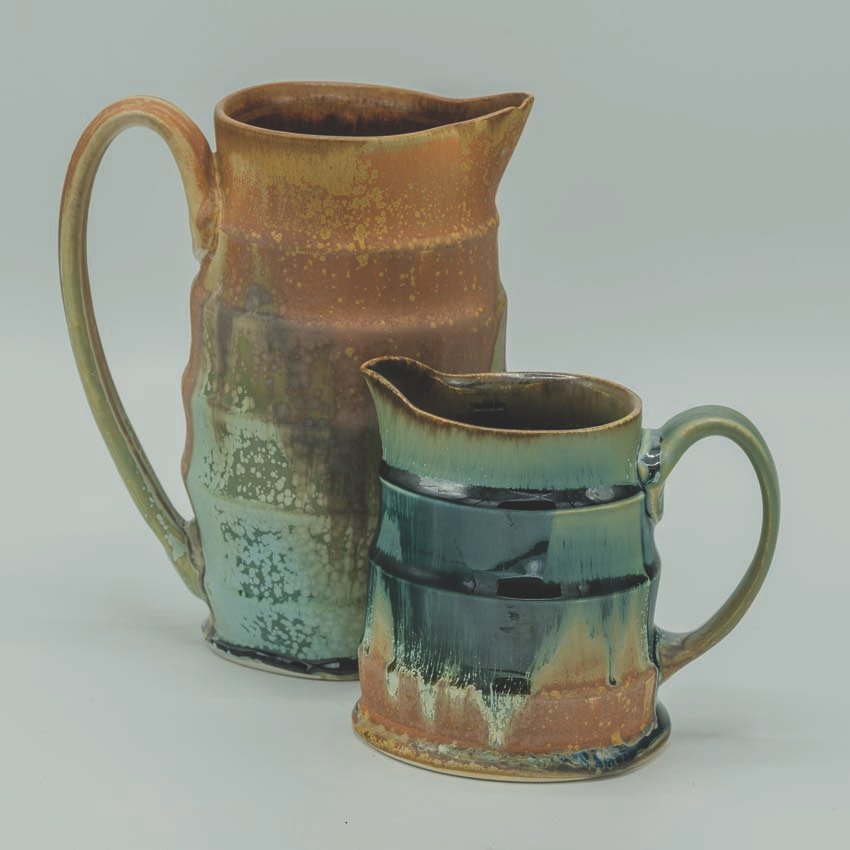
Most of his work is strictly functional, much of it including objects one would expect to find in a kitchen or on a dining table. While sculpture has been part of his artistic practice, he prefers making objects that serve a purpose beyond aesthetics. “I love tea and I love food, naturally, so I just try to make things that enhance those experiences,” he says.
Geithner’s creations have made their ways into his daily practices. Matcha drinking has become ritualistic in a handmade chawan bowl, a form that Geithner has found difficult to master. “I just finished an iced matcha latte that I made myself. That’s been my go-to drink recently. I use my own ceramics to prepare it. It’s grassy, it’s bright, it’s a beautiful color, it’s just very good,” he says.
His commitment to functional forms has also earned recognition among fellow ceramic artists. At National Council on Education for the Ceramic Arts (NCECA) conventions in 2023 and in 2024, Geithner met Steven Hill, a master ceramist. He was inspired by Hill’s glazes, surfaces, and forms, and he had a great deal of success with borrowing those ideas for his own work. “I was copying him. I was a little thief, stealing his ideas,” he says.
Hill was flattered that Geithner emulated his work and invited him to participate in his workshop at Adamah Art Studios in Dodgeville, Wisconsin. Geithner drove himself to Wisconsin for three sessions in 2024 and 2025. At the workshop, Hill encouraged Geithner to slow down and fully explore an idea one step at a time and resist distractions, which Geithner claims he is prone to.
Hill’s workshop is designed for students to find their own authentic, artistic voices, and build on that experience to inform future projects. Hill remembers Geithner as an assiduous student with a great deal of talent and artistic potential. “He has the work ethic to follow through with ideas and also a restless spirit that should help him to keep his work fresh and serve him well throughout his career,” says Hill.

While he doesn’t work with ceramics every day, Geithner often goes into the studio and starts making objects. Sometimes only one piece in 10 will really speak to him. Being present, he says, is the best way to discover something new and interesting. “Whether I have any sense of direction or not, if I’m just putting myself into a situation where I’m being creative, it opens the door to that inspiration or that spirit that’s really exciting,” he says.
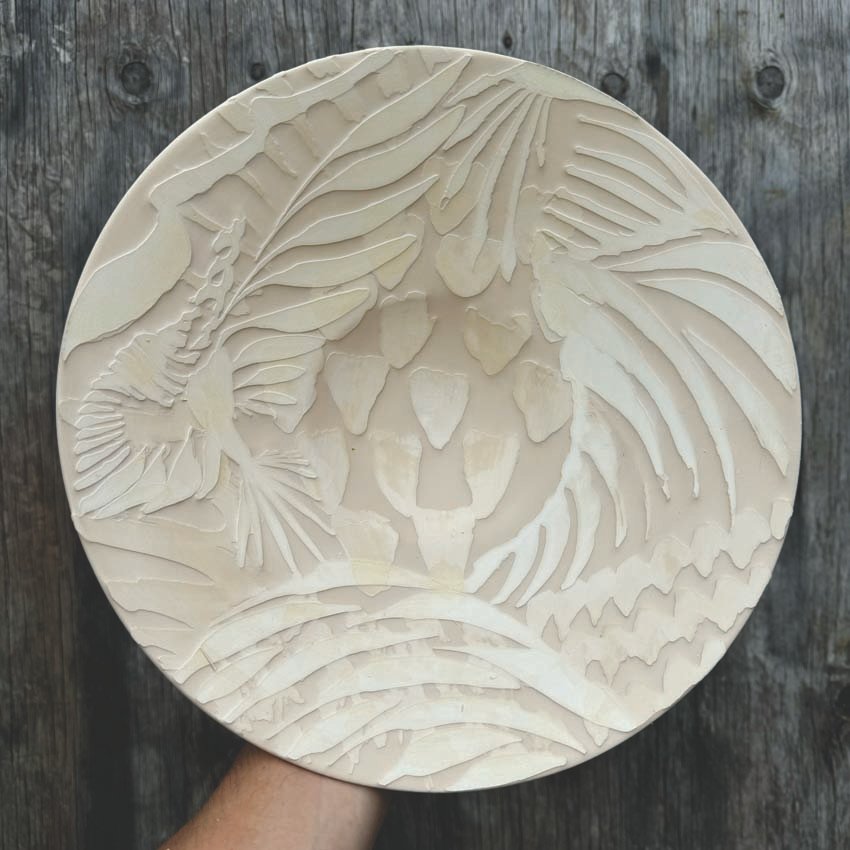
Making a clay object is the first step. After the clay object is made, traditionally, it undergoes the bisque fire, followed by a glaze firing. This turns the glaze into glass and fuses everything together. Multiple bisque firings and multiple glaze firings create different effects.
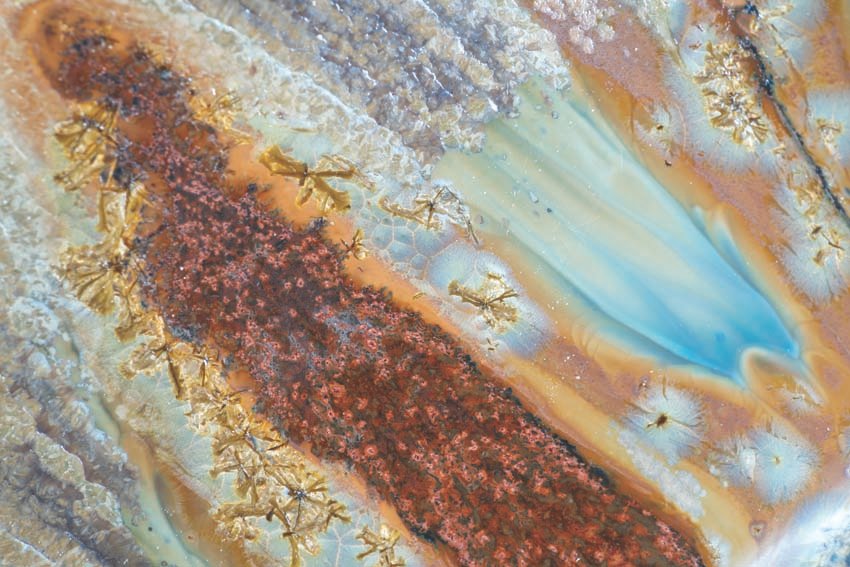
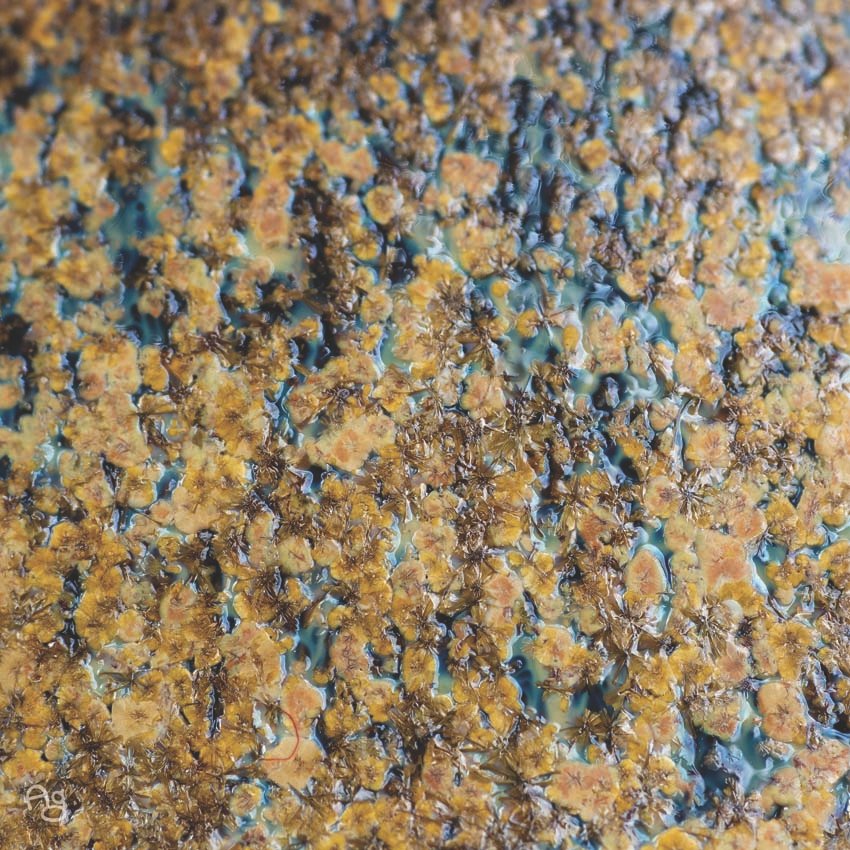
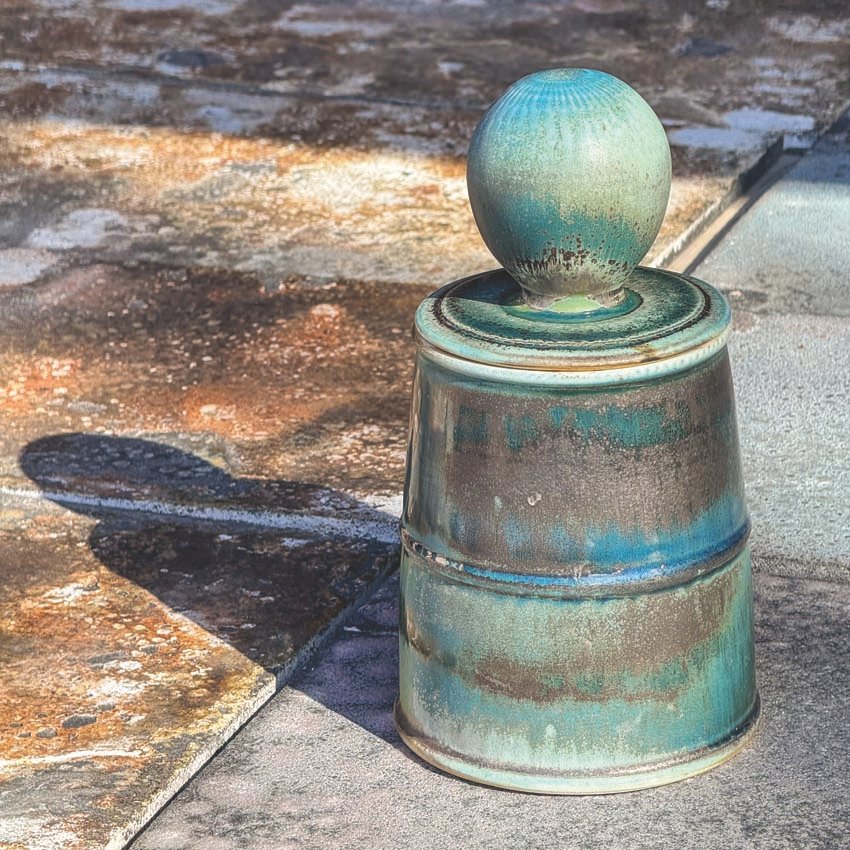
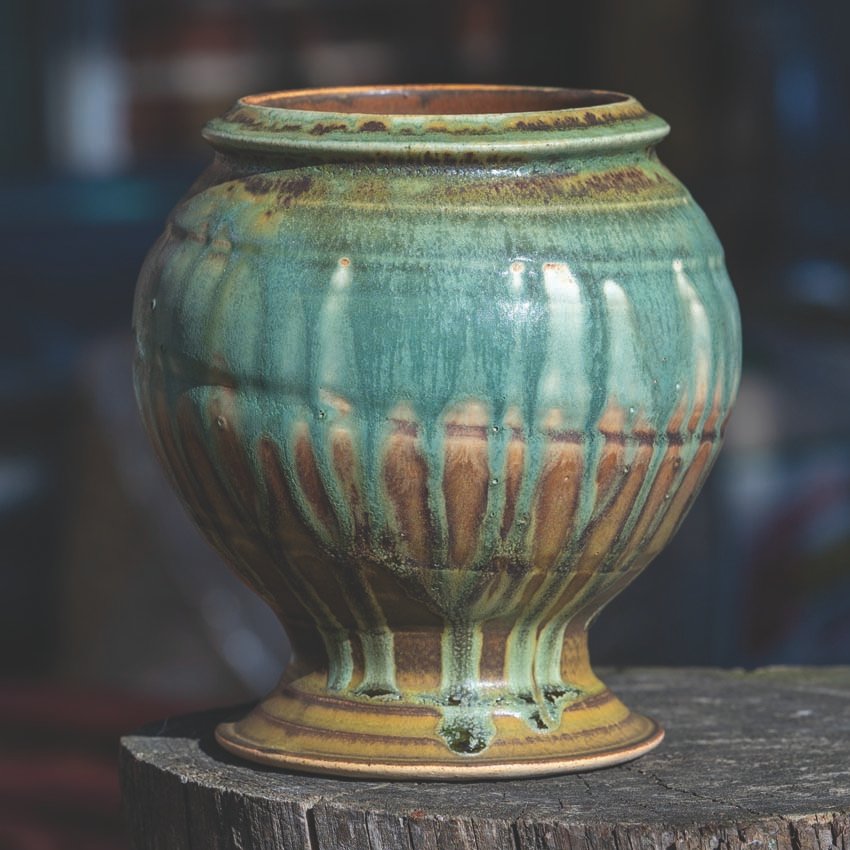
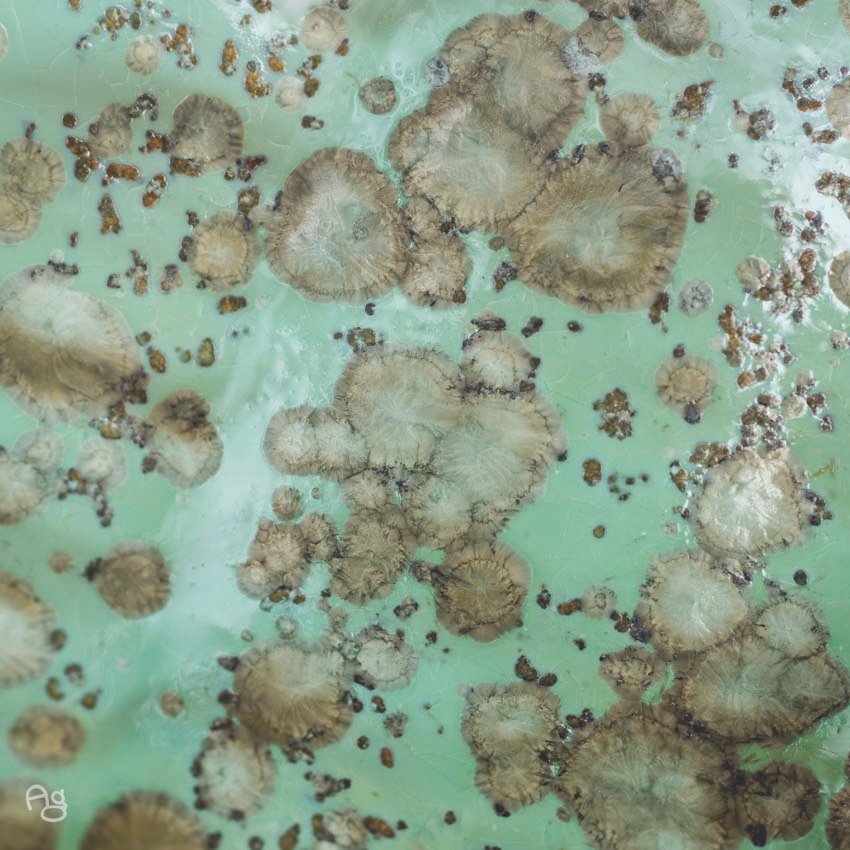
One of Geithner’s rooms is filled with raw materials to make a glaze, a process that he’s spent extensive time researching. Through experimentation, he puts the materials together, applies them, and tests them while looking for a combination that works. He especially finds working with jet metallic black to be interesting. If applied and fired properly, it produces gray metallic surfaces. Geithner considers some of his most beautiful works to have been achieved through using multiple glazes and applying different methods, including dipping, spraying, or brushing. “That’s how I get some of the more reactive surfaces,” he says.
For inspiration, Geithner looks outward, drawing from Japanese arts and crafts and the colors, textures, forms, and patterns found in aquatic life. That sense of curiosity extends beyond the studio; he doesn’t sell his ceramics, instead he gives many of his pieces to family and friends and hosts occasional pottery nights in his studio. Outside of ceramics, he rock climbs and tends his seven beehives that recently yielded four gallons of honey. Whether he’s making a bowl, harvesting honey, or, as he puts it, “making noise to the audience that is my four walls,” Geithner remains driven by the simple act of creating. █