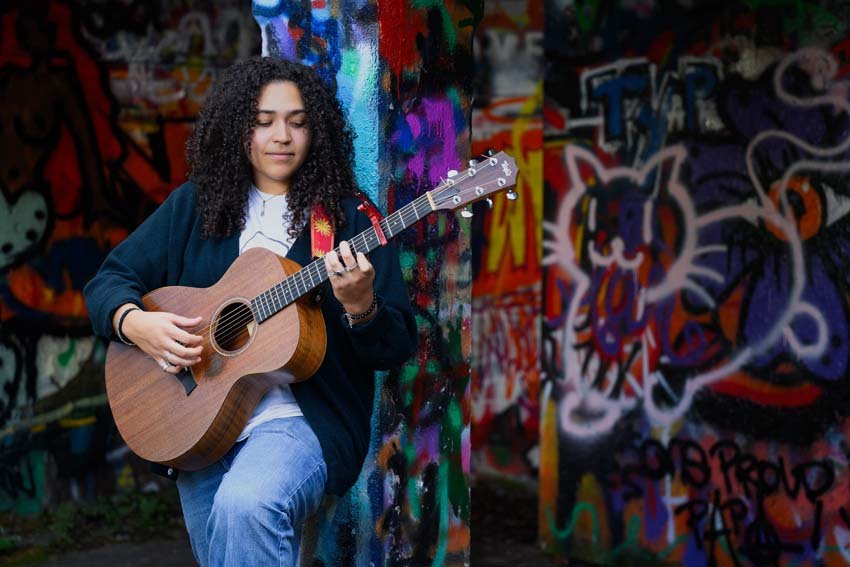
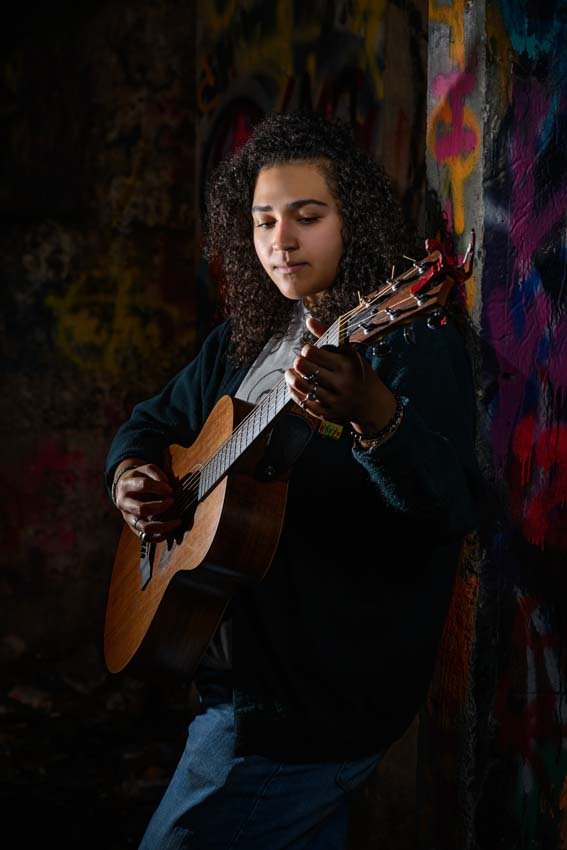
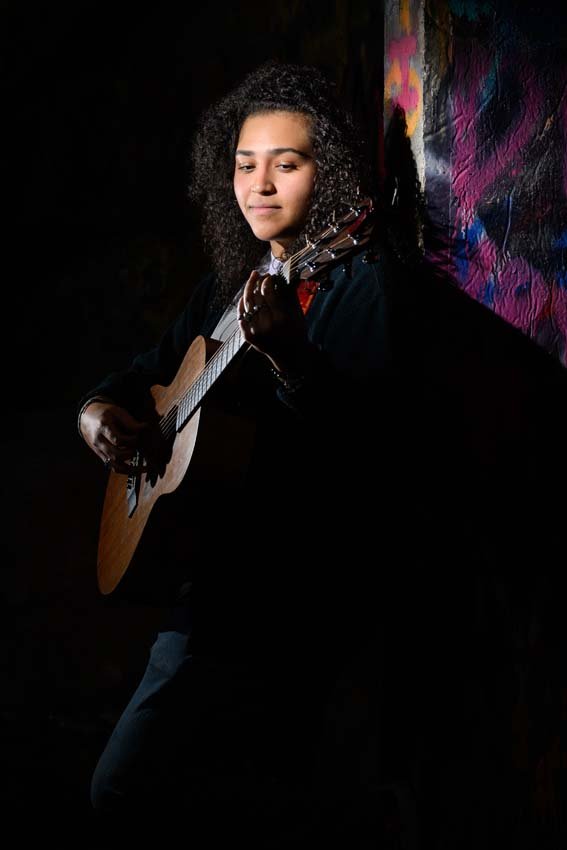
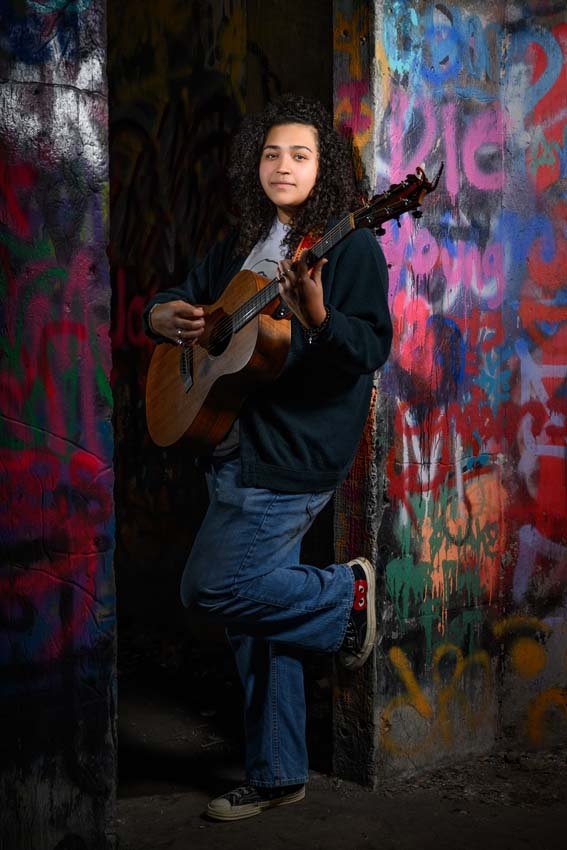
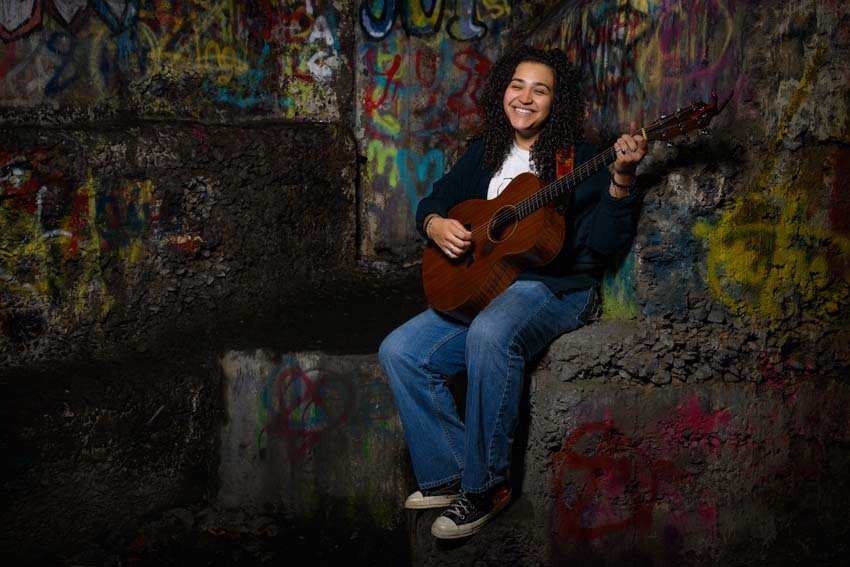
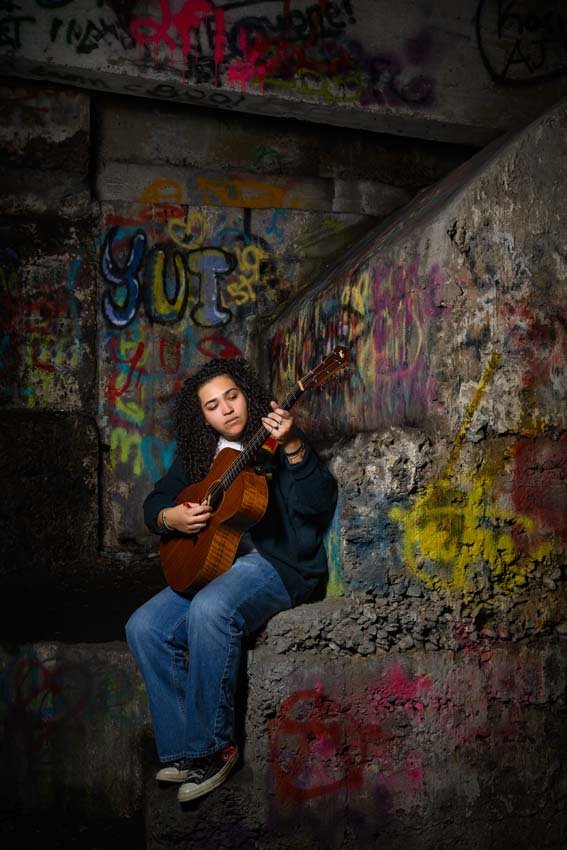
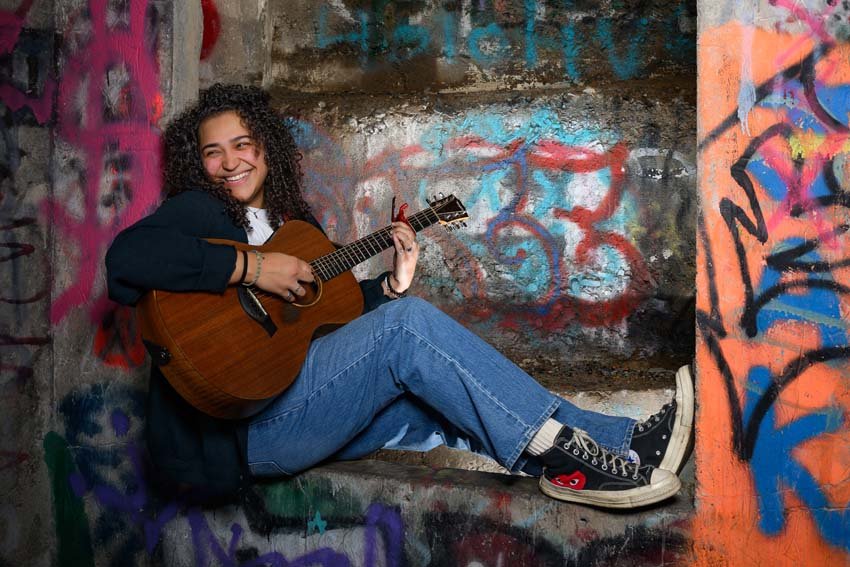
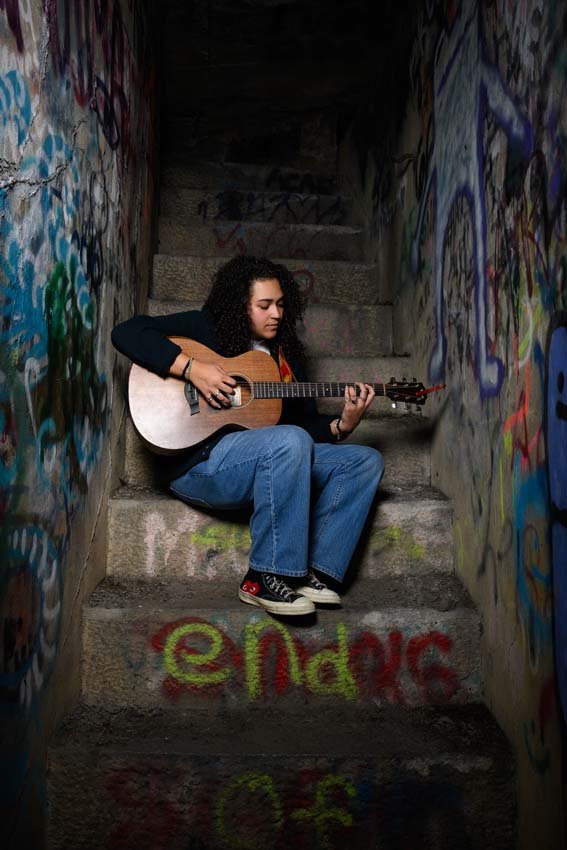
+ By Rahsaan “Wordslave” Eldridge + Photos by Gregg Patrick Boersma
I just want to create intimate, curated spaces around the world where people [who] like my stuff can hear it, and I can see the beautiful scenery along the way.
– Madisun Bailey
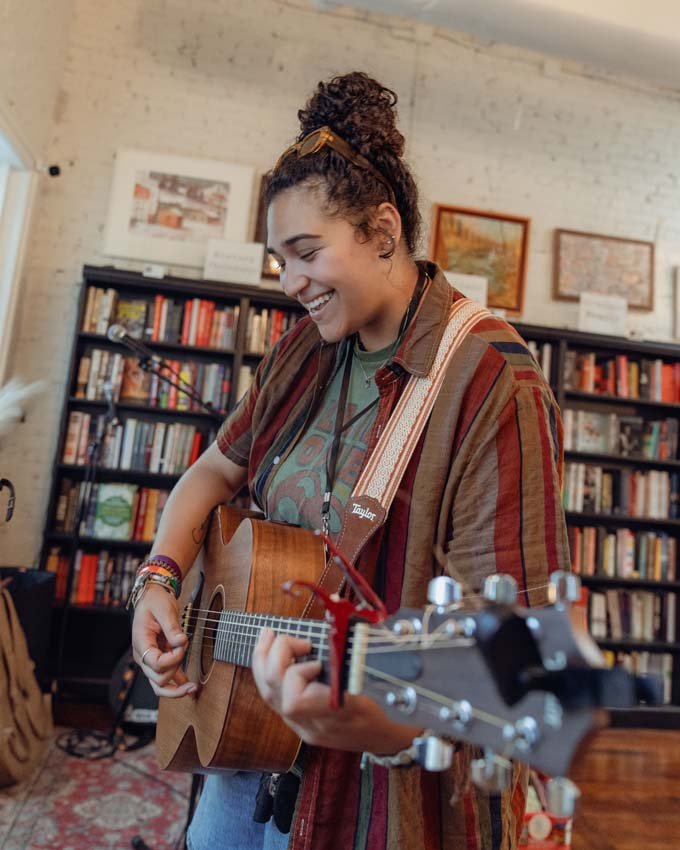
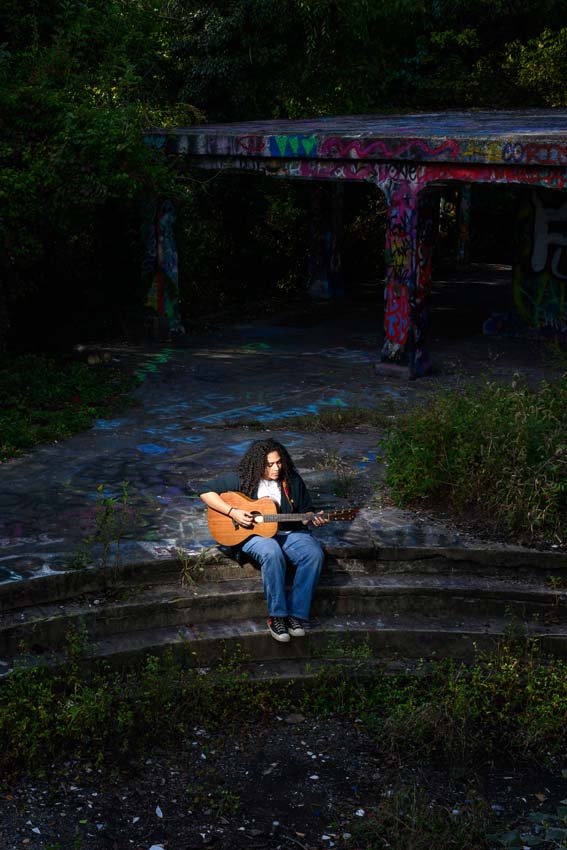
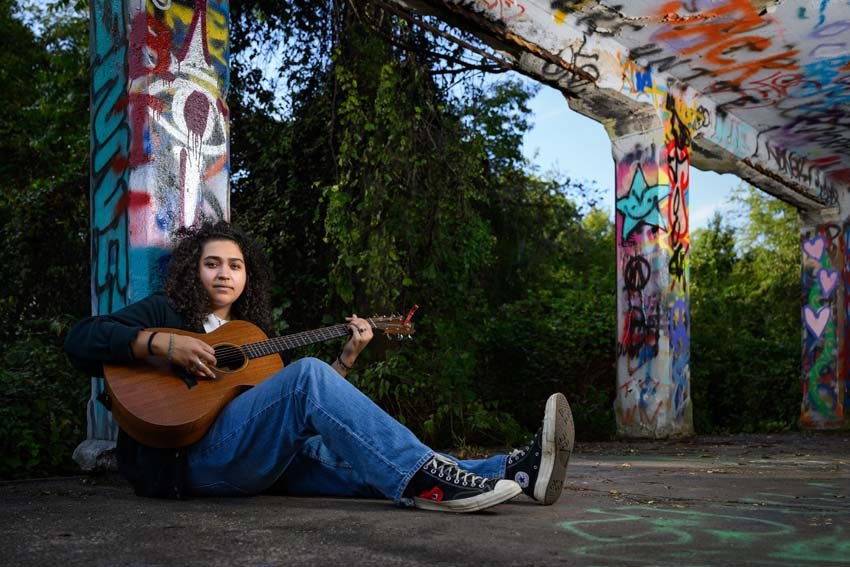
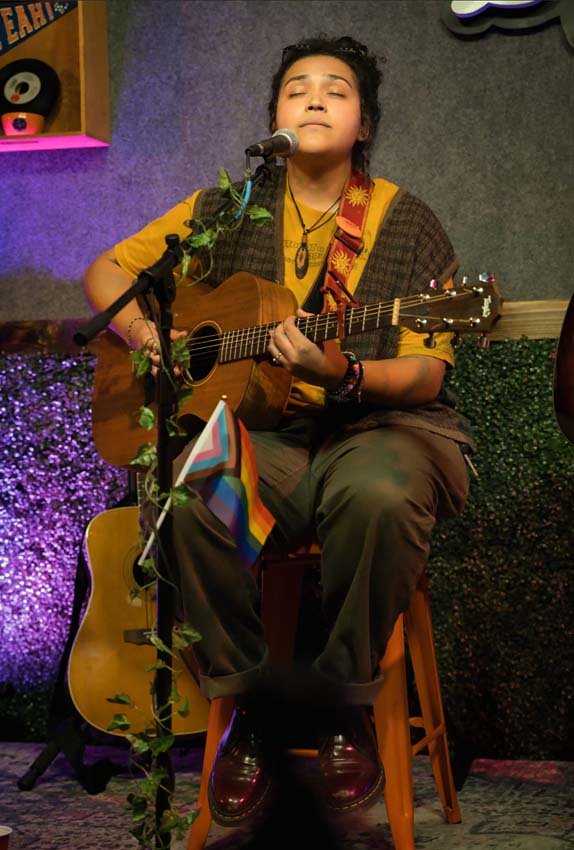
Madisun Bailey’s first love was basketball, but she was forced to stop playing at an early age because of injuries. Fortunately, she had another interest that was a balm for healing: music. It filled the void that basketball left and became her tool for connection, an avenue for affirmations of love and authentic expression, a safe space in a world that is sometimes unkind. In the seventh grade, Bailey’s mother suggested that she join the ukulele club after school. Because she liked the teacher, Bailey agreed to join. It was a pivotal decision in her life. As a busy child, the club helped redirect her energy. “I had a lot of electricity and not enough outlets,” she says. She learned early that music was a conduit. Now, she uses her music to create safe spaces for others.
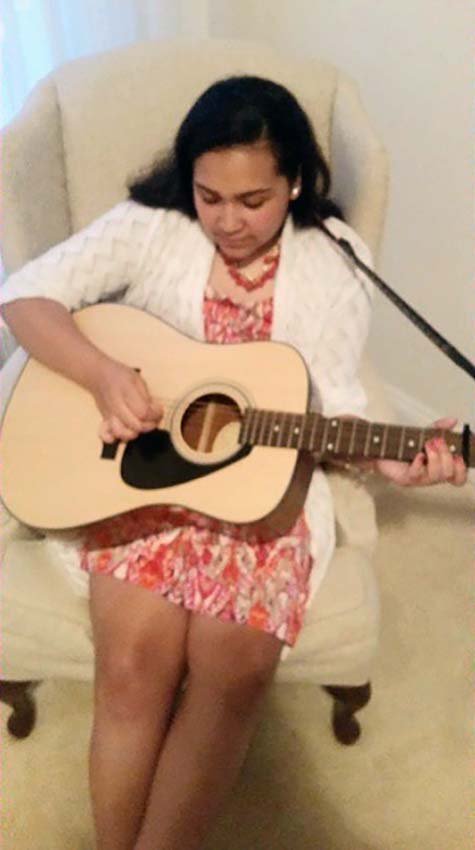
Bailey has a familial history with musicians. Her great-grandfather Pop-Pop and great-uncle were bluegrass musicians. She remembers going to jams with her uncle, watching him play, and wanting to play like them. She credits her early fingerpicking style to her bluegrass roots. When she was around 13 years old, Bailey switched from ukulele to guitar. The classes in school weren’t enough, so she started teaching herself to play. At 17, she self-produced her first album, Big Fun in the Sun, recording it in her bedroom. It’s lighthearted and playful at times while also addressing heavier topics, such as anxiety in “Wallflower” and heartache in “Key Lime Pie.” In “You Are Enough,” her message of self-affirmation is an early indication of Bailey’s depth and introspection.
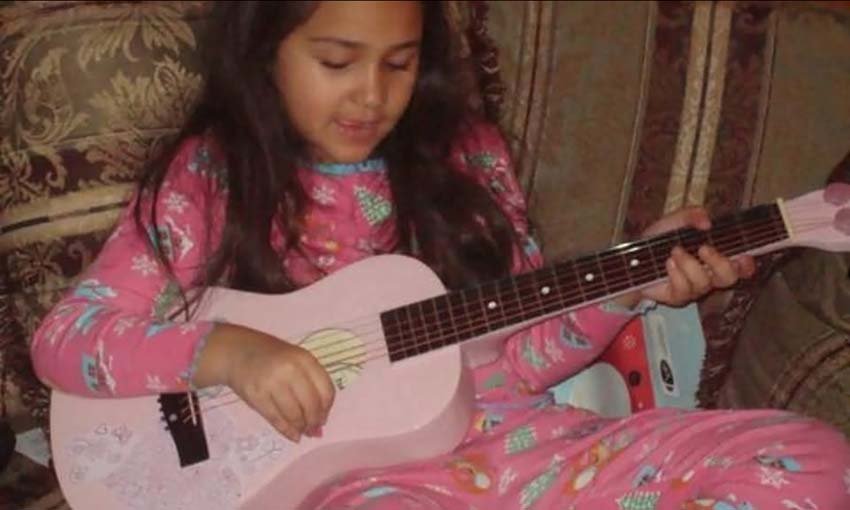
In addition to bluegrass, Bailey grew up listening to alt-rock, folk, and Americana. Later, she gravitated to R & B, funk, hip-hop, and jazz. Her most influential artists include Erykah Badu, Billie Holiday, and Tash Sultana. There’s a special place in her heart for Radiohead, evidenced by a tattoo of its album title In Rainbows on her arm. She watches National Public Radio’s Tiny Desk Concerts to discover new artists, and holds local musicians Rob Hinkal of ilyAIMY, Old Crab Hands, and Nicky Stacy in high regard (Bailey’s mother bought her daughter her first guitar from Stacy). Bailey constantly studies and absorbs, taking journals to shows so she can take notes. “I want to be a sponge,” she says.
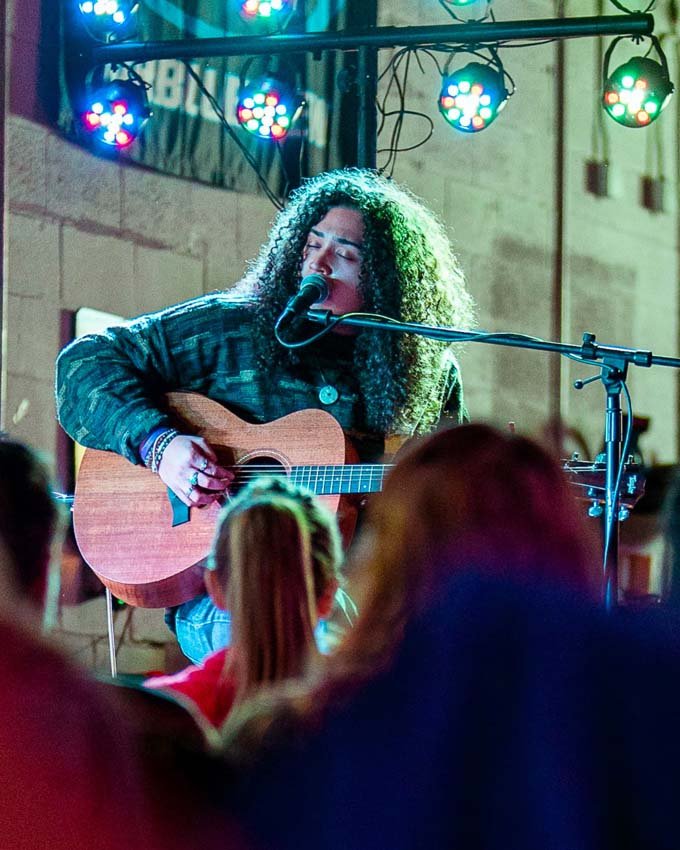
Bailey admits that she struggles sometimes to write songs because she’s overwhelmed with heaviness. Journaling and writing poetry help her get into “flow.” In moments when she doesn’t have anything original to say, she’ll reimagine a cover that she loves. Steady gigs and the use of a loop pedal have expanded her stylistic evolution from earlier fingerpicking. When she realized that audiences were paying attention, she became more intentional about her performance. Bailey is dedicated to the craft, and adamant about improvement, sometimes practicing until her fingers hurt. That is also a metaphor for succeeding in life. “It’s hard, but you just gotta keep going,” she says. “It’s gotta work out. That’s what I tell myself. It has to.”
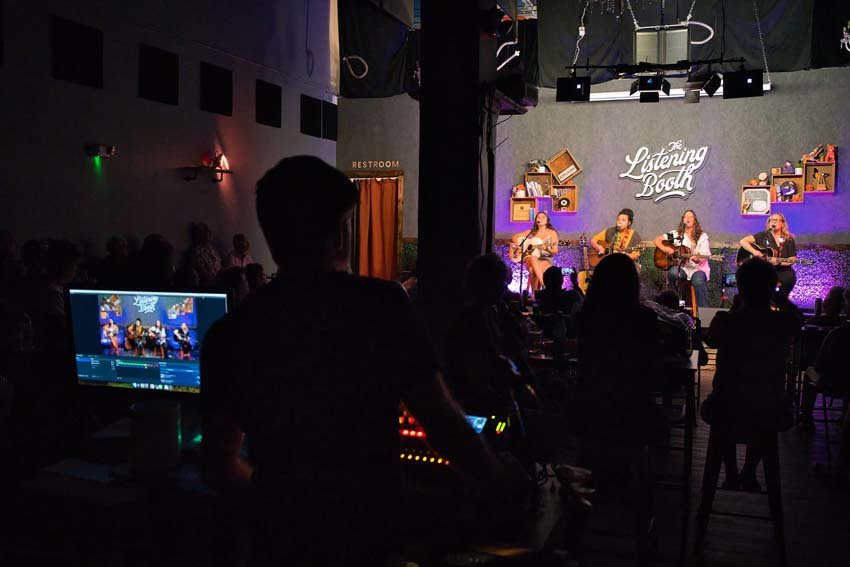
Bailey is no stranger to navigating challenges. She remembers being teased in middle and high school for having a parent who was an addict. She was called “poor” by her affluent classmates because she was on scholarship, and she faced microaggressions for being biracial. Some students asked, “What are you?” Others called her an Oreo and told her to pick a race. She was also diagnosed with post-traumatic stress disorder, depression, and anxiety. There was a time when Bailey wanted to be a therapist because she wanted to be the person that she wished she had to assist her in dealing with some of her difficulties. Now, she sees her music has a way to be of service to others. In her song “Prune Provider” she says, “I am the writer, the provider, giving sound to an empty room, pressing strings ’til my fingers prune.” It’s a lyrical declaration to serve through her art, even when it hurts.
Bailey has found safe spaces within her artistic community. Songbird Collective is one of them. Bailey met cofounder Meg Murray at the Annapolis Songwriters Festival, and Murray remembers being captivated by Bailey’s performance. “She was so striking, original, and unique. She’s the total package,” says Murray, who also raves about Bailey’s work ethic, leadership, and inspirational qualities. In the summer of 2025, Bailey, Murray, and fellow Songbirds Carly Winter and Laura Brino toured together as Friends and Folklore. Murray and Bailey note how touring together strengthened their bond by allowing them to get to know each other personally while traveling between gigs. Bailey carries around Songbird stickers and hands them out to other women at gigs to promote the collective as the safe space it has been to her and other women artists.
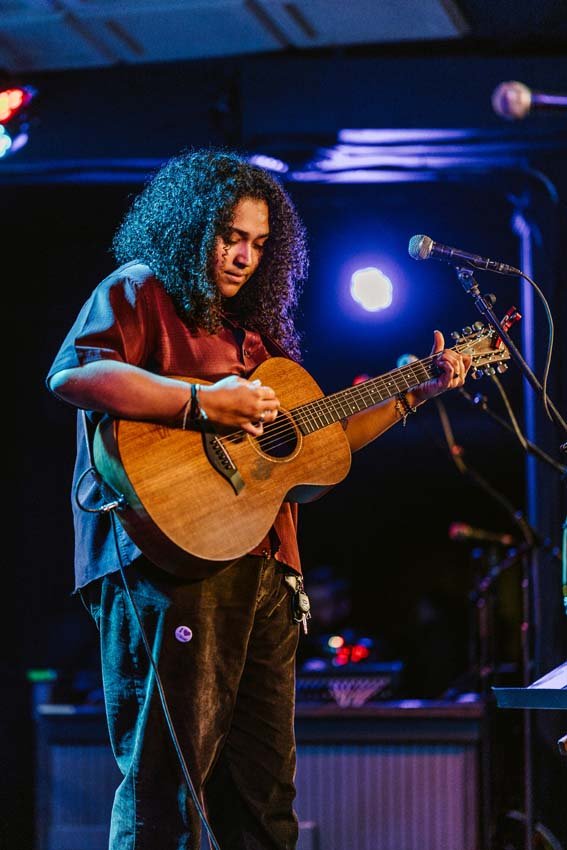
Musician Leslie Webber met Bailey at a Songbird Collective showcase and was instantly drawn to Bailey’s sound. They found out that they are neighbors and became friends, sometimes playing music together when not on stage. Webber cites Bailey’s patience as a collaborator and her unique ability to evoke images. “She paints a mural with every one of her songs,” she says. Webber sang Bailey’s song “Bourbon Breath Brother” at a recent Annapolis Musicians Fund for Musicians, Starry Night showcase, during which Annapolis musicians covered each other’s songs. One of Webber’s favorite moments of the evening was captured in a photograph of Bailey smiling while watching Webber sing her song.
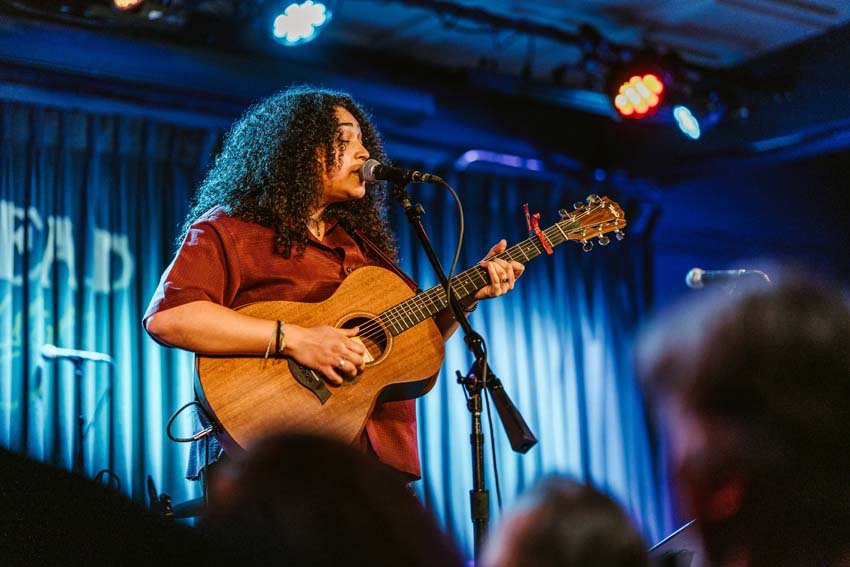
For three years, Bailey has been a full-time musician. She used to work in retail but hated the work environment. When she realized her earning potential from gigs, she left her job, and she has been gigging steadily ever since. She has a reputation as a hard worker, but being a one-woman operation, responsible for all the booking, managing, and promotion, is not easy. Connecting with venues and event managers has been challenging at times because of scheduling conflicts. If she had it her way, she would just play, but she understands everything that is required to be full time. She’s open to building a team but is protective of her business and hasn’t found time for properly vetting any prospects.
Networking is also important to Bailey. On days when she’s not gigging, she’ll sometimes go to an open mic to play and network. Making connections has been one of the most rewarding parts of her experience so far as an artist.
Her dream is to travel anywhere she wants in the world and sell out venues with a capacity anywhere between 50 and 2,000. She’s not interested in stadiums or large venues because she wants to be able to see individual faces. She wants to connect with people intimately and for them to feel heard and be uplifted. She wants her music to be a safe space for others in the same way that it is to her.