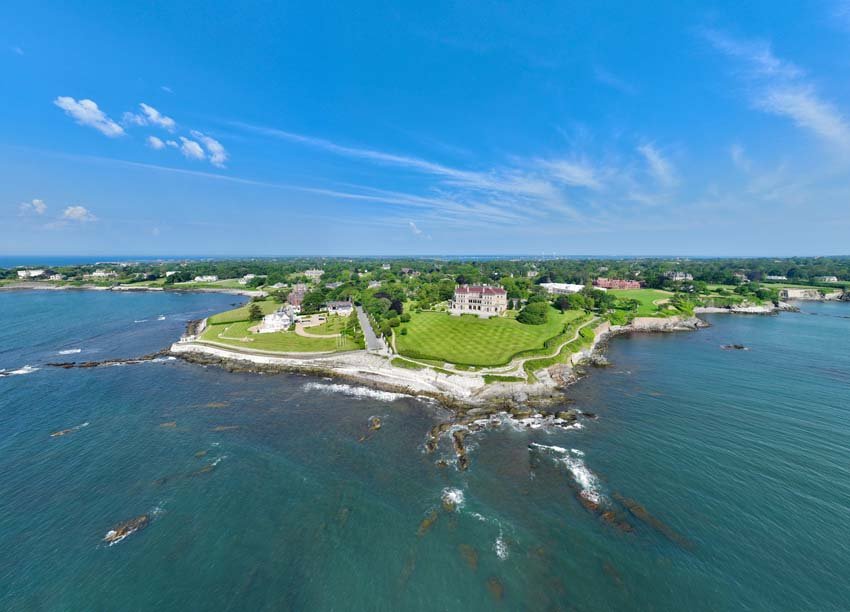
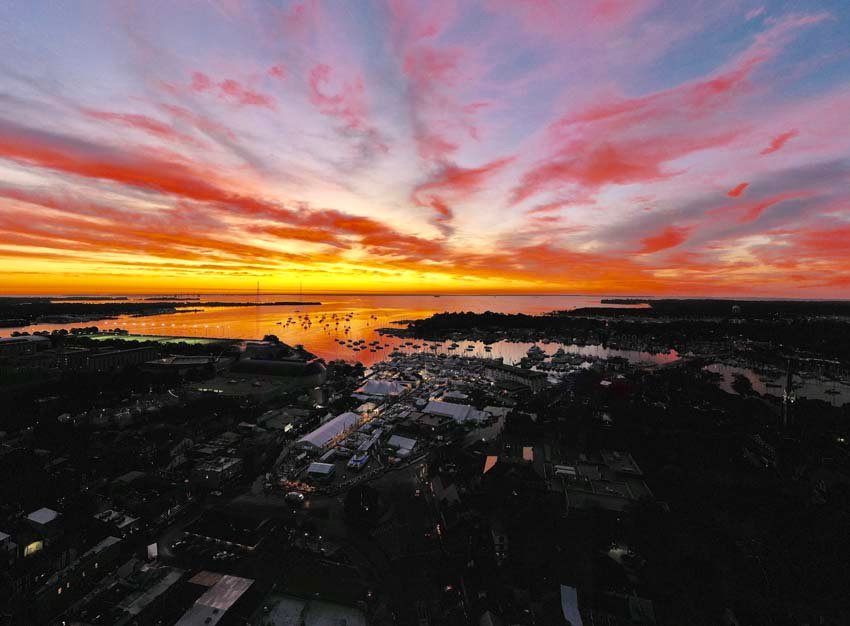
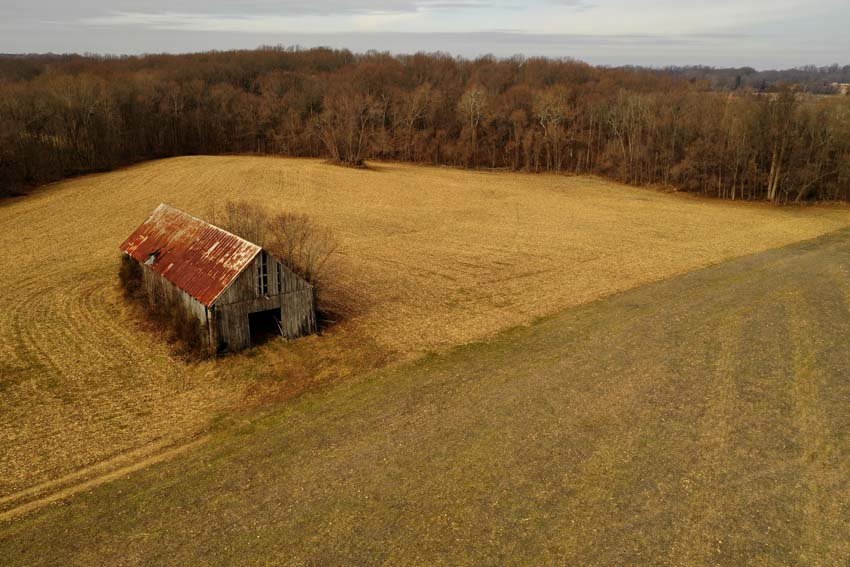
+ By Theresa C. Sanchez + Photos by Jeff Voigt
In 1971, Jeff Voigt’s eleven-year-old legs were too short to reach the pedals of a Cessna 150 airplane. To remedy this, his father built him a makeshift aviation high chair so he could not only control the aircraft but also see over the dashboard while doing so. Thus, a young aviator was born. Voigt would go on to flying camps and lessons, graduate to multi-engine planes, and attend the US Naval Academy. “I wanted to be a fighter pilot; I wanted to be an astronaut,” he says.
During an aviation training flight over Texas, Voigt had an epiphany. “There were these thunderstorms, clouds all around us, the sun was real low in the sky and . . . the clouds were orange and blue and pink, and there was lightning, and we’re just weaving our way around this valley, and it was like heaven,” recalls Voigt. He realized that he was looking out more than he was looking in. “I said, you know, I’m gonna find a way to get something up here and take pictures. I’m just done flying myself around.”
For a while, he used a Pentax K100D camera, stealing photographic glances at the airspace around him. But the photos were dodgy and the technique unsafe. It took a while for technology to meet notion. Finally, in the early 2000s, drones became available to everyday consumers. At last, he could combine his lifelong love of flight with his mistress, photography.
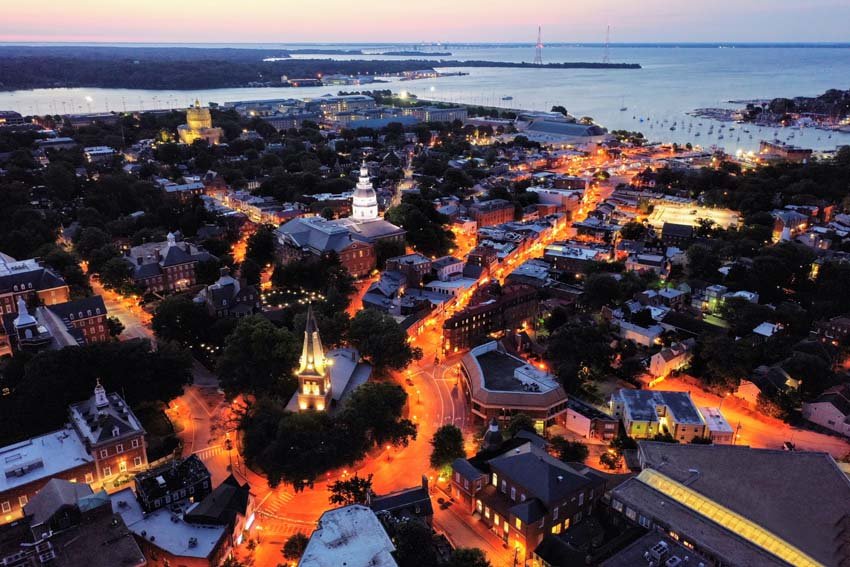
Now, more than 50 years after those Cessna days, Voigt can see over almost anything—and photograph it—from what he calls his 400-foot tripod. While he may no longer feel the wind in his hair, he says that toggling a joystick while monitoring from the ground makes him feel like he’s tilting and diving along with the aircraft.
“When I first started flying [drones], looking at that screen, if you gimbal that camera down, it throws you off. You have to kinda sit down or lean up against the [car] . . . while you’re flying it—kinda get acclimated,” he says.
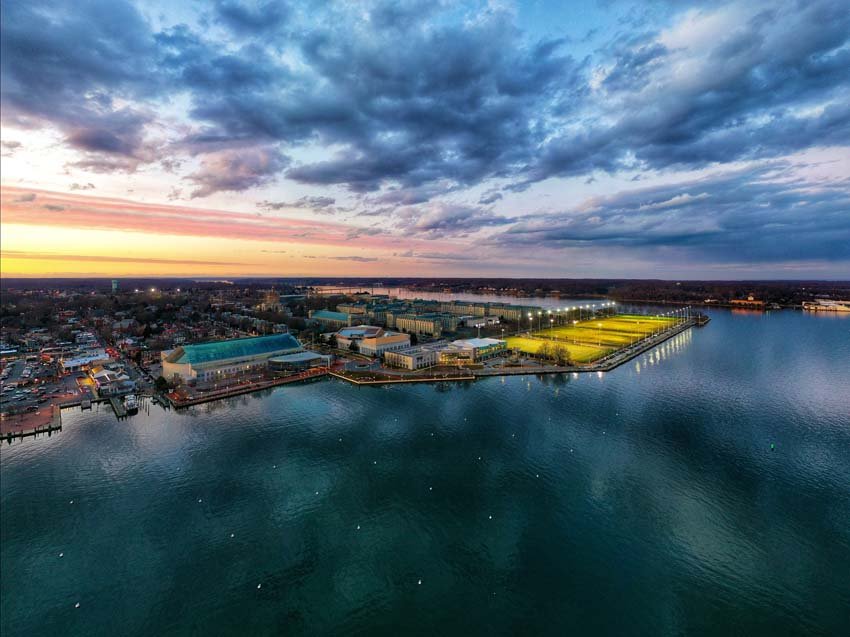
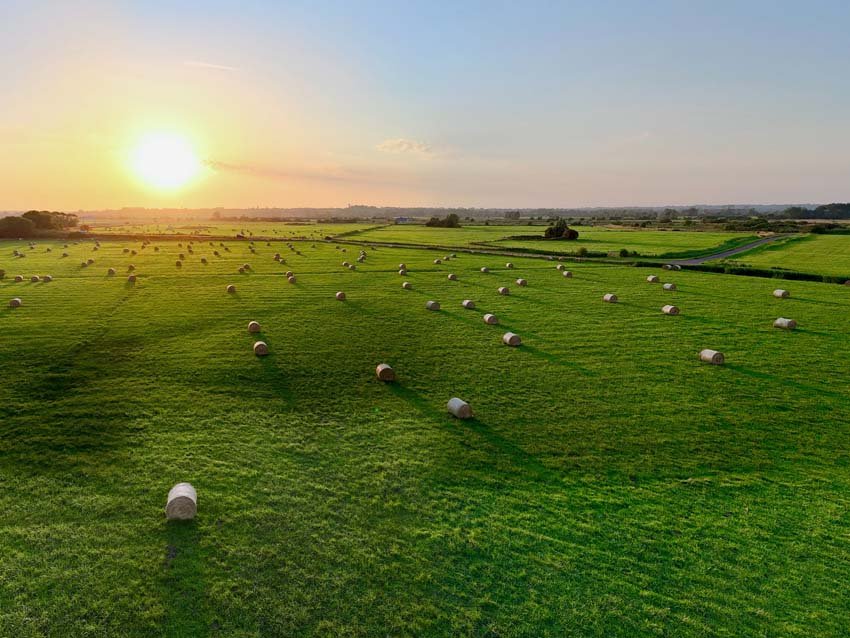
Sunrises and sunsets are his favorite things to shoot, but he’s happy to yaw or rotate the craft to just the right angle over the top of just about anything. He calls Annapolis a target-rich environment, with its dramatic domes and water views. Military and patriotic scenes seem to guide his flight path. One crowd favorite is a golden-hued aerial shot of the US Naval Academy that he took one summer solstice. “Lots of grads buy that one,” he says. The Naval Academy sells his work—mostly on postcards— at its bookstore. Large, dramatic, sun-streaked prints are available on his website and at Local by Design, a store at the Annapolis Mall that features area artists.
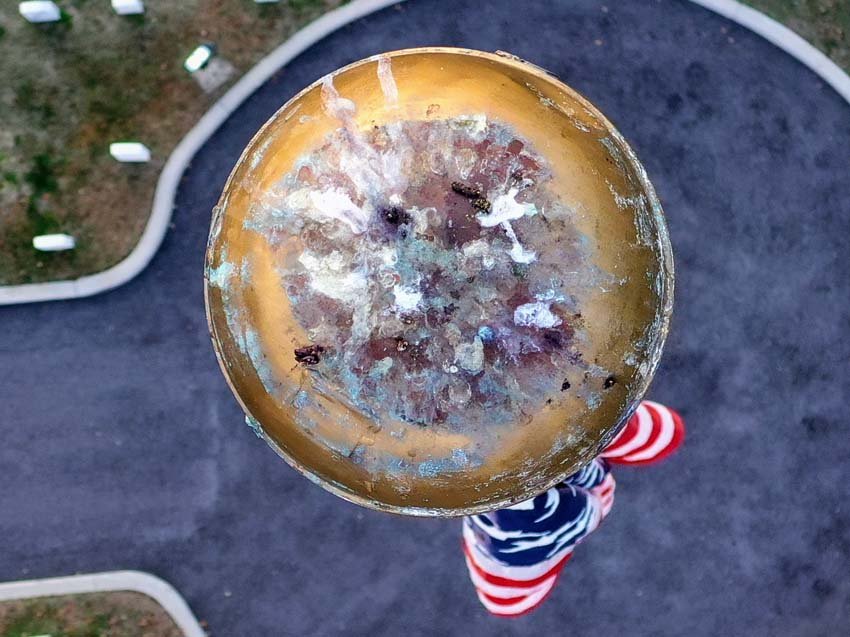
Voigt spent plenty of time on the ground at the Naval Academy before he started photographing it from the air. He became a midshipman only after he was rebuffed by the US Air Force Academy. That might have been a small disappointment for his father, Lt. Col. William Voigt, an Air Force fighter pilot who flew combat missions during the Korean War, but he didn’t show it—the navy had a flight school, too. Voigt graduated from USNA in 1982.
As a youngster, Voigt and his father spent many an afternoon building model planes together and flying them while Karen Carpenter songs played on the AM radio. When Voigt turned 14, his father noticed an advertisement for a flying camp in Colorado Springs. Young Voigt mowed lawns—a real feat, as they lived in Arizona, a place where landscaping is more likely to include rocks and sand than anything green—and saved money until he was able to pay for half the cost of the camp. His father handled the rest. When his parents came to pick him up after the three-week camp was over, father and son both tried to play it cool, but eventually his father couldn’t help himself.
“Did you solo, Son?” his father asked.
“Yeah, Dad, I soloed,” Voigt answered. Only 2 of the 15 students had been permitted to fly planes on their own. “My dad was so proud,” he says. “If my mom knew some of the stuff I did at the time . . .” He shakes his head. After camp, he mowed and saved and flew every couple of weeks.
“Not a day goes by that I don’t think of my father,” says Voigt. After his father died in 2021, Voigt put a drone into play to carry out one of his father’s final wishes: scattering his ashes in a field near Coutances, France, where second Lieutenant Charles Voigt, William’s brother, had crash-landed a P-47 aircraft during World War II. Voigt traveled to France and, to find the exact location, re-created the crash—through a corn field and over two hedges—with a drone. Later, he quietly spread some of the ashes over the field at sunset. His uncle survived that June 1944 crash and was taken in by a local French family. He died young, though, in 1958. The brothers are buried 20 feet apart at Arlington National Cemetery.
Voigt’s grades at the Naval Academy were less than exemplary. Undiagnosed dyslexia pinned him near the bottom of his class academically throughout his tenure there. Eventually, he left the navy and became a financial planner, but later he was welcomed back to teach sailing and navigation as a reservist at the Academy. He also spent a few years teaching celestial navigation, naval history, and leadership at Officer Candidate School in Newport, Rhode Island. That’s when Voigt discovered his third passion.
“I love teaching,” he gushes. He currently runs a course at Carroll Community College in Westminster that prepares students to obtain their drone flying licenses. Much to Voigt’s consternation, licensing is not required unless the drone is being flown commercially.
“The industry is like the Wild West. A six-year-old can walk into a Walmart and buy a drone, and he can put it up in the air,” says Voigt. “He doesn’t know the first thing about 400 feet [an altitude regulation], what’s the airspace like, has he looked at the weather—does he even know how to fly the thing?” Voigt says that the key to drone safety is rote—do the same things every time. Follow the safety checklist. Apps are available to let pilots know if there are any current restrictions, such as the one over the Navy-Marine Corps Memorial Stadium on game days. He says that it’s important for potential drone owners to know that the sophisticated crafts are not just toys. The Federal Aviation Administration issues the license and an identification number. That status makes it a felony to shoot one down.

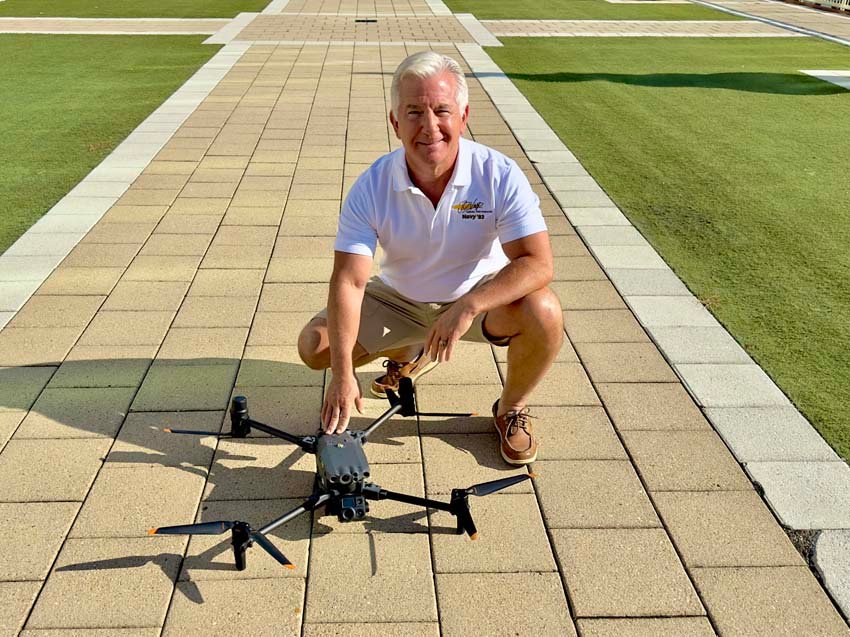
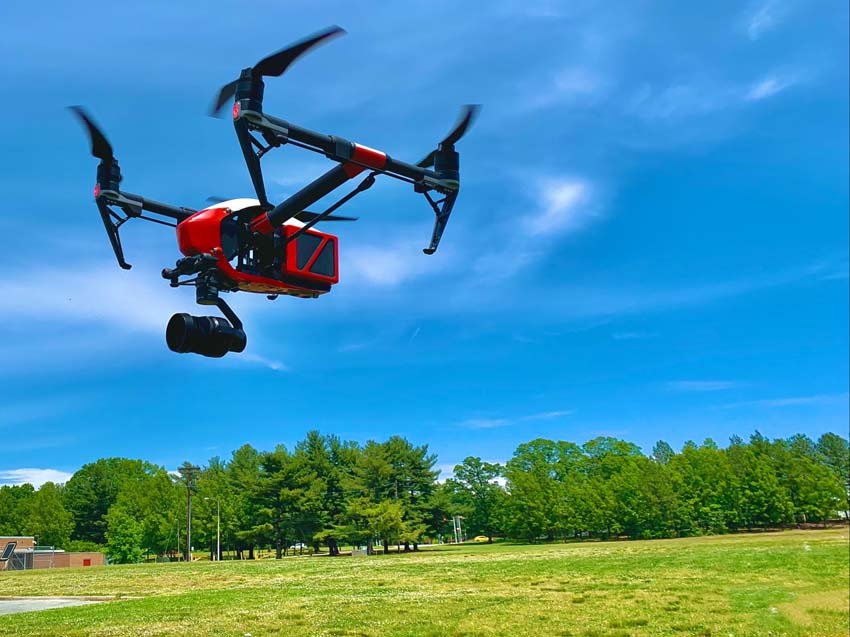
Voigt is an artist, but he’s all about the gear. He flies a DJI Mavic 4 Pro equipped with a Hasselblad camera—worth about six thousand dollars. It has three lenses, one for wide shots and two to zoom. As he toggles and throttles from the monitor on the ground, he always keeps one eye up. A homing device ensures that every flight will end feet down, in a designated landing zone. He’s had a couple of crashes, one in his neighborhood and one in the ambient red rocks of Sedona, Arizona. “When you get close to the side of a mountain . . . you’re looking right at it coming toward you . . . that sense of speed erupts!” he says. Accidents can happen where acceleration and creativity meet. Luckily, he always has a backup device. He owns several high-end drones.
Voigt flies nearly every day. In seven years, he’s accumulated 2,400 hours of flight time. Sometimes he’s working on a photo commission; other times, he’s asked to help find a lost pet. He’s also done some real estate shots. But most of the time, he’s just looking for a change of scenery and that perfect shot. “Just 10 feet off the ground, and everything takes on a different perspective,” says Voigt. “I like that.”