+ By Terese Schlachter + Photos courtesy of Terrapin Fiberworks
Cloth has been woven for millenia. The earliest examples of two-needle knitting go back to medieval times. Earlier exmaples may have existed and disintigrated with time. Perhaps prior to 300 AD someone picked up wooden sticks or bones and artfully knotted wool together to make garments. Not surprisingly, the practice of knitting caught fire in colder climates, especially in places such as Iceland, where it was first proven that behind every successful Viking was a woman creating a textile he could wear and sell, thereby exerting his influence across the North Atlantic. Knitting was eventually brought to America by Spanish colonists, but it wasn’t until the 1940s that knitting was really popularized, mostly due to World War I and again in World War II, when women were encouraged to “Knit Your Bit” to keep the nation’s service members warm. A few wars and even more spun yarns later, we find knitter, crocheter, weaver, and dyer Lyla Lawless making quite a mess in her bathtub.
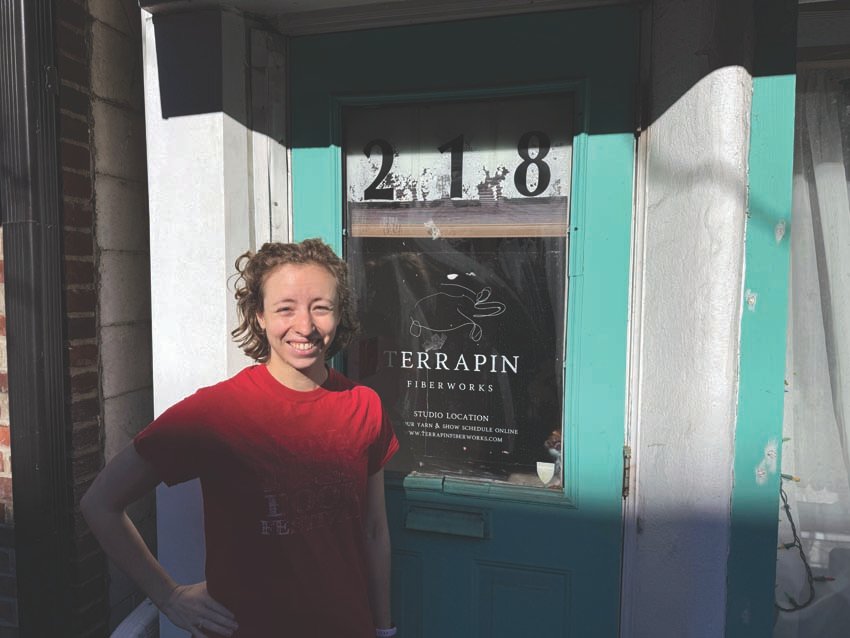
“It was a pandemic thing,” recalls Lawless, now owner of Terrapin Fiberworks, a craft yarn store located in the Annapolis Arts District. “We all got stuck at home, and we needed something we could do on our own, so a lot of people picked up knitting and crocheting.” Needlework became especially popular for millennials, and 32-year-old Lawless is among them. She says that the quiet rhythm of stitching was calming through a time heaving with anxiety. “And I love that feeling of satisfaction,” she says. “In the end, I’ve achieved something.” Life on the internet provided opportunities to connect with others regarding her work and her wares. Richly hued yarns for sale online often caught her eye, but the prices made her breath catch. She began to wonder if she could dye her own yarn. Which brings us to the bath.
“I figured, if no one liked my colors, I’d use them myself,” says Lawless. And she set about creating her own palette in the small townhome she shares with her husband.
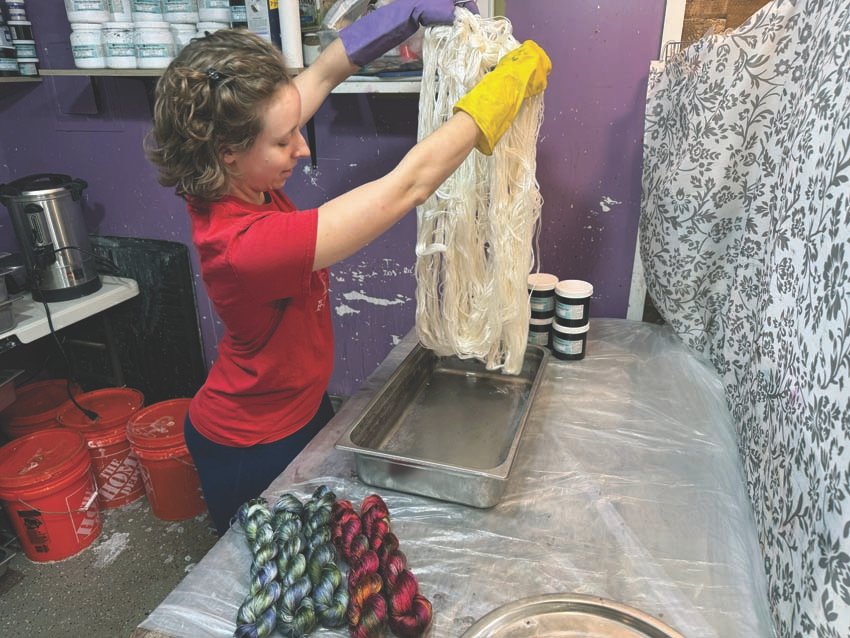
The three-day dying process is sploshy. Lawless begins, if she is working with cotton yarn, by washing it to remove the spinning oil accumulated at the mill. Oil would keep the dye from penetrating the fiber. Then she soaks it in soda ash, which also helps make the color stick. By day two, it’s time to add the color.
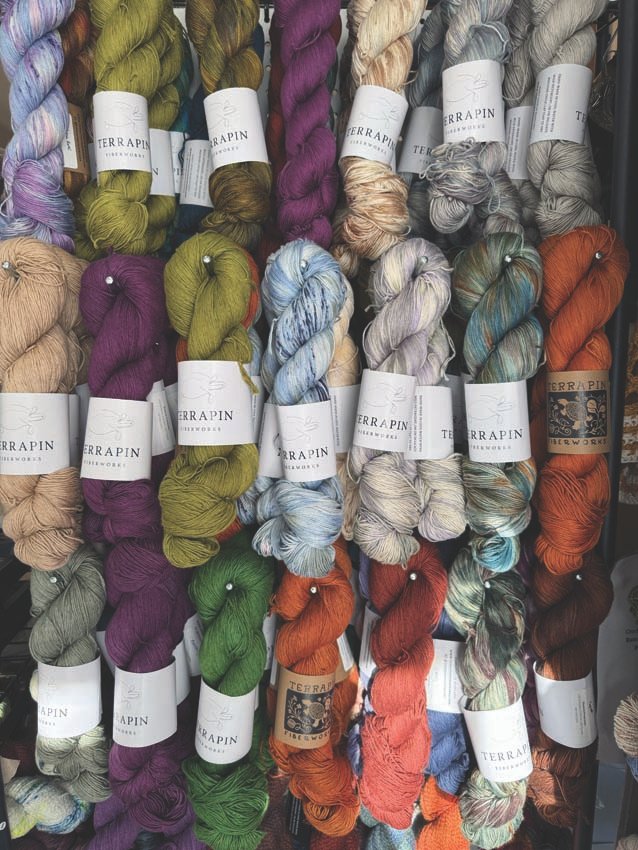
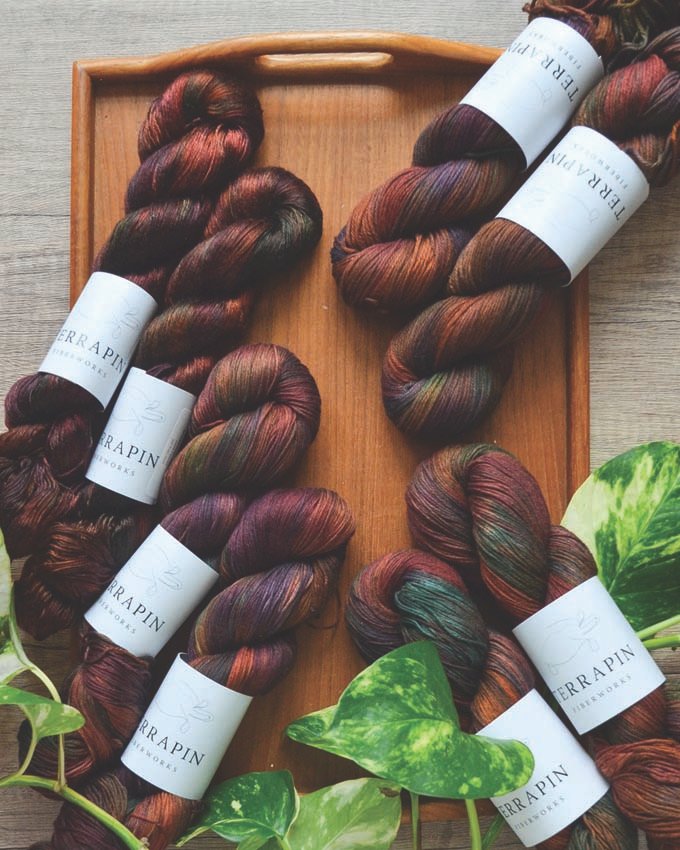
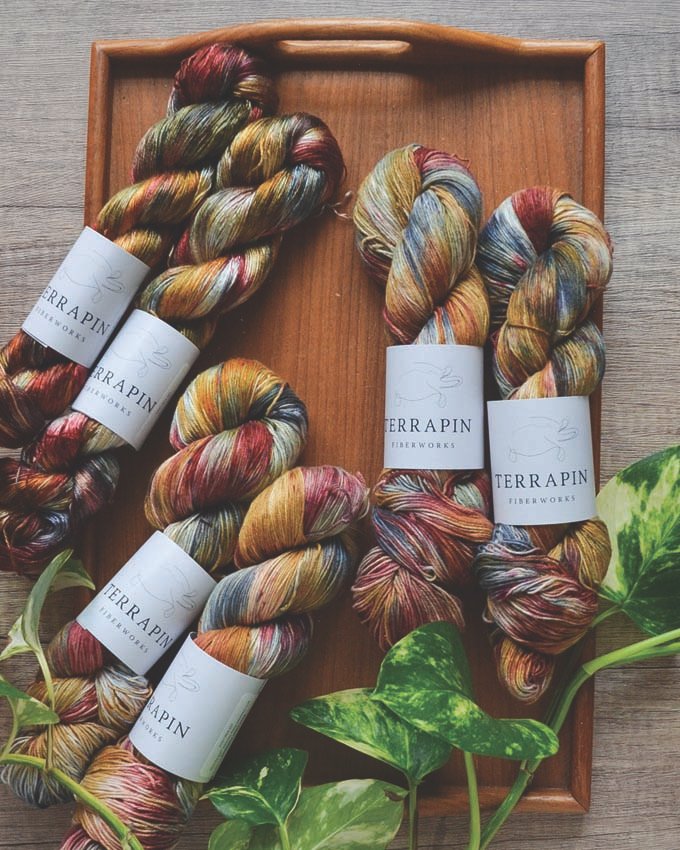
“I like really rich, moody, or jewel earth tones,” she notes, squeezing dye from what appear to be commercial ketchup bottles into a catering tray filled to the brim with skeins—or loops—of creamy white yarn. This recipe, requested by a customer, calls for two reds, a green, and a brown. She saturates the fiber, carefully controlling the amount of water she squishes between strands. “I want to make sure [the customer] is not getting splotchy stitches,” she says, making sure each of the 246 yards of the skein of white fiber is covered. Then the yarn sits overnight. The result is a sophisticated spectrum of purples merging with green, highlighted with shades of red. The variegated coloring is one of her techniques that makes a simple knitting stitch appear more complex. “You can have this pretty thing where the yarn did some of the work for you.”
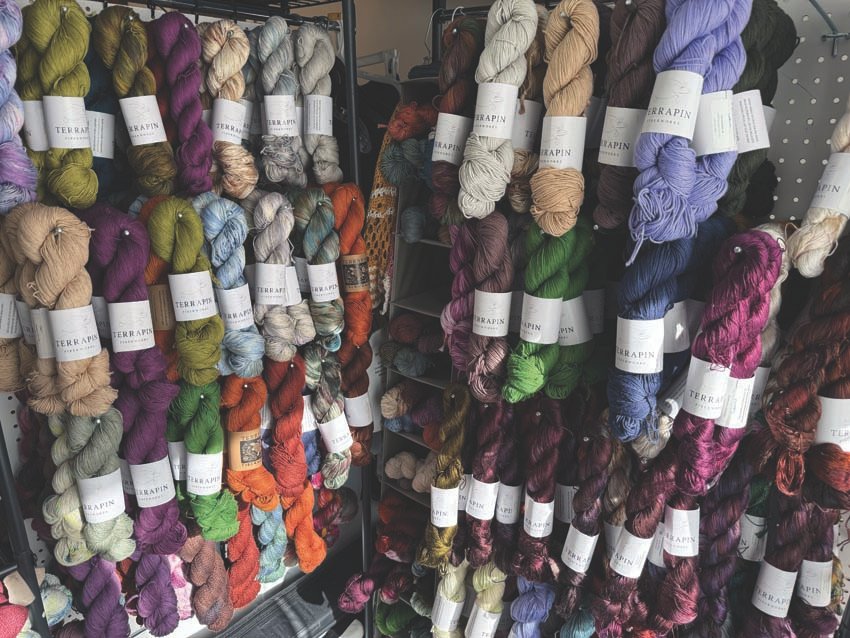
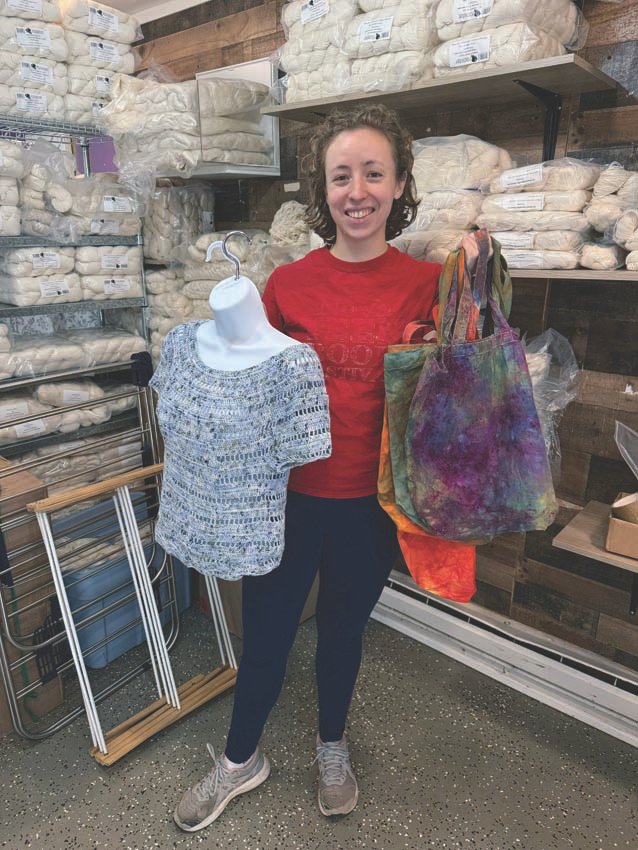
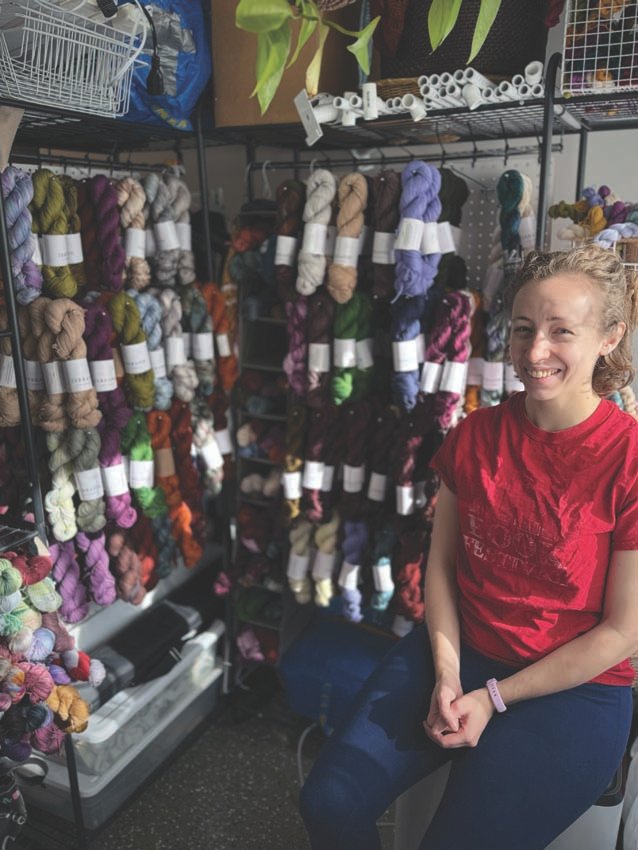
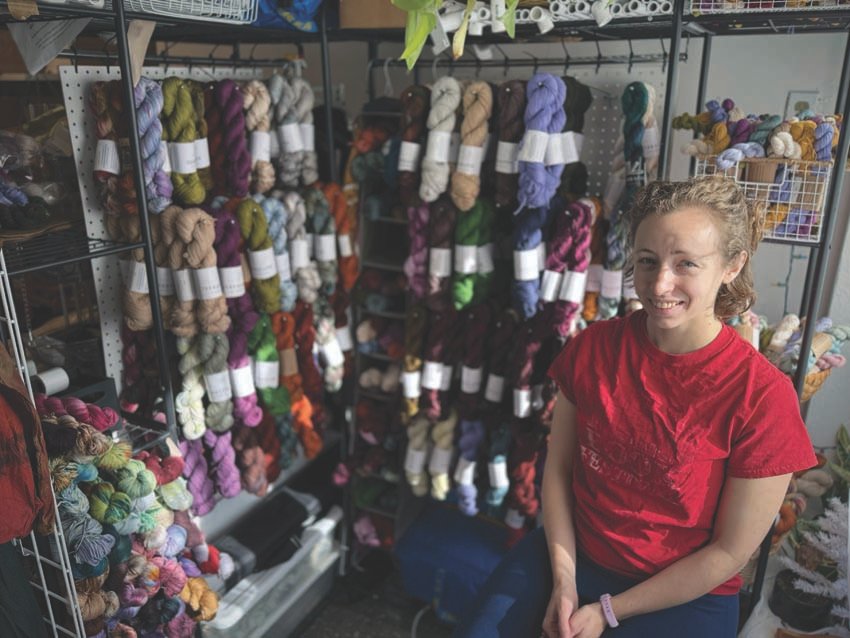
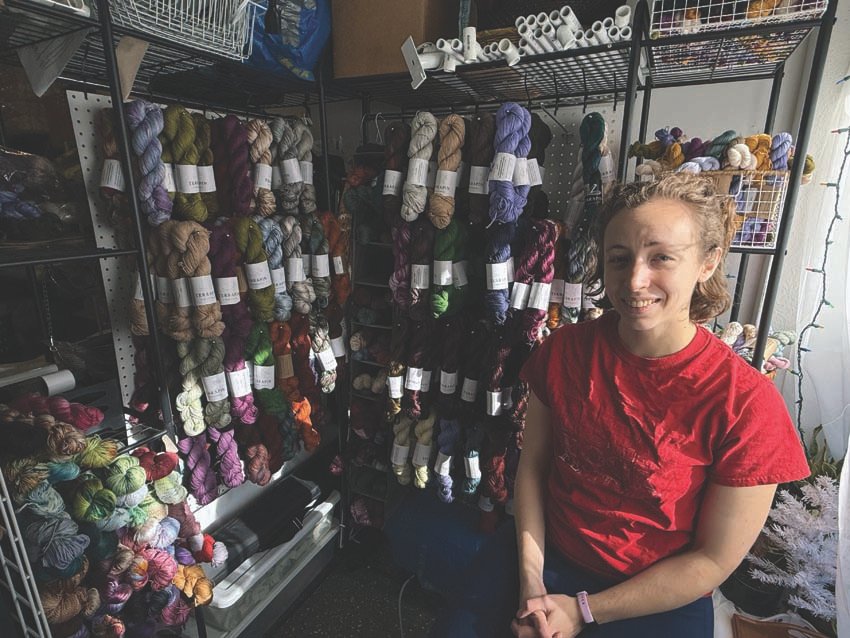
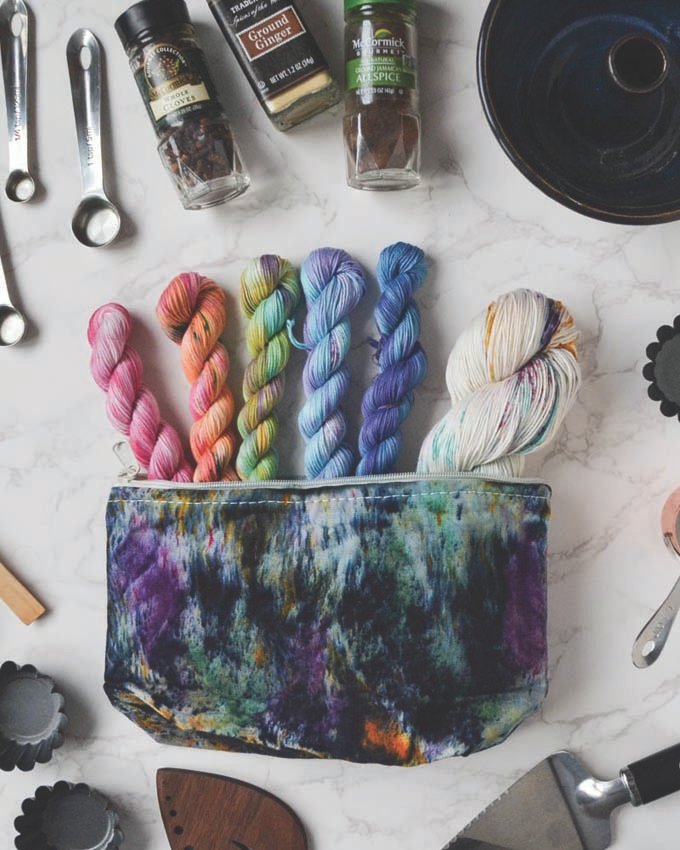
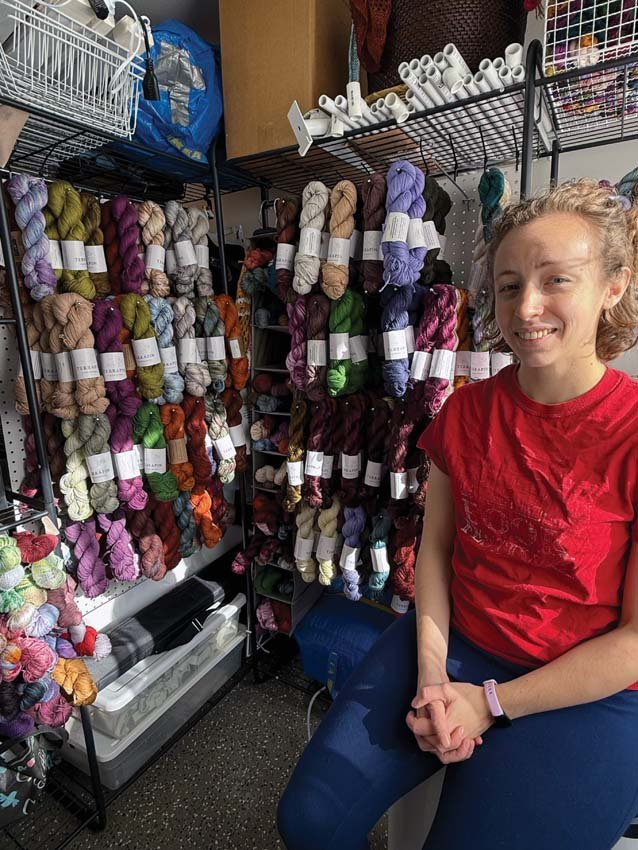
Lawless moved her business from her bathtub to a small studio on West Street a couple of years ago. Samples hang like pretty, twisted, baby pink and white-speckled cotton candy near the front, obscuring the mad-scientist-like laboratory in the back. The recipes evolve through trial and error, sometimes on yarn, or she might test a nascent idea on paper towels. She doesn’t do much brick-and-mortar business. Like many millennials, she is digital savvy, collecting clients and keeping in touch with the knitting community mostly online.
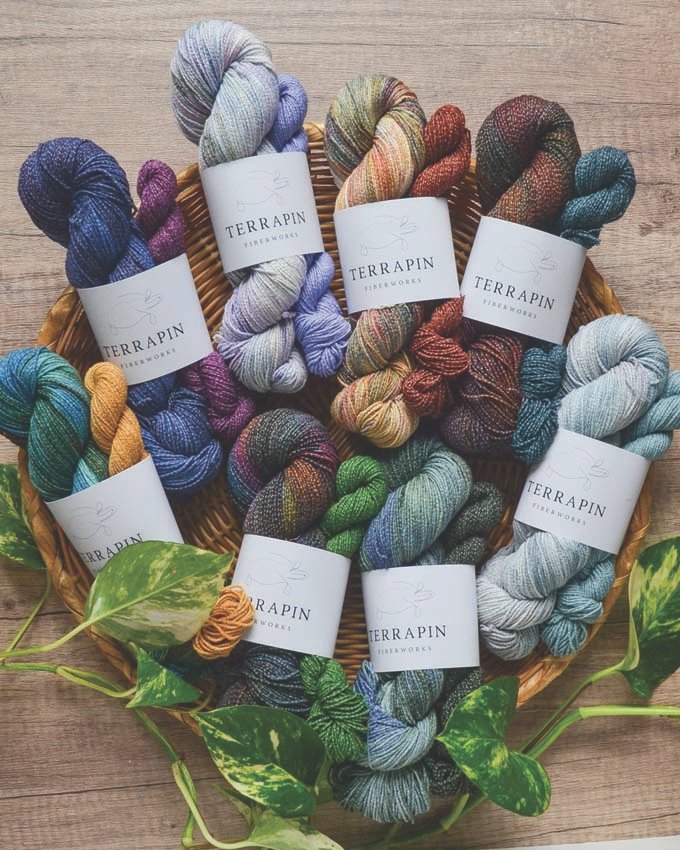
Because Lawless uses only plant-based yarns, there is no sheep’s wool, cashmere (goat-based), or alpaca yarns in her sample book. While shearing doesn’t hurt these animals, vegans commonly avoid products from farmed or domesticated animals. Cotton, Tencel (derived from eucalyptus pulp), and linen (derived from flax, which requires little water and no pesticides) make up most of her products. She’s also a socially responsible knitter, using only yarn bases from mills with a traceable supply chain. It’s a way of avoiding suppliers who overwork and underpay their laborers. Her conscious environmental and social parameters drive the costs up a bit, but the handcrafted market seems to be reliable. She sends about 1,500 shipments of varying sizes annually, mostly within Maryland, and has some international customers in Canada and Australia.
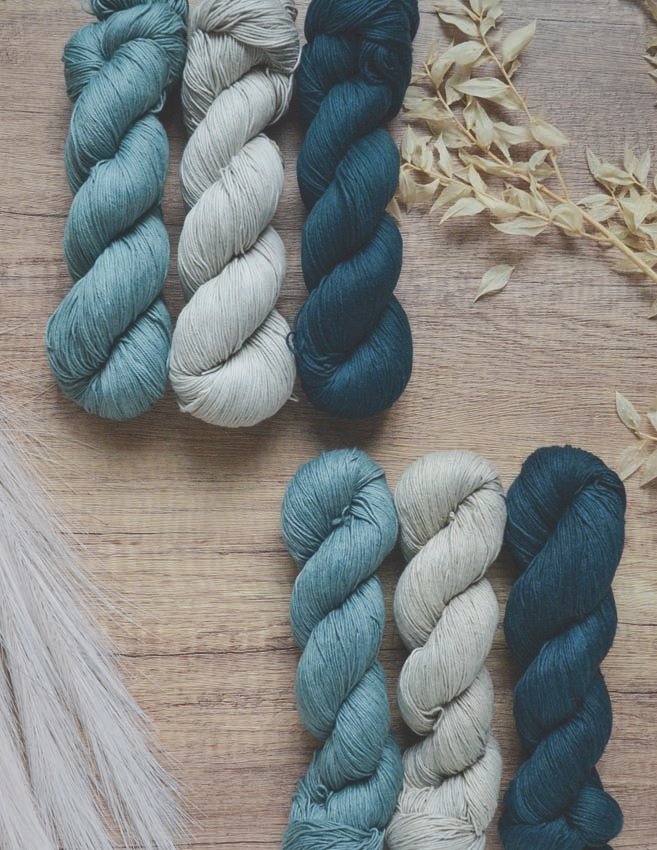
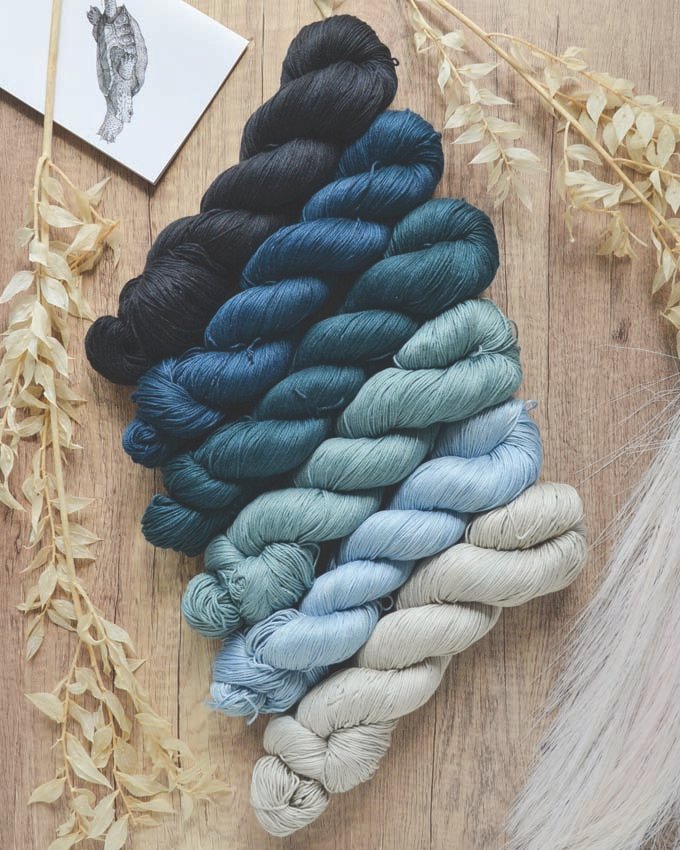
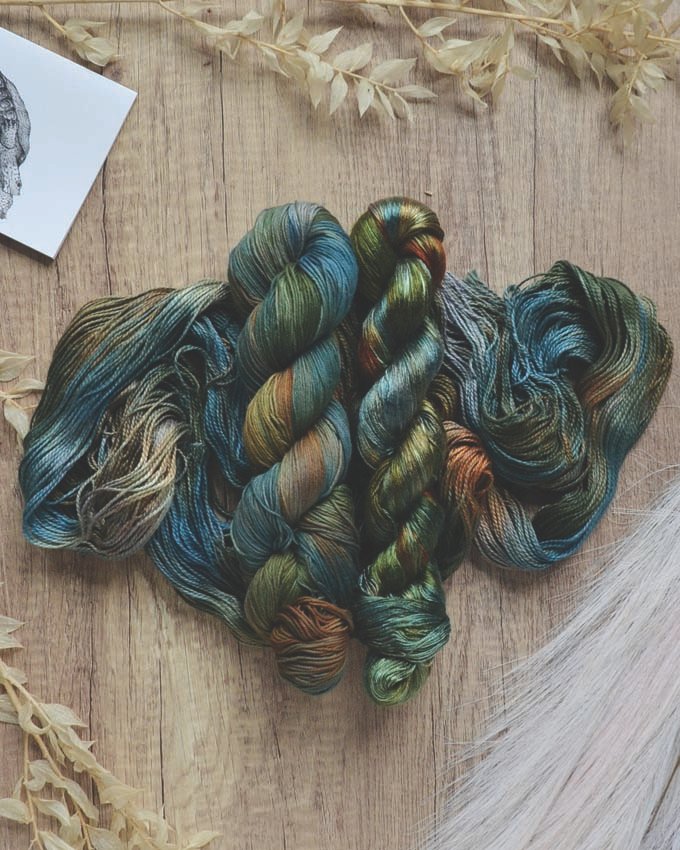
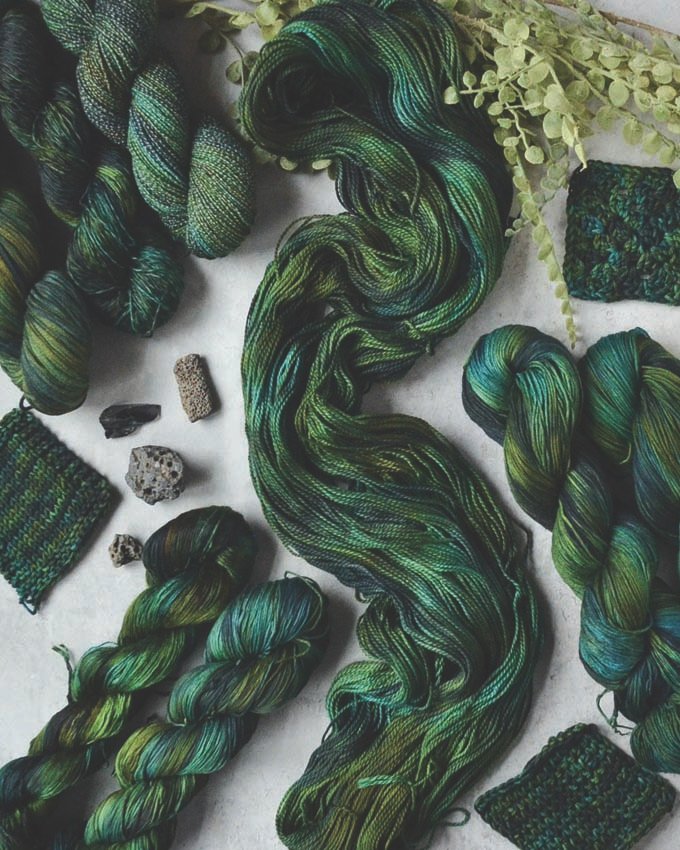
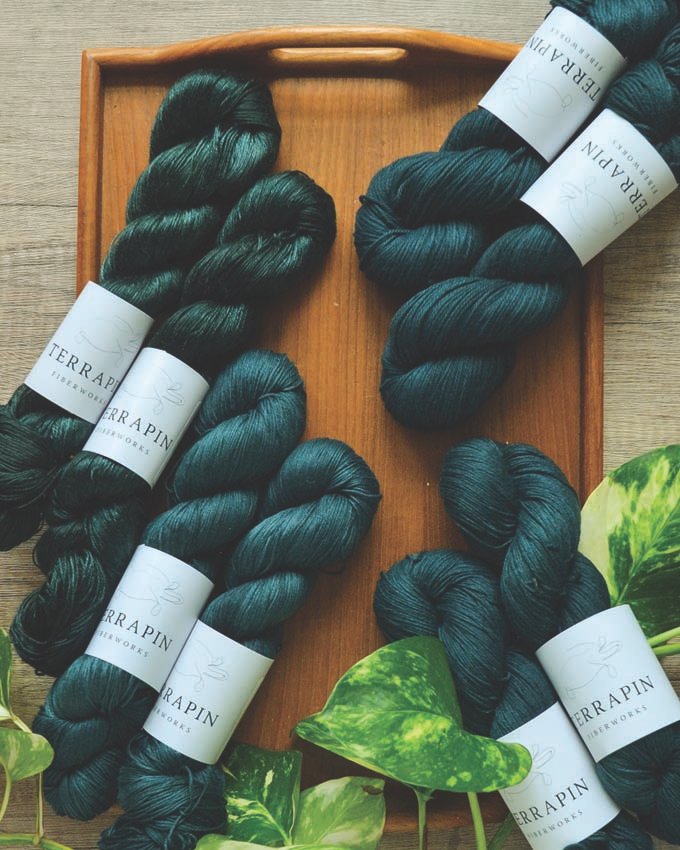
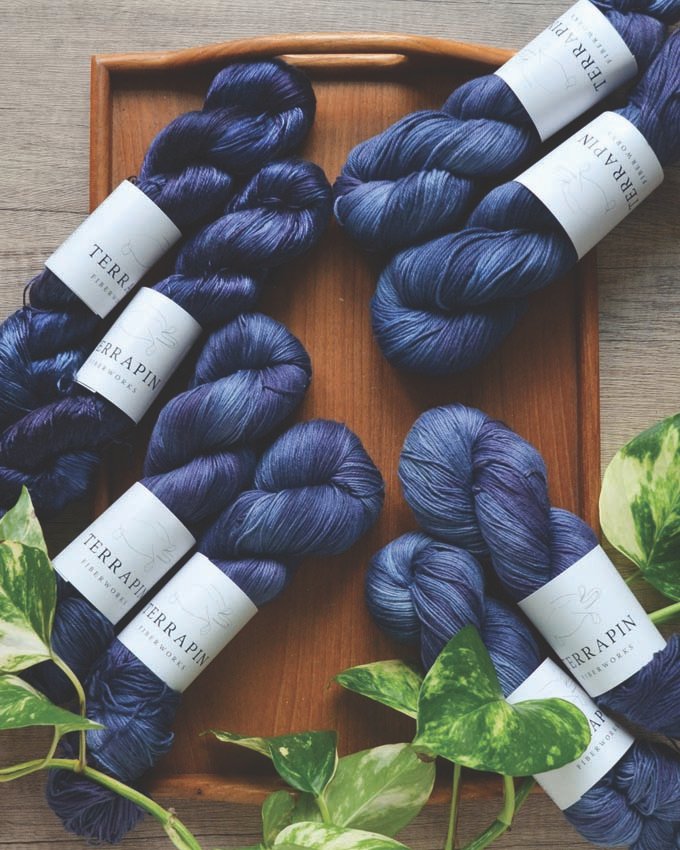
Lawless’ international travels have inspired colors such as “Pacific,” which is teal but with more blue, and “Isle Royale,” which is teal but with more green. “Estuary” is close to sky blue, and “Black Sand” is exactly as expected. Perhaps in homage to those Vikings, a trip to Iceland spurred a series of earth tones—mossy greens along with lava-like reds and oranges, and, of course, a steely blue to recall the famous Blue Lagoon geothermal pool. The theme for 2026 is “Backpacker,” which will include colors a hiker might encounter on trails in Western Europe. Colorways are available à la carte or by joining a monthly yarn club.
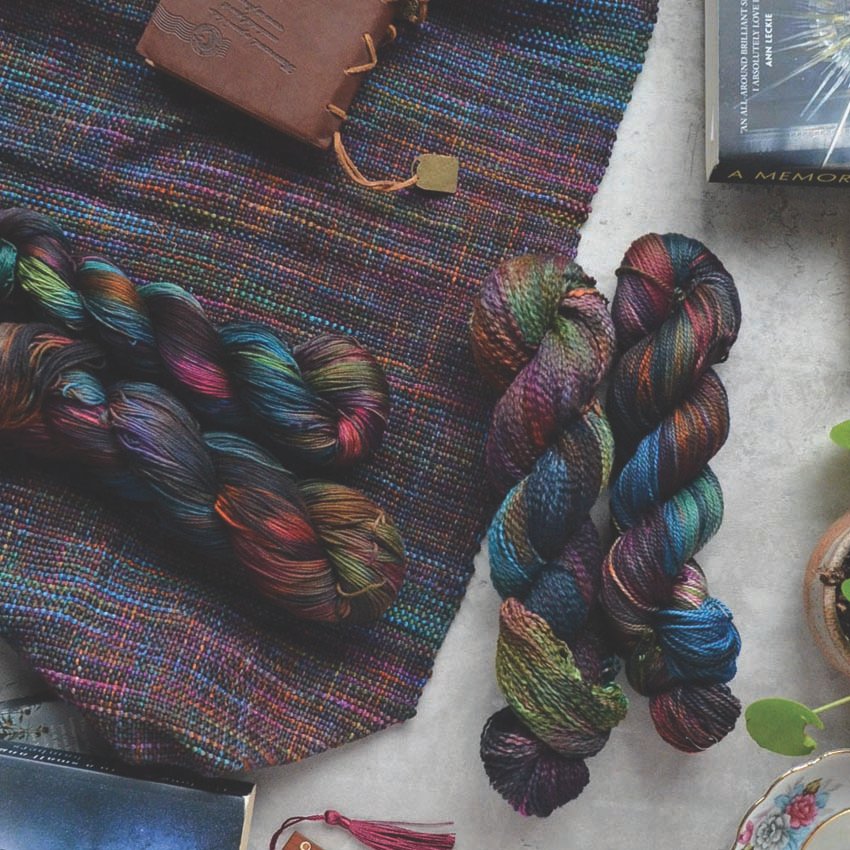
While Lawless doesn’t spin fiber to make yarn, she’s known to spin a yarn or two as a writer of fantasy, sci-fi, and other fiction. She’s been doing that since she was in her late teens, and this accounts for the yearlong book-themed color spread. In February 2025, she featured stories about vampires, such as Isabel Cañas’ Vampires of El Norte, along with deep burgundy yarns. The Year of the Witching by Alexis Henderson appeared in the dark of October, commonly referred to as the season of the witch, and was accompanied by spooky greens and purples. An Afro-futurism theme dominated December, readers being drawn in by the novella Binti by Nnedi Okorafor while knitters were treated to neon greens, oranges, and jet black.
Knitting and crocheting are solo endeavors. Lawless calls them both a slow craft, where one can find refuge from the outside world everyone craved so much while shut in. Now, there are festivals and conventions during which needleworkers who perhaps met online can mingle face-to-face. At the popular New York State Sheep and Wool Festival in Rhinebeck, New York, the fuzzy fingered can bring their version of a preselected pattern and then pose, wearing their rendition, for a group photo. In Maryland, the Sheep and Wool Festival offers fiber arts seminars. “It’s a whole subculture,” says Lawless, laughing. “It’s a really lovely and positive community of people who are enjoying their relaxing hobby.” ν
For more information,
visit terrapinfiberworks.com.