+ By Terese Schlachter + Photos courtesy of Elizabeth Myers Mitchell Art Museum
To enter the Elizabeth Myers Mitchell Art Museum (/m) is to become enveloped in an inspired version of the quiz show Jeopardy! The answer lies, always, in the form of a question.
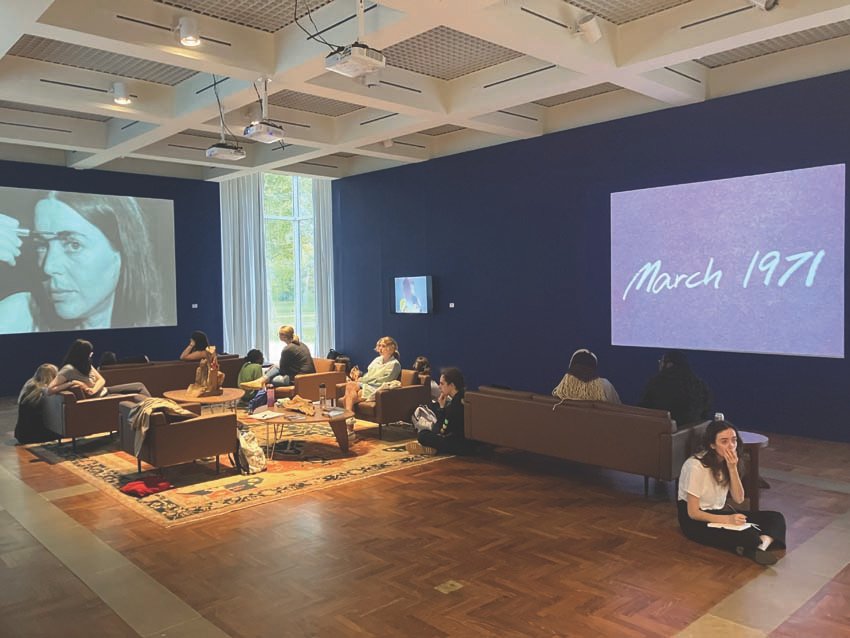
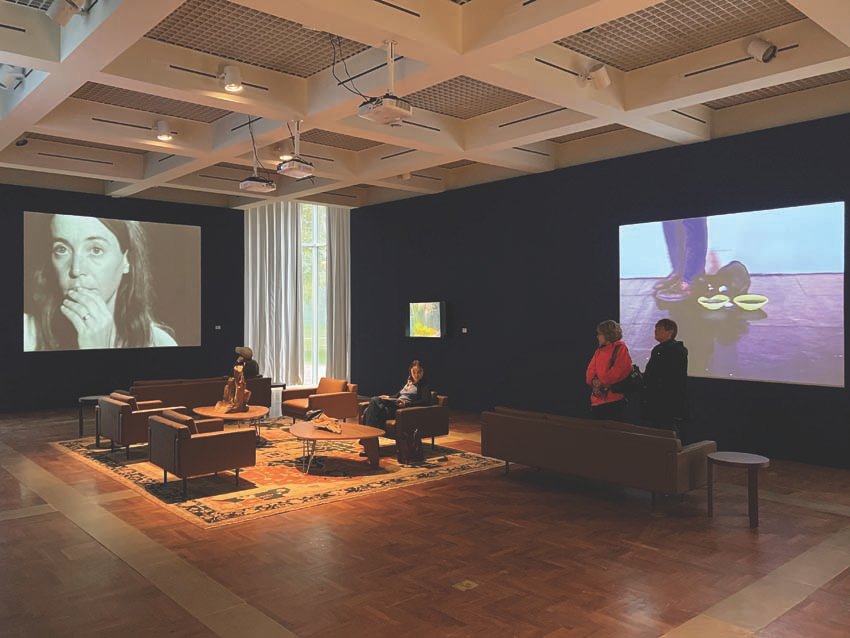
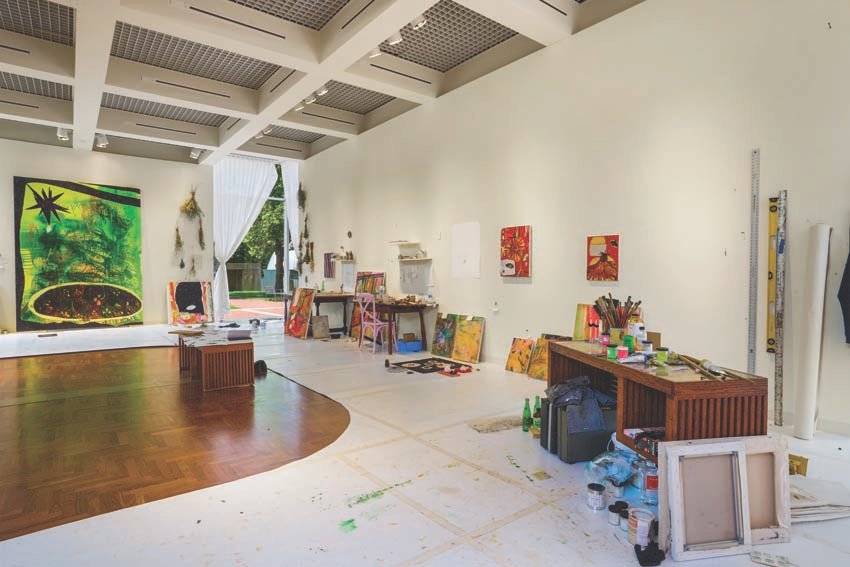
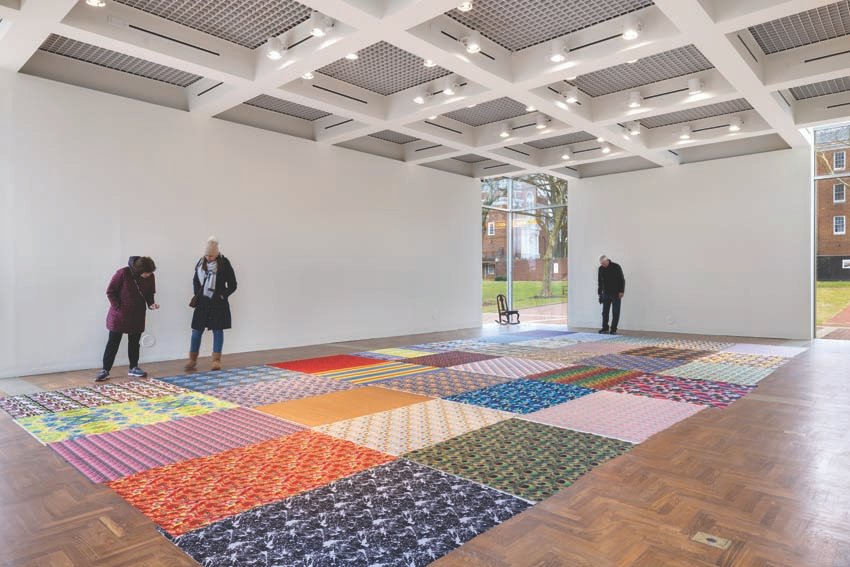
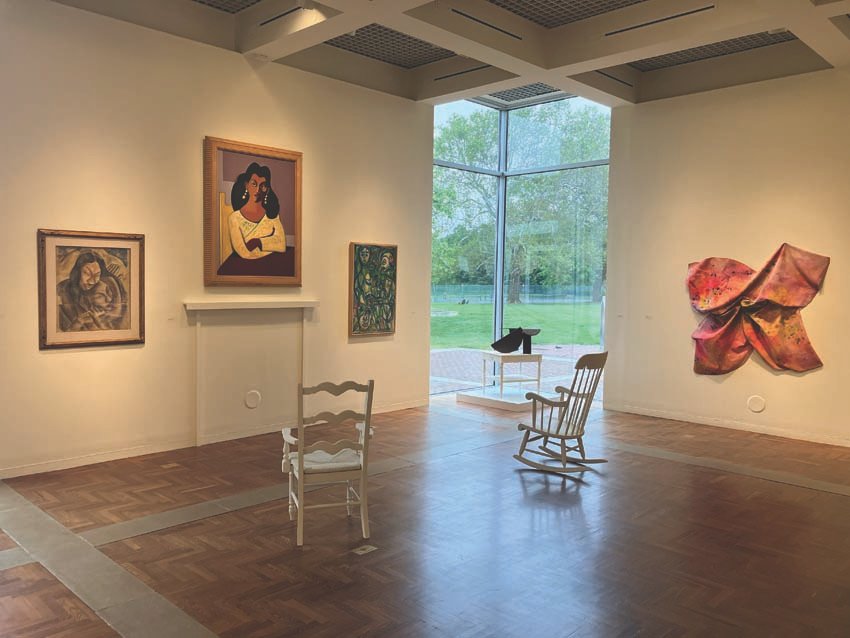
The museum occupies a 1,500-square-foot space in Mellon Hall at St. John’s College in downtown Annapolis, just a block away from the Maryland State House. It is designed and curated to pose a theoretical or philosophical pondering for visitors to mull as they mosey from one artwork to the next. It’s a space where one might delicately step over a wave of sea-green Life Savers candies or become enlightened by a circular grouping of desk lamps.
“I’m trying to capture the culture of the place, the learning environment,” says museum director Peter Nesbett, who arrived in 2022 with Jenny Cawood, the museum’s manager. His mission was to reopen the space after its three-year pandemic-induced shutdown and to bridge the “town-gown” divide, that is, to program content to draw students in as well as appeal to the greater Annapolis community.
The curriculum at St. John’s College fosters an interdisciplinary, liberal arts education. Students pore over great writings that, according to the program statement, “illuminate the persistent questions of human existence.” They come to the seminar table bolstered to opine and inquire, guided by tutors whose roles are to ask questions and facilitate discourse.
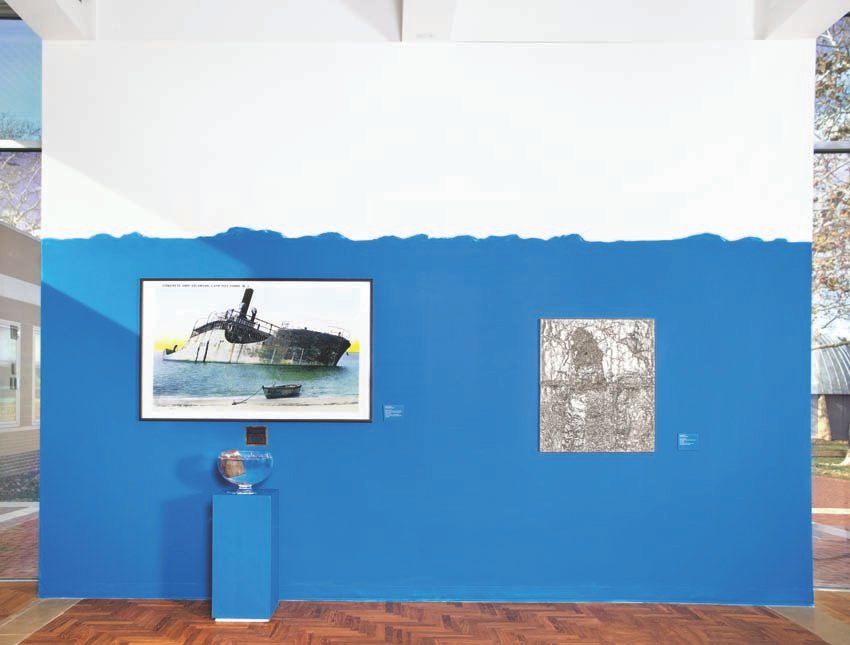
“I’m doing the same thing in the museum,” explains Nesbett. Each exhibition comes with a query. A recent one, entitled Lost at Sea (Ulysses), asked, “Can art save us?” That’s where the Life Savers came in. Visitors were encouraged to sample the candy.
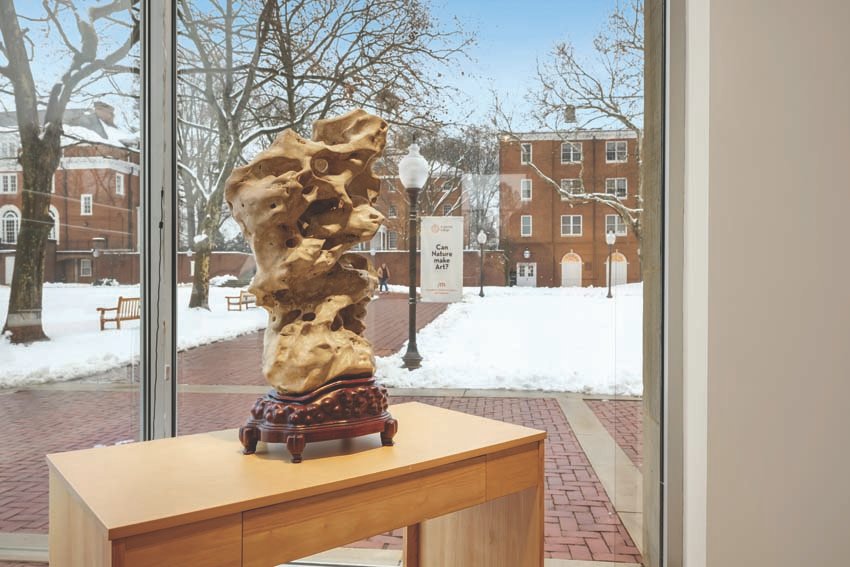
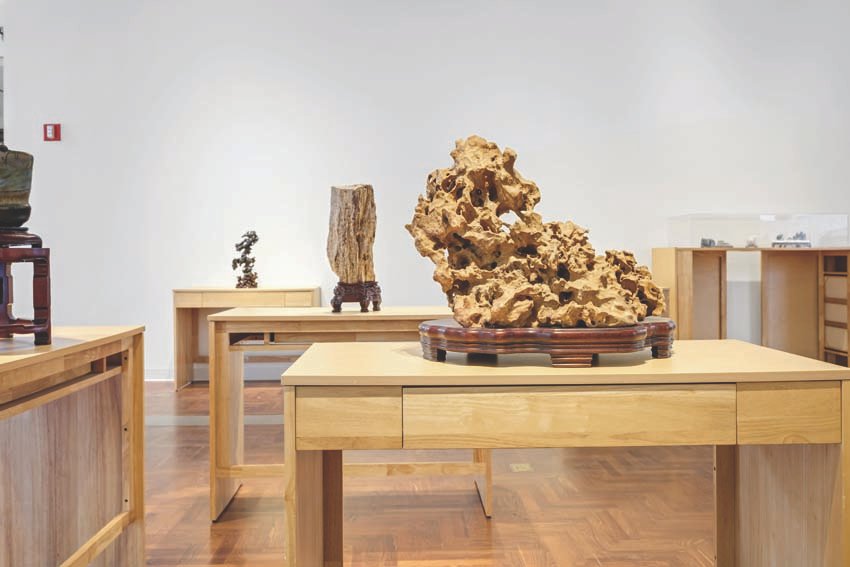
Less appetizing but no less interesting were the scholars’ rocks, presented in 2025 in Nature’s Readymades. Collected by Chinese literati, scholars’ rocks are found in riverbeds. “They’re very deformed by the currents, and they look like sculpture, but they’re untouched by human hands,” says Nesbett. He borrowed some from the National Bonsai & Penjing Museum at the National Arboretum in Washington, DC, and displayed them at the Mitchell on a collection of student desks. The rocks are evaluated based on thinness, openness, perforations, and wrinkling. “I personally love that,” says Nesbett. “What are these things? How do we classify them? They had all these criteria for what makes a good rock, much like a critic might use evaluating artwork.” The question: Can nature make art? “It was a super simple question in a way—of course it can’t, because art is a human endeavor, but . . .” he trails off. The questions are strictly for debate. There are no wrong answers. Or right ones.
Nesbett favors materials that were never meant to live in the world as art. José Guadalupe Posada Aguilar, creator of the popular Day of the Dead sketches, was never considered an artist while he was alive. He was a lithographer, creating cartoonish drawings of skeletons doing silly things that were distributed on flyers and sold for a few pesos in Mexico in the 1800s. After he died, a collection was made. Some of it was curated by Nesbett at the Mitchell. The Posada inquiry: “Does one have to be serious to be taken seriously?”
The director believes that showing what he calls “unskilled art,” like the Life Savers mounds or the rocks or Posada’s satirical sketches, demonstrates an intellectual pathway for students. One doesn’t have to wield a brush or a chisel to become a member of the arts community.
Nesbett needed no chisel. He was born in New York City and lived a few blocks from the Metropolitan Museum of Art. His parents were avid museumgoers, frequently whisking their son off to the Frick Collection or the Guggenheim or to play in the garden in front of Cooper Hewitt, Smithsonian Design Museum. He graduated from Cornell University and then landed a job at Christie’s auction house, where he regularly handled paintings by Monet, Cézanne, and Picasso. But, in 1990, Christie’s $82.5 million (equivalent today to $205 million) sale of Vincent van Gogh’s Portrait of Dr. Gachet set him back. “I was disillusioned by the relationship of money and art, and I needed to get as far away from New York as possible,” recalls Nesbett. After some European travels, he landed at the University of Washington. There, in the graduate student lounge, he met Shelly Bancroft, who would become his wife, confidant, and cocurator.
She went on to work in commercial and nonprofit spaces while he set off to document every drawing and painting he could find by Jacob Lawrence, the first American artist of African descent whose work was purchased by the Museum of Modern Art. That lead to the publication of The Complete Jacob Lawrence, an award-winning, two-volume catalogue raisonné. Soon after, they moved to Harlem in New York City, where Shelly turned a 6,000-square-foot warehouse into an art gallery called Triple Candie. At first, they invited national and international artists to exhibit large-scale works, and many of those artists went on to great success. But the couple wanted to contribute to the art world by filling a void while at the same time avoiding gatekeepers—the rules and roadblocks sometimes associated with great art. So they began curating exhibitions about art and about artists, without showing the original pieces. They used photocopies, found objects, and re-creations. The New York Times called Triple Candie a “scrappy Harlem alternative space” and lauded an exhibit of everyday objects as “absorbing and interesting.”
“That’s where the nonart comes in,” says Nesbett, reflecting on his then nascent philosophy. “[The re-creations] allowed for conversations about art and control . . . but it also had this other educational side to it, where you got to see, in . . . a highly diminished form . . . a subject you otherwise couldn’t access.” Triple Candie ran full steam ahead for a decade before the couple shut the doors and began curating in other venues while Peter did a stint at the Pew Charitable Trusts in Philadelphia before he took a job at the Washington Project for the Arts. There, he morphed the organization from one that ran business workshops for artists to one that funded artistic research. Each project would start with a question. The culture of inquiry took root.
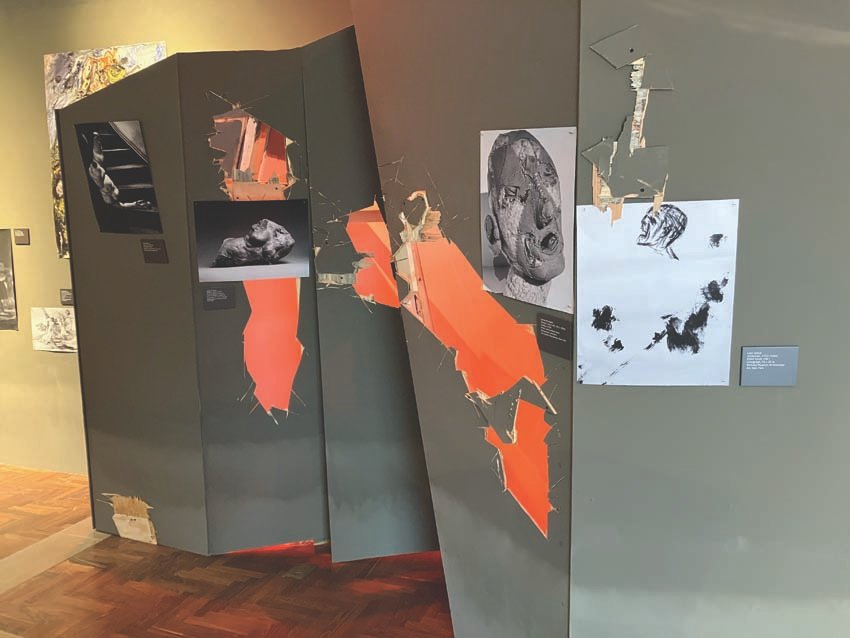
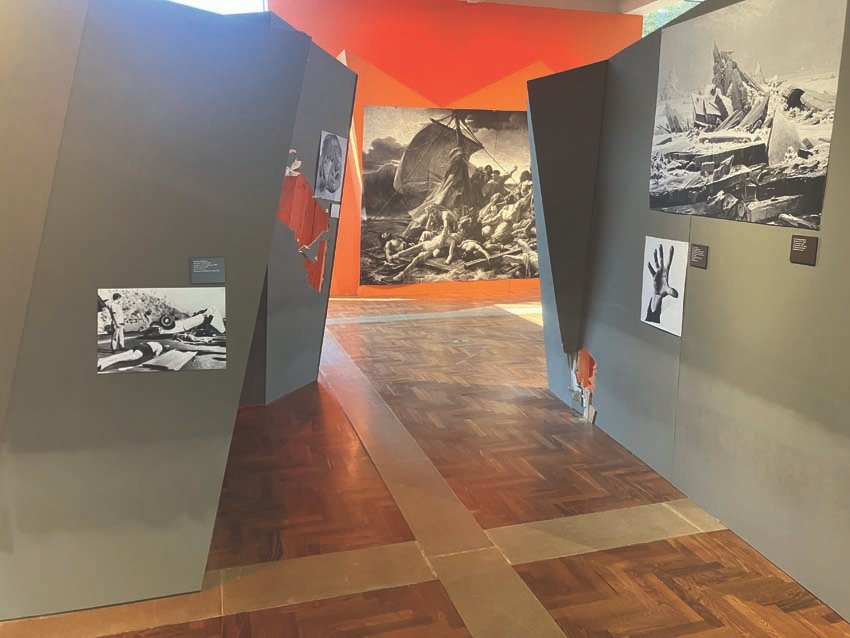
At the Mitchell Museum, Nesbett and Bancroft continue as a team. Bancroft is not on the payroll, but she cocurates and handles much of the installation. When she thought a show called Theatre of Turmoil (The question: Do we live in unusual times?) seemed too staged, she went at it with a sledgehammer and a circular saw. She came up with the student desks in the scholars’ rocks exhibit. She also made the Life Savers waves.
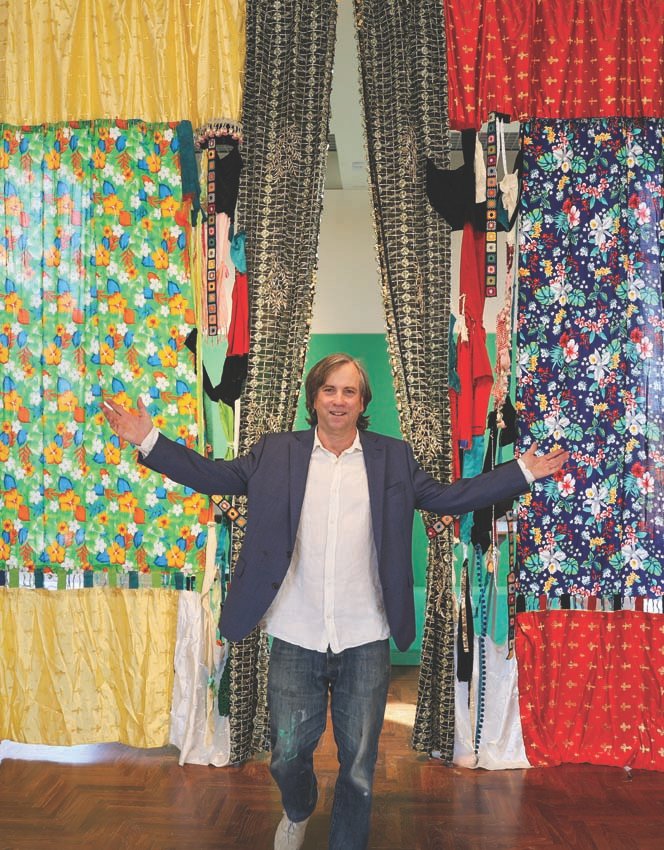
“It’s very intuitive,” says Bancroft of their partnership. “We know what each other is good at. Peter always does the first draft of something.” “I’ll say something abstractly, and Shelly will fine-tune it,” adds Nesbett.
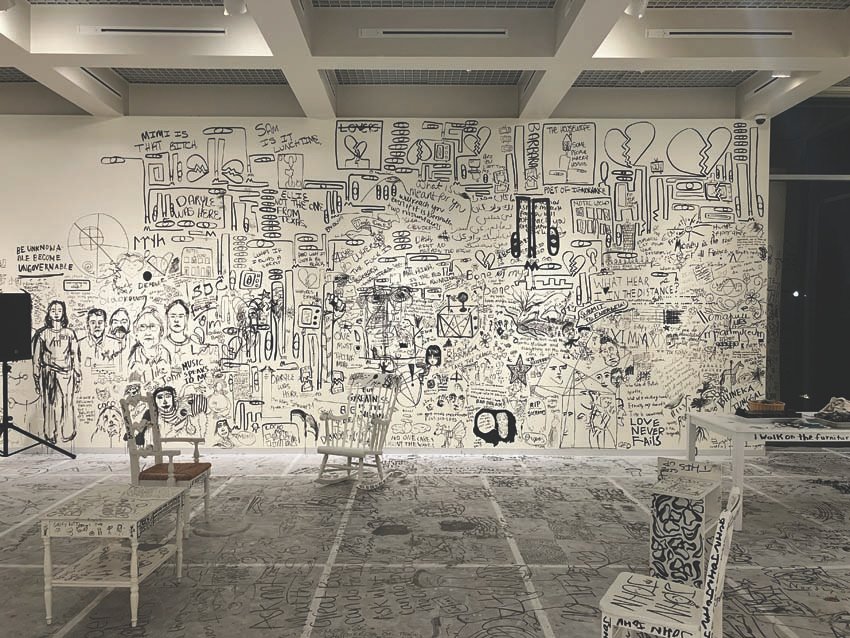
Their most recent exhibitions represent a pivot toward the community, in hopes of cementing a local network. Ken Friedman: 92 Events features Fluxus art, which was popular in the 1960s and 1970s. Fluxus artists seek to integrate art with life. It’s casual, less polished. Ninety-two printed instructions or “scores” will ask museumgoers to do various zany things, such as “Make a phone call to a bird” or “Paint on the glass screens of television sets.” Participation is optional, but amateur performers are invited to draw, enact, or sing the score of their choice.
The upcoming Liberty Tree Project commemorates a 400-year-old tree that once stood on the campus and provided a meeting place for townspeople to plan uprisings to protest British rule. Nesbett is partnering with Annapolis Pride and a local Latino group to ask the question, “What do you want to be free from?”
What if the answers forge an entirely new question?